Antique Jewelry: How to Identify, Evaluate, and Wear It
Antique Jewelry: How to Identify, Evaluate, and Wear It
Antique jewelry carries the visible evidence of another era: a hand-finished edge, an old-world setting, a softened surface, or a story that traveled through a family. Learning how to read those clues helps you appreciate what you have without making assumptions about age, authenticity, or value. This guide explains the language, inspection steps, and styling ideas that make older pieces easier to understand and wear now.
Schedule a jewelry consultation at LUCE Jewelry to discuss your piece, your style, and your next fine-jewelry addition in West Palm Beach.
What is antique jewelry?
Antique jewelry generally refers to a piece made more than 100 years ago. The term describes age, not a guarantee of rarity, condition, materials, or market value. A piece can be antique and modest, heavily restored, or missing its original stones. The evidence needs to be considered as a whole.
The 100-year guideline is the definition used by the Gemological Institute of America in its consumer guidance on antique and vintage jewelry. GIA also distinguishes estate jewelry as pre-owned jewelry that may be antique, vintage, or contemporary. In other words, estate describes ownership history, while antique describes age.
| Term | What it usually means | What it does not prove |
|---|---|---|
| Antique | Made more than 100 years ago | That it is rare, original, or valuable |
| Vintage | Older jewelry that is not contemporary, but does not meet the antique threshold | A specific age unless the production date is documented |
| Estate | Previously owned jewelry from any era | That the piece is antique or in original condition |
| Reproduction | A newer piece made to resemble an earlier style | That it was made during the historical period it imitates |
These terms are useful starting points when you speak with a jeweler, search an auction archive, or organize family jewelry. They should not replace a careful examination of the piece itself.
How can you tell if jewelry is antique?
You can begin identifying antique jewelry by comparing several clues: construction, metal marks, stone cuts, setting details, wear, repairs, and provenance. No single stamp or visual characteristic proves age. A stronger assessment comes from clues that agree with one another and do not conflict with the piece's materials or construction.
- Document the piece. Photograph the front, back, sides, clasp, hinges, inside surfaces, and every visible mark. Record dimensions, approximate weight, and any family history before cleaning or polishing.
- Study construction. Look at how parts join, how prongs are shaped, whether edges are hand-finished, and whether solder lines or tool marks appear consistent with older workmanship.
- Inspect the stones. Older cuts may have different proportions from modern cuts, but a cut alone is not a date stamp. Look at the stone, setting, and wear together.
- Look for service evidence. Re-tipped prongs, replacement stones, new clasps, resized rings, and fresh solder can tell you that the piece has had a long life. They can also make original details harder to read.
- Compare the story with the object. A family story is meaningful provenance, but it is still one part of the evidence. Compare the story, marks, construction, and condition instead of treating any one detail as conclusive.
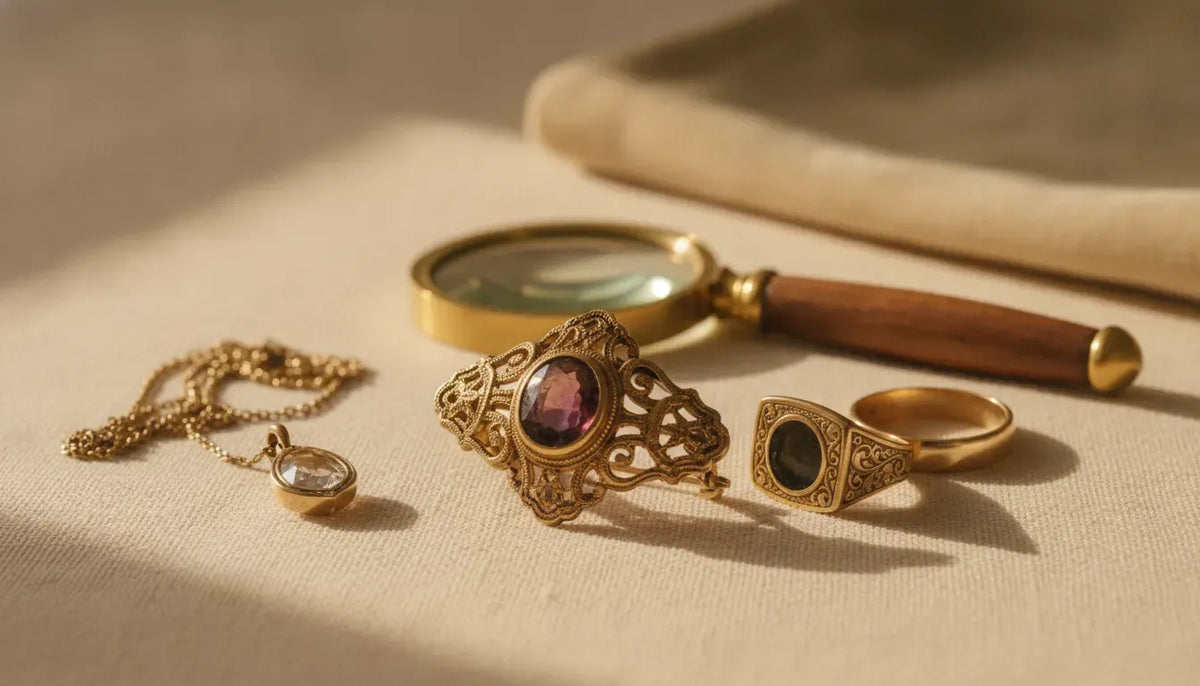
Use a loupe only if you know how to handle the piece safely. Do not scrape a mark, flex a delicate hinge, test a stone with household chemicals, or attempt a home acid test on a sentimental or valuable item. Small damage can remove the very evidence you are trying to understand.
Which hallmarks and maker's marks matter?
Hallmarks and maker's marks can provide useful information about metal content, maker, place of manufacture, or period. Read them as evidence rather than a shortcut to a conclusion. A clear mark that aligns with the construction and provenance is more informative than an isolated stamp that has been added, altered, worn, or misread.
Metal and purity marks
Look for stamps that describe metal content, such as gold karat marks or silver standards. The format varies by country and period, and a mark can be hard to read after decades of wear or polishing. Metal marks should be checked against the actual construction and the rest of the piece.
Maker's marks and initials
A maker's mark may connect a piece to a workshop, designer, retailer, or manufacturer. Compare its shape, lettering, placement, and strike depth with reliable reference material. Initials can overlap across makers, so do not assign a name based on a quick visual match alone.
Assay and location marks
Some jewelry carries marks associated with an assay office, country, or import system. These can narrow the field, but they require context. A mark's style should make sense for the claimed location and period. If it conflicts with the construction, treat the identification as provisional.
The Federal Trade Commission's Jewelry Guides emphasize accurate representation of a jewelry item's material, quality, origin, treatment, and other characteristics. That principle is useful for shoppers, too: describe what you can support, separate observation from interpretation, and ask for documentation when a claim affects a purchase or insurance decision.
How do condition and repairs affect antique jewelry?
Condition affects how an antique piece looks, wears, and should be handled. Wear is not automatically a defect, and restoration is not automatically a problem. The important questions are whether the structure is secure, which parts appear original, what work has been completed, and whether the piece can be worn safely without causing further damage.
- Surface wear: Softened edges, small scratches, and changes in finish may reflect age and use.
- Setting security: Loose prongs, thin bezels, or movement around a stone deserve attention before regular wear.
- Repairs: Resizing, soldering, replacement clasps, and re-tipping can preserve a piece while changing some original evidence.
- Stone condition: Chips, abrasions, fractures, and loose stones can be difficult to see without magnification.
- Cleaning history: Aggressive polishing may remove detail from engraving, hallmarks, or delicate edges.
Before cleaning an older piece, ask what materials and construction methods may be present. Porous gems, foil-backed stones, fragile enamel, glued components, and delicate settings may not respond well to modern cleaning methods. When in doubt, pause and seek professional guidance rather than experimenting at home.
What does provenance tell you about a piece?
Provenance is the documented or remembered history of ownership and context behind a piece. It can include family photographs, receipts, letters, estate records, prior insurance documents, auction records, or a clear chain of ownership. Provenance can strengthen a piece's story, but a story without supporting evidence should be described as family history rather than proof of a date or value.
Create a simple record that includes who owned the piece, when it was acquired, where it was purchased, and any work performed. Keep photographs of marks and repairs with the record. If the jewelry came from a relative, note the relationship and the approximate decade it entered the family. Avoid filling gaps with assumptions, especially when a future sale, insurance policy, or inheritance decision is involved.
If you need formal documentation for insurance, estate planning, donation, or a sale, consult a qualified independent professional whose scope includes the type of jewelry in question. This guide is for education and styling. It is not an authentication, appraisal, or price estimate.
How should you evaluate antique jewelry before wearing it?
Evaluate antique jewelry in a calm sequence: identify what is visible, check whether it is structurally ready to wear, record what is known, and decide what additional expertise is needed. This approach protects the piece and keeps the conversation grounded in evidence instead of a dramatic label or an unsupported value claim.
- Start with the intended use. Will you wear the piece daily, occasionally, or only display it? A fragile antique may need a different plan from a sturdy ring or brooch.
- Check the fit and movement. Rings should not catch, pinch, or spin excessively. Clasps, hinges, and articulated sections should move as intended without resistance or looseness.
- Record original and replaced elements. Note visible replacement stones, modern findings, repaired solder seams, or changed backs without treating them as automatic disqualifiers.
- Ask about care. Confirm safe cleaning, storage, and wear conditions before using water, chemicals, ultrasonic cleaning, or heat.
- Set expectations. A piece can be meaningful because of design, memory, craftsmanship, or family connection even when its market value is unknown.
For older rings, consider a professional check before stacking them with other bands. For necklaces and bracelets, inspect clasps and links. For brooches, check the pin and catch. Small preventive work can reduce the risk of losing a stone or damaging a delicate component during wear.
How can you style antique jewelry with modern fine jewelry?
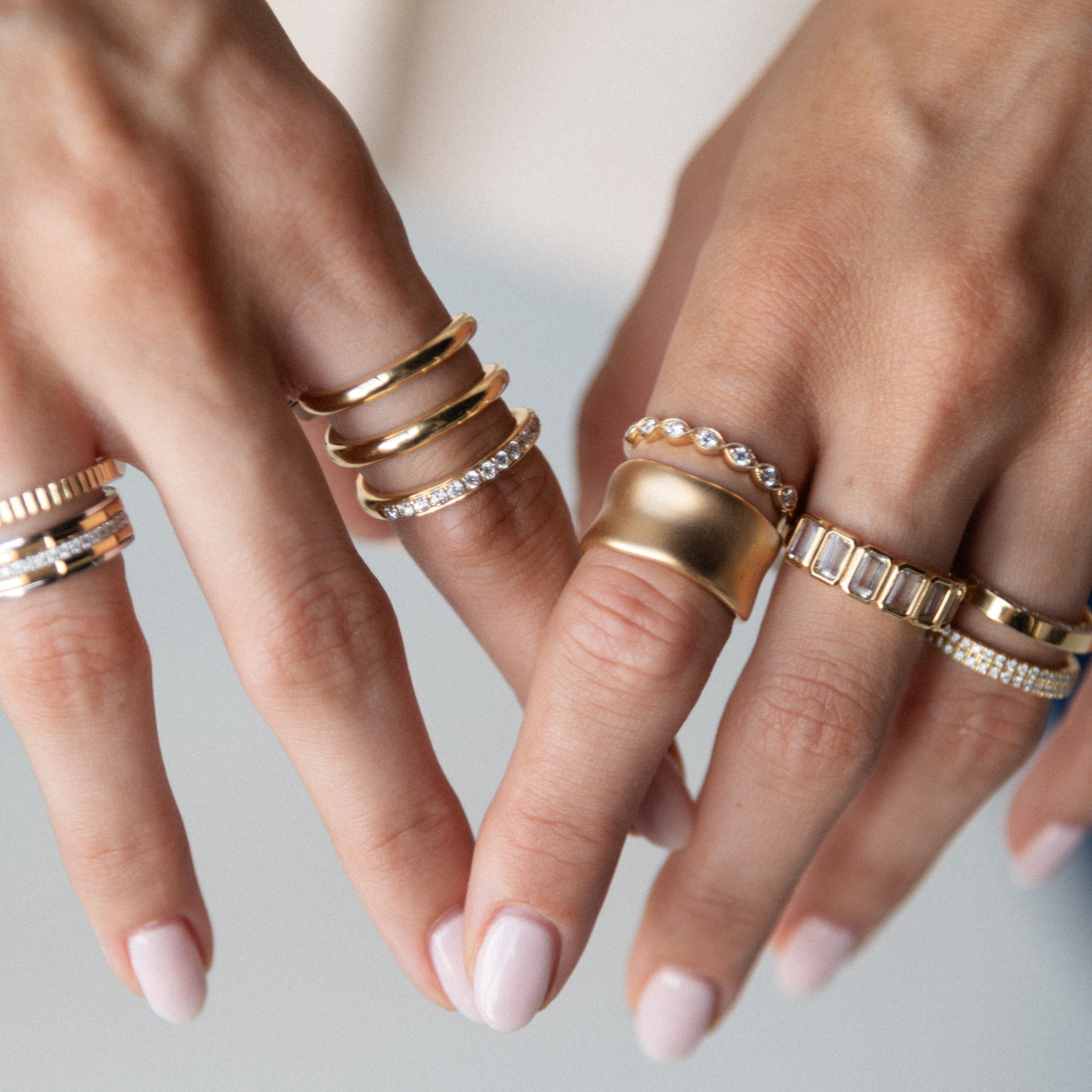
Style antique jewelry by giving the older piece room to speak while using modern fine jewelry to create proportion and balance. Start with one focal piece, then repeat one visual detail, such as a metal tone, stone color, texture, or line. The result should feel considered, not like a costume from one period.
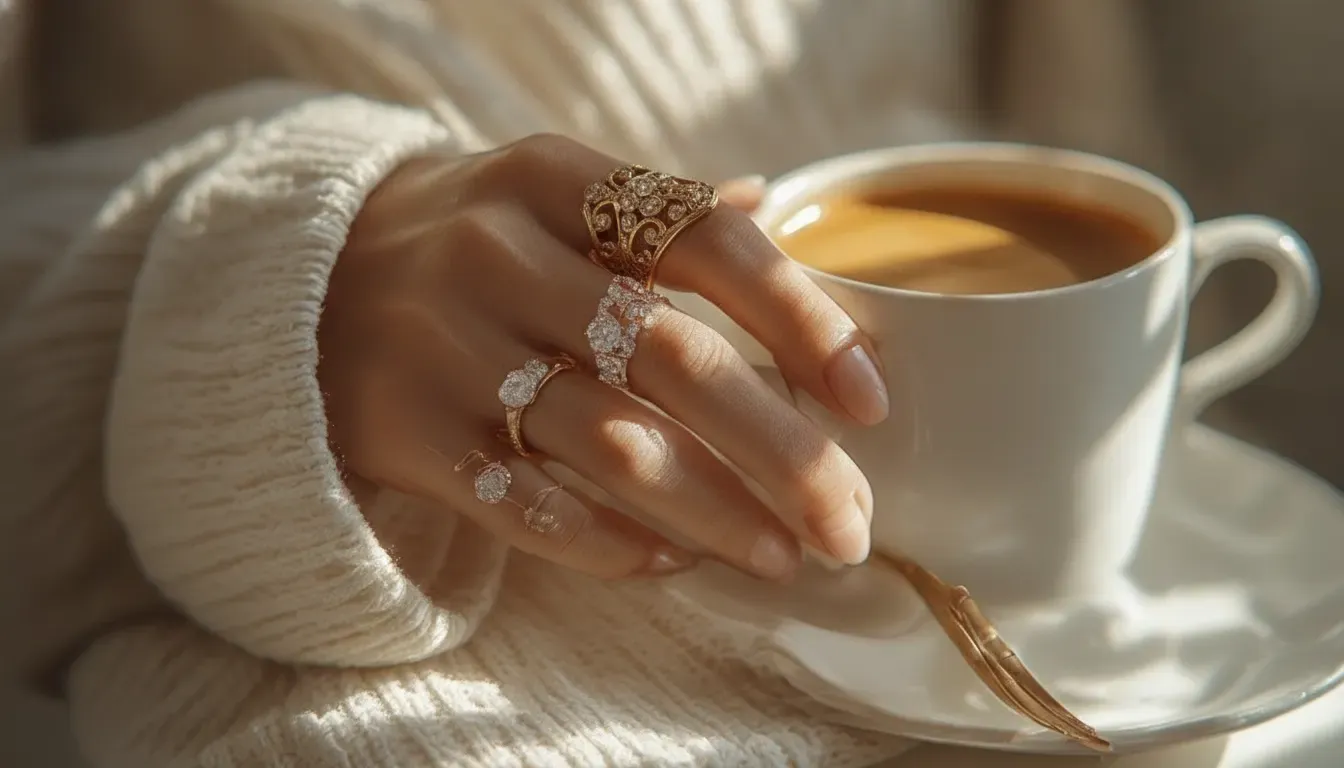
- Pair an ornate ring with a clean band. A slim modern band can frame engraving or a detailed setting without competing with it.
- Layer an older pendant with a simple chain. Vary the lengths so the pendant remains visible and the neckline does not feel crowded.
- Balance a decorative brooch with a structured outfit. A tailored jacket, crisp shirt, or simple knit gives a small antique focal point a current setting.
- Use texture as the bridge. Combine a soft patina with polished metal, or a detailed surface with a smooth modern silhouette.
- Mix metals deliberately. Repeat the second metal in at least one other piece so the contrast looks intentional rather than accidental.
- Keep scale in proportion. If the antique piece is bold, let neighboring jewelry stay quieter. If it is delicate, a modern stack can add presence without hiding it.
LUCE's modern fine jewelry collections are designed for everyday wear and future-heirloom thinking. Explore the LUCE rings collection for clean bands and sculptural silhouettes, or browse LUCE bracelets to build a balanced wrist stack around a sentimental piece.
Bring your styling questions to a LUCE consultation in West Palm Beach and build a combination that feels personal to you.
How do you care for antique jewelry?
Care for antique jewelry starts with gentle handling, safe storage, and a clear understanding of its materials. Keep pieces separated so stones and metal do not rub together, avoid leaving jewelry in damp areas, and remove fragile pieces before bathing, swimming, exercise, or household work. When a piece needs cleaning, use guidance specific to its construction.
- Store each piece in a soft compartment or pouch rather than allowing chains to tangle with settings.
- Keep photographs of marks, repairs, and the current condition with your ownership record.
- Do not use an ultrasonic cleaner, steam, or polishing cloth until a professional confirms that the materials can tolerate it.
- Fasten clasps before storage and avoid pulling delicate chains through knots.
- Schedule a check when a stone moves, a clasp feels weak, or a ring becomes thin at a high-wear point.
Older jewelry rewards a slower approach. A few minutes of inspection before wear can help you notice a change while it is still manageable, and careful records can preserve the context that makes a family piece meaningful.
Frequently asked questions about antique jewelry
Antique jewelry questions often combine terminology, age, condition, value, and personal style. The short answers below clarify the most important distinctions while keeping expectations realistic. When the piece is fragile, sentimental, or financially significant, use the answers as preparation for a qualified in-person review rather than as a final determination.
Is 50-year-old jewelry antique or vintage?
Jewelry made 50 years ago is generally described as vintage, not antique, because antique usually means more than 100 years old. The exact production date may still be uncertain, so use the term as a working description unless documentation supports a narrower claim.
Does a hallmark prove that jewelry is antique?
No. A hallmark can provide clues about metal content, maker, location, or period, but it should be compared with construction, stone cuts, wear, repairs, and provenance. Marks can be worn, misread, replaced, or associated with more than one maker.
Is antique jewelry always valuable?
No. Market value depends on factors such as materials, craftsmanship, condition, rarity, maker, design demand, and documented history. Age alone does not establish a price, and a sentimental piece may be important to a family even when its market value is unknown.
Can I wear antique jewelry every day?
Some antique jewelry is sturdy enough for regular wear, while some pieces need occasional use or display. Check the settings, stones, clasps, hinges, and thin areas before wearing a piece frequently. A professional inspection can help you choose a safe routine.
What is the safest way to clean antique jewelry?
There is no single safe method for every antique piece. Materials such as enamel, porous gems, foil-backed stones, old solder, and fragile settings can react differently to water, heat, chemicals, and vibration. Ask for material-specific guidance before cleaning.
How can I make antique jewelry feel modern?
Pair one older focal piece with clean modern silhouettes, vary scale, and repeat one detail such as metal tone or texture. A simple band can frame an ornate ring, while a modern chain can give an older pendant a more current proportion.
A thoughtful approach to antique jewelry
Antique jewelry is worth approaching with curiosity and restraint. Learn the terms, document the clues, respect the condition, and separate what you know from what you are still investigating. Then wear the piece in a way that honors its history while allowing it to belong to your life now.
For more guidance on building jewelry with lasting meaning, explore LUCE's family jewelry heritage and sustainability approach. If you are considering a new piece to wear beside a family treasure, contact LUCE Jewelry for a personal conversation in West Palm Beach.