Your Guide to Emerald & Baguette Cut Diamond Rings
There’s something incredibly special about a ring that feels like it was made just for you. The clean, geometric shapes of emerald and baguette diamonds make them the perfect foundation for a custom design that reflects your unique story. Whether you envision a classic solitaire that highlights a single stunning emerald cut or a modern band featuring a seamless row of baguettes, the possibilities are endless. These cuts are incredibly versatile, working beautifully in vintage-inspired, minimalist, or bold designs. We’ll explore some of our favorite styles and show you how you can create a one-of-a-kind emerald and baguette cut diamond ring.
Key Takeaways
- Understand the key visual differences: Emerald cuts have soft, beveled corners and a mesmerizing "hall of mirrors" effect, making them ideal center stones. Baguettes offer a sleek, glassy look with sharp corners, perfect for accenting a main diamond or creating a minimalist band.
- Prioritize clarity over sparkle for step cuts: Their long, open facets act like windows into the stone, so a high clarity grade is essential for that clean, icy look. Judge the cut by its symmetry and proportions, not its fire, to ensure a balanced and elegant appearance.
- Choose a setting that fits your lifestyle: While a classic solitaire beautifully showcases an emerald cut, a modern bezel setting provides superior protection for daily wear. The right setting not only complements the diamond's shape but also keeps it secure for years to come.
What Are Emerald and Baguette Cut Diamonds?
If you love clean lines and sophisticated elegance, you’ve probably been drawn to emerald and baguette cut diamonds. Both are part of the "step cut" family, known for their long, rectangular facets that create a subtle, glassy shimmer instead of the fiery sparkle of a brilliant cut. Let's look at what makes each one unique.
The Appeal of Emerald Cut Diamonds
An emerald cut diamond is all about understated glamour. With over 49 long, linear facets, it creates a mesmerizing "hall of mirrors" effect, where flashes of light and dark play off each other. This cut was originally developed for emerald gemstones because it reduced pressure during the cutting process, preventing chips. When applied to diamonds, it produces a stone with incredible depth and clarity. Its rectangular shape is softened by beveled corners, giving it a timeless and elegant silhouette. An emerald cut doesn't hide imperfections well, so it demands a high-quality diamond, making it a true statement of sophistication for any piece of fine jewelry.
The Beauty of Baguette Cut Diamonds
Baguette cut diamonds are the definition of sleek and modern. Named after the French word for a long, thin loaf of bread, this cut is defined by its simple rectangular shape and sharp, pointed corners. With only 14 facets, it doesn't have the intense sparkle of other cuts. Instead, it offers a crystal-clear, icy luster that is beautifully understated. The facets are arranged in parallel steps, creating a clean, geometric look. Because of their streamlined shape, baguettes are often used as accent stones to flank a larger center diamond, but they also make for stunning, minimalist bands or pendants when set side-by-side.
Emerald vs. Baguette: What's the Difference?
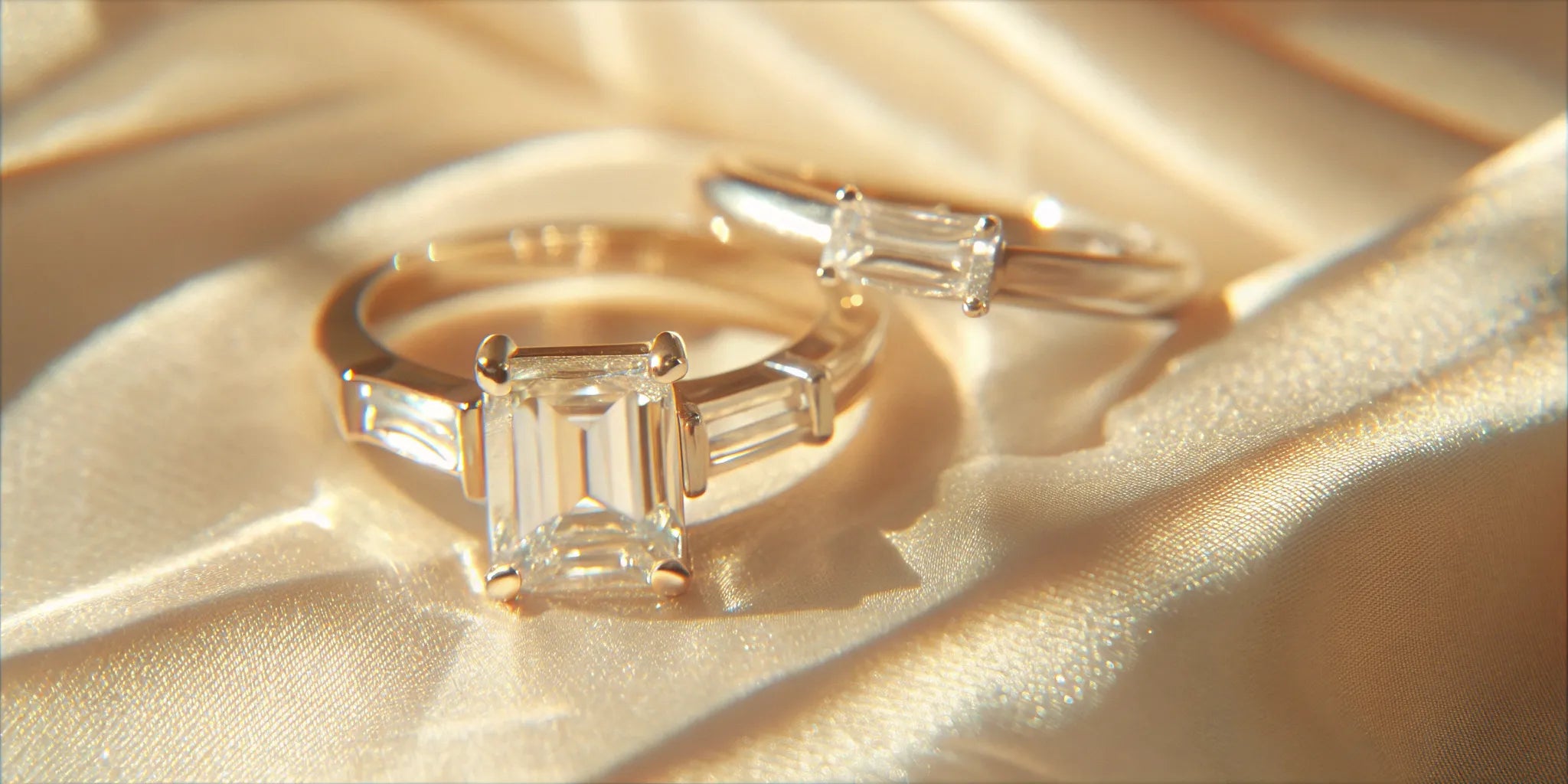
While both cuts share a rectangular shape and Art Deco heritage, their differences are in the details. The most obvious distinction is the corners: an emerald cut has cropped, beveled corners, while a baguette has sharp, 90-degree angles. An emerald cut also has significantly more facets, which gives it more depth and that signature hall-of-mirrors flash. A baguette’s fewer facets create a cleaner, more glassy appearance. Think of an emerald cut as the leading star, perfect for a solitaire ring, while baguettes often play a supporting role as elegant side stones. However, both can be used in creative ways to build a piece that feels uniquely you.
Best Ring Styles for Emerald and Baguette Diamonds
Emerald and baguette diamonds have a distinct, architectural beauty thanks to their long, linear facets. This unique structure makes them incredibly versatile, fitting beautifully into a range of settings from minimalist to ornate. Whether you prefer a timeless classic or a modern statement piece, there’s a perfect style to showcase the clean elegance of these step-cut gems. Let's look at some of the most popular designs that make these diamonds shine.
Classic Solitaire Settings
A solitaire setting is the ultimate choice for showcasing the quiet luxury of an emerald cut diamond. This classic style features a single stone, allowing its crisp, clean lines and mesmerizing "hall-of-mirrors" effect to take center stage. With no other gems to distract the eye, the focus remains entirely on the diamond's unique geometry and clarity. The elongated shape of an emerald cut in a solitaire setting also has a flattering effect, making the finger appear longer and more slender. It’s a sophisticated and timeless look that proves simplicity is often the most elegant choice for fine jewelry.
Three-Stone Ring Designs
For a look with a little more presence, a three-stone ring is a beautiful option. This design typically features a central emerald cut diamond flanked by two smaller side stones, often tapered baguettes. The baguettes act as perfect complements, their linear shape echoing the center stone while adding extra dimension and sparkle. This arrangement creates a balanced, harmonious look that feels both classic and substantial. A three-stone setting is also rich with symbolism, representing a couple's past, present, and future. It’s a meaningful design that you can make uniquely yours through our custom design process.
Art Deco and Vintage-Inspired Styles
The sharp, geometric lines of emerald and baguette cuts made them stars of the Art Deco era, and they remain a perfect fit for vintage-inspired designs today. These styles often embrace bold symmetry and intricate details, using the clean shapes of step cuts to create stunning patterns. Think of a central emerald cut diamond framed by carefully placed baguettes, milgrain edging, and other architectural elements. This style is ideal for anyone who loves a piece with history and character. It’s a nod to the glamour of the past while remaining completely timeless, resulting in a truly unique and eye-catching ring.
Halo and Bezel Set Options
If you want a more modern or secure setting, consider a halo or bezel design. A bezel setting, where a thin metal frame encircles the diamond, offers superior protection for the stone's corners and creates a sleek, contemporary profile. It’s a practical and stylish choice for everyday wear. A halo setting, on the other hand, surrounds the center stone with a frame of smaller pavé diamonds. This not only adds a brilliant layer of sparkle but also makes the central emerald or baguette cut diamond appear larger. Both options provide a beautiful frame for your diamond when you design your own ring.
How Much Do These Diamond Cuts Cost?
Let's talk about one of the most important factors in choosing a diamond: the price. While both emerald and baguette cuts offer incredible beauty, their costs can be quite different. Understanding what goes into pricing these gorgeous stones will help you find a ring that not only fits your style but also your budget. It’s not just about the carat weight; the unique characteristics of each cut play a huge role in the final price tag.
Pricing Emerald Cut Diamond Rings
Emerald cut diamonds often hit a sweet spot in terms of pricing. They are generally more expensive than baguette diamonds but can be more affordable than a round brilliant cut of the same carat weight. This is because the cutting process for an emerald shape retains more of the rough diamond. The long, elegant facets of an emerald cut are designed to showcase a diamond’s clarity and color, so a high-quality stone is essential. This focus on clarity means you’re investing in a diamond with a stunning, crystal-clear appearance, making it a centerpiece for any beautiful ring.
Pricing Baguette Cut Diamond Rings
If you love a clean, geometric look, baguette diamonds are a fantastic and often more budget-friendly choice. Their simpler, rectangular shape requires fewer facets, which makes the cutting process less complex and, in turn, lowers the price compared to emerald cuts. Baguettes are perfect as side stones that frame a larger center diamond or grouped together in a band for a chic, modern statement. Their understated elegance allows you to add significant sparkle and style to a piece without a dramatic increase in cost, making them a popular choice in custom designs.
What Affects the Price?
Beyond the cut itself, a few key factors influence the price of both emerald and baguette diamonds. Clarity is a big one. Because both are step cuts with large, open tables (the flat top surface), any internal flaws or inclusions can be more visible to the naked eye. That’s why it’s a good idea to look for diamonds with a VS (Very Slightly Included) clarity grade or higher. The diamond’s proportions also matter. A classic length-to-width ratio of about 1.5 to 1.75 creates that beautiful elongated shape. When you design your own ring, we can help you find a stone with the perfect balance of these qualities.
How to Judge Diamond Quality
When you’re choosing a diamond, it’s helpful to understand the basics of quality, often called the 4Cs: cut, color, clarity, and carat. For step cuts like emerald and baguette diamonds, these factors are especially important because their long, clean lines don’t hide imperfections the way brilliant cuts do. Instead of maximizing sparkle, these cuts are designed to showcase the diamond’s clarity and luster, creating a sophisticated, mirror-like effect. This is what gives them that distinct, icy elegance that so many people love.
Understanding what to look for will help you feel confident in your choice. A well-chosen emerald or baguette cut diamond has a unique and understated beauty that’s truly captivating. When you know how to evaluate the clarity, color, and proportions, you can find a stone that looks stunning and reflects your personal style. It’s not about finding a "perfect" diamond on paper, but about finding the one that speaks to you. Whether you’re designing a custom piece or choosing from a curated collection, paying attention to these details makes all the difference. Our team is always here to guide you through our collection of fine jewelry and help you find the perfect stone for your story.
Why Clarity Matters for Step Cuts
Clarity refers to the internal and external flaws of a diamond, known as inclusions and blemishes. With emerald and baguette cuts, clarity is critical. Because both cuts have large, flat surfaces (tables), any flaws inside the diamond can be more visible to the naked eye. Think of it like looking through a clean, open window versus one with many small panes. For this reason, it’s a good idea to choose diamonds with a VS (Very Slightly Included) clarity grade or higher to avoid noticeable imperfections. This ensures the stone has that beautiful, clear, and icy appearance that makes step cuts so desirable. When you design your own ring with us, we can source high-clarity diamonds that are perfect for these elegant styles.
Choosing the Right Diamond Color
Diamond color is graded on a scale from D (colorless) to Z (light yellow or brown). For emerald and baguette cuts, the color of the diamond can significantly affect its appearance. Since these cuts have large facets that don't produce as much fire and sparkle as brilliant cuts, they tend to show color more readily. Many people prefer a colorless or near-colorless diamond (grades D-G) for the best visual impact. A higher color grade will give your ring a crisp, bright look, especially when set in white gold or platinum. However, if you love the warmth of yellow gold, a diamond with a slightly lower color grade (H-J) can still look absolutely beautiful, as the metal’s hue will complement it perfectly.
The Importance of Cut and Proportion
For step cuts, the "cut" grade is less about sparkle and more about the stone's symmetry, polish, and proportions. The beauty of an emerald or baguette diamond lies in its clean lines and the mesmerizing "hall of mirrors" effect created by its facets. A poorly cut stone can look dull or uneven, no matter how great its color or clarity is. Look for a good balance between the diamond's width and length to ensure it looks elegant and well-proportioned. A classic length-to-width ratio for emerald cuts is about 1.5 to 1.75 times its width, creating a graceful rectangular shape. This ratio is a matter of personal preference, but paying attention to it ensures your finished ring has a balanced and beautiful silhouette.
Where to Find Your Perfect Diamond Ring
Finding the ring that feels just right is a huge part of the journey. It’s about more than just the diamond; it’s about finding a piece that tells your story. Whether you dream of designing something completely unique or want to find a trusted expert to guide you, there are plenty of paths to your perfect ring. The key is knowing what to look for in a jeweler and understanding your options, from the type of diamond to the final design. Let's walk through how you can find a ring you'll love for a lifetime.
Create a Custom Ring with Luce Jewelry
There’s something incredibly special about creating a ring that is uniquely yours. When you go the custom route, you get to be part of the creative process from start to finish. At Luce, we make it easy to design your own ring and bring your vision to life. You can choose an emerald cut center stone in either a lab-grown or natural diamond and have it set in 14K/18K gold or platinum. Our transparent pricing breaks down the cost of the setting and the center stone, so you can adjust the clarity, color, and carat to fit your style and budget perfectly. It’s your story, and your ring should reflect that.
How to Choose a Jeweler
Finding the right jeweler is as important as finding the right ring. You want someone you can trust, who listens to your ideas, and has a reputation for quality craftsmanship. Start by looking for jewelers with positive reviews and a strong local presence. A great jeweler will guide you through their collection of rings and explain your options without pressure. They should also be knowledgeable about current styles, like the trend toward full and half bezel settings for engagement rings, which offer a modern look and extra security for your diamond. Don’t be afraid to ask questions and make sure you feel comfortable with their process and expertise.
Lab-Grown vs. Natural Diamonds
One of the biggest decisions you'll make is choosing between a lab-grown and a natural diamond. The great news is, there's no wrong answer. Lab-grown and natural diamonds are chemically and optically identical; the only difference is their origin. Natural diamonds are formed deep within the earth over billions of years, while lab-grown diamonds are created in a controlled environment. Many couples are drawn to lab-grown diamonds as a sophisticated choice that aligns with their values. As a brand committed to sustainable practices, we love offering beautiful, handcrafted lab-grown options for those who prioritize luxury and responsibility. Ultimately, the choice comes down to what matters most to you.
Choosing the Right Cut for You
Deciding between an emerald and a baguette cut diamond is a personal choice that goes beyond simple aesthetics. It’s about finding the stone that reflects your style, fits your lifestyle, and feels uniquely you. Both cuts offer a sophisticated, clean look, but their subtle differences can help guide you to the perfect ring. Think about how you'll wear the ring every day, the overall design you have in mind, and what you want your jewelry to say about you.
Consider Durability for Daily Wear
Your daily routine plays a big role in choosing the right diamond. Because of their long, rectangular shape and sharp corners, larger baguette cuts can be more prone to chipping than other styles. If you have a very active lifestyle or work with your hands, a more protected setting, like a bezel or channel setting, is a great choice for either cut. Emerald cuts are generally quite durable, but their large, open table means any inclusions are more visible. No matter which you choose, knowing your ring is well-made gives you peace of mind. Should anything happen, our expert repairs can restore your piece beautifully.
Match Your Setting and Style
The beauty of a diamond is amplified by its setting. Emerald cuts are incredibly versatile and look stunning in everything from classic solitaire engagement rings to modern three-stone designs. We're seeing many people choose bezel or half-bezel settings, which wrap the diamond in metal for a sleek, contemporary look that also adds protection. Baguettes are often used as side stones to complement a larger center diamond, creating a seamless, architectural feel. When you design your own ring, you can experiment with different combinations to create a piece that perfectly matches your vision.
Find a Cut that Fits Your Personality
Ultimately, your ring should be a reflection of you. Emerald cut diamonds are often chosen as the main stone for their commanding presence and refined, "hall-of-mirrors" elegance. This cut has an elongating effect on the finger, offering a look of quiet luxury and sophisticated grace that many people love for its clean lines. Baguette cuts, while beautiful on their own, often shine as accents that add structure and sparkle. They speak to a minimalist, understated style. Exploring different rings can help you discover which cut truly captures your personal style.
How to Care for Your Diamond Ring
Your diamond ring is more than just a beautiful accessory; it’s a symbol of a special moment and a piece you’ll want to cherish forever. Keeping it looking its best doesn't require a lot of effort, just a little consistency. Because emerald and baguette cuts have long, open facets, they can show smudges and dirt more easily than brilliant cuts. A simple care routine will ensure your diamond maintains its incredible sparkle and fire for years to come. Think of it as a small ritual to honor a piece you love.
Cleaning Your Ring at Home
You don’t need fancy equipment to keep your ring sparkling. A gentle at-home cleaning once or twice a month can make a huge difference. The easiest method involves a simple solution of warm water and a few drops of mild dish soap. Let your ring soak for about 20 to 30 minutes to loosen any buildup from lotions, soaps, or daily life. Afterward, use a new, soft-bristled baby toothbrush to gently scrub around the stone and setting, getting into all the little crevices. Rinse it under warm running water and pat it dry with a soft, lint-free cloth. This simple process will keep your rings looking as brilliant as the day you got them.
When to Get Professional Care
While at-home cleanings are great for maintenance, think of a professional cleaning as a spa day for your ring. We recommend bringing your ring to a trusted jeweler at least once a year. Jewelers use professional-grade equipment, like ultrasonic cleaners, that use high-frequency sound waves to safely remove stubborn dirt and grime from deep within the setting. More importantly, this visit is a chance for a full inspection. A professional can check for loose prongs or any signs of wear and tear before they become serious problems. This preventative care is the best way to ensure your diamond stays secure and your ring remains in perfect condition. Our team is always here to help with professional cleaning and repairs.
Protect Your Ring for a Lifetime
The best way to keep your ring safe is to know when to take it off. We suggest removing your ring during activities that could expose it to harsh chemicals or impact. This includes swimming in a chlorinated pool, cleaning with bleach, gardening, or lifting weights at the gym. When you’re not wearing it, store your ring in a safe place, like a fabric-lined jewelry box or a soft pouch. Keeping it separate from other jewelry will prevent other pieces from scratching the metal or the diamond. Taking these small precautions ensures that the beautiful ring you designed or chose will remain a cherished heirloom for a lifetime.
Frequently Asked Questions
Which cut sparkles more, emerald or baguette? Neither of these cuts is designed for the fiery sparkle you see in a round brilliant diamond. Instead, they offer a more subtle, elegant shimmer. An emerald cut, with its many long facets, creates a captivating "hall of mirrors" effect with flashes of light. A baguette cut has fewer facets, giving it a clean, glassy luster. If you're looking for more flash and depth, the emerald cut is the winner between the two.
Are these diamond cuts a good choice for an engagement ring I'll wear every day? Absolutely. Both emerald and baguette cuts are beautiful and durable enough for daily wear, especially when placed in a secure setting. Because a baguette's sharp corners can be vulnerable, a bezel or channel setting is a great way to protect it. An emerald cut's cropped corners make it quite sturdy, and a classic prong or modern bezel setting works wonderfully to keep it safe while you wear it.
Why do I need a higher clarity grade for an emerald or baguette diamond? Think of these step cuts as having a large, clear window right on top. Their long, open facets don't hide internal characteristics, called inclusions, the way brilliant cuts do. To get that stunning, crystal-clear look that makes these cuts so special, it's best to choose a diamond with high clarity. This ensures there are no visible spots to distract from the stone's clean, geometric beauty.
Can I use baguette diamonds as the main stone in a ring? Yes, and it creates a wonderfully modern and minimalist look. While baguettes are often used as elegant side stones, setting them side-by-side in an eternity band or a three-stone design makes a chic and sophisticated statement. This style, often called a baguette bar setting, is perfect for someone who loves clean lines and understated glamour.
Is there a visual difference between a lab-grown and a natural emerald cut diamond? No, there is no visual difference. Lab-grown and natural diamonds are identical in their chemical, physical, and optical properties, meaning they look exactly the same and have the same brilliance and hardness. The only distinction is their origin. The choice between them simply comes down to personal preference, budget, and what values are most important to you.