Engagement Ring Stone Shapes: How They Wear | LUCE
Choosing an engagement ring starts with more than a favorite photo. The outline you notice from above affects how the stone reads across the finger, while its facet arrangement influences the way light moves through it. That is why two stones with a similar silhouette can create distinctly different impressions.
Talk with LUCE about your engagement ring stone shape and take the next step with a trusted jewelry team.
Engagement ring stone shapes describe a gem's visible outline, such as round, oval, pear, marquise, cushion, or heart, while cut style describes how its facets are arranged and angled. Comparing both helps you weigh proportion, sparkle, orientation, and personal style rather than choosing by name alone. GIA explains the distinction between shape and cut style.
Whether you are researching from home or planning to view rings in West Palm Beach, start by understanding what each silhouette communicates on the hand. From classic symmetry to elongated profiles and clean step-cut lines, the differences become easier to evaluate once the basic vocabulary is clear.
What Are Engagement Ring Stone Shapes?
When people compare engagement ring stone shapes, they are usually comparing the outline a stone creates on the hand. Shape describes the stone's silhouette when viewed from above: round, oval, pear, marquise, cushion, heart, or a square outline. It is the first visual impression, but it is not the whole story. A stone's proportions, orientation, and setting also influence how that outline reads in a finished ring.
Shape and cut style are related, but they mean different things. Cut style describes how a gem's facets, or precisely angled flat surfaces, are arranged. That arrangement influences how light reflects and refracts through the stone, affecting its brightness, fire, sparkle, and overall visual character. The Gemological Institute of America explains that two stones with the same shape can look notably different when their cut styles differ. GIA's guide to diamond shapes offers a useful technical overview.
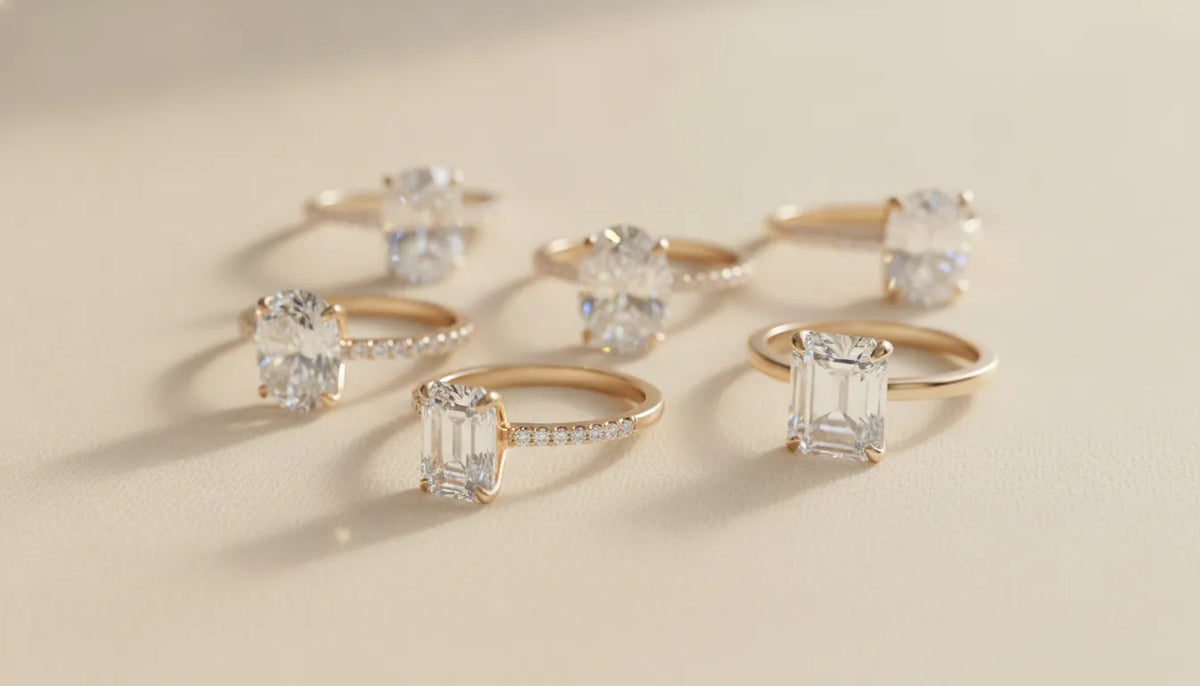
Facet arrangements generally fall into recognizable visual families. Brilliant styles are designed around facets that return light in a lively pattern; round brilliant, pear, and princess are examples GIA identifies in this category. Step cuts, including emerald and Asscher, use parallel, linear facets that create a more architectural appearance. Oval, pear, marquise, and heart shapes can also be paired with different facet arrangements, so the same silhouette may feel bright and animated in one stone or more understated in another.
This distinction gives you a better starting point than choosing a shape by name alone. First notice the silhouette you naturally respond to. Then consider the facet pattern, proportions, and the way the stone will be oriented and set. As you compare options, look at both the outline from a distance and the way the stone handles light up close. The right choice is the combination that feels most like your style, not a universal ranking of shapes.
How Engagement Ring Stone Shapes Compare on the Hand
Shape describes a stone's outline when viewed from above, while cut style describes the arrangement and angles of its facets. Those are separate from the setting, which is the structure that holds the stone, such as a solitaire, halo, or three-stone design. The distinction matters because two stones with a similar outline can look different when their facet patterns differ. The GIA guide to diamond shapes explains the difference clearly.
| Shape | How it reads | Cut or proportion note |
|---|---|---|
| Round | Balanced and symmetrical, with a compact outline that suits many setting styles. | A round brilliant uses a defined facet arrangement, typically 57 or 58 facets, to create brightness, fire, and scintillation. |
| Oval | Softly elongated, giving the center stone a longer visual axis without pointed ends. | Oval stones can use different facet arrangements, so compare the actual stone rather than the outline alone. |
| Emerald | Elongated and rectangular, with a clean, architectural presence. | It is a step cut, so the broad facets create a different visual effect from a brilliant cut. Explore this emerald cut diamond shape guide for a deeper look. |
| Pear | A tapered teardrop silhouette that combines a rounded end with a pointed tip. | Its orientation changes the way the point and curve frame the finger. |
| Marquise | Long and narrow, with two pointed ends that create a distinctive directional outline. | Its length and width proportions strongly influence how much of the finger it covers. |
| Cushion | Square or rectangular with softened corners, combining structure with a gentler outline. | Compare length-to-width proportions because cushion shapes can vary substantially. |
| Princess | Square and crisp, bringing a geometric look to the center of the ring. | It is commonly associated with brilliant-cut facet arrangements, while the shape remains the outline. |
| Asscher | Square and distinctive, with a structured appearance that feels especially tailored. | Like emerald, Asscher is a step cut, so its facet style differs from a round brilliant. |
| Heart | A symbolic outline with a cleft at the top and a pointed base. | Its proportions and orientation affect how clearly the heart reads when worn. |
Use the table as a starting point, then view each stone in the setting you are considering. A shape establishes the silhouette, but the setting changes its height, surrounding detail, and relationship to the band.
Which Shapes Create an Elongated Look?
Oval, marquise, pear, and rectangular silhouettes share a longer north-south axis. Set from the base of the finger toward the fingertip, that axis can draw the eye along the hand and accentuate the impression of length. It is a proportion effect, not a universal rule about what looks best. Finger length, width, knuckle shape, and the scale of the setting all influence the result.
Oval, marquise, and pear silhouettes
An oval offers a continuous curve with softer ends, while a marquise creates a more pointed profile and a pear combines a rounded end with a taper. Each can provide meaningful coverage along the finger without the sharper geometry of a rectangular outline. The exact effect depends on the stone's length-to-width ratio and how much of the shank or surrounding setting remains visible.
A rectangular or emerald silhouette brings the same lengthwise structure with straighter edges. Its clean outline can read as architectural, especially when the setting leaves the perimeter visible. If you want to explore that shape in greater depth, see this guide to the emerald cut diamond shape.
North-south or east-west?
North-south is the traditional lengthwise orientation, but an elongated stone does not have to follow the finger. Turning an oval, emerald, marquise, or another longer-than-wide shape east-west can create a wider visual footprint across the finger. Gem Breakfast notes that this orientation may provide more finger coverage and make a ring seem somewhat larger without changing its carat weight: read the east-west engagement ring guide.
That sideways placement can be a distinctive choice for someone who values a modern, less expected proportion. Compare both orientations on your own hand rather than relying on a photograph. A wider stone may also deemphasize finger width, but comfort and personal style should remain part of the decision. The best shape is the one whose proportions, orientation, and setting feel natural when you move and look at your hand from different angles.
Want help comparing silhouettes? Connect with LUCE's jewelry team to discuss the shapes and proportions you are considering.
How Settings Change the Way a Stone Shape Wears
A stone's outline is only one part of the ring's visual story. The setting determines how much of that outline remains visible, what frames it, and how the center relates to the band. The same oval, cushion, or pear can feel quiet and open in one design, then more detailed and substantial in another.
Let the setting set the emphasis
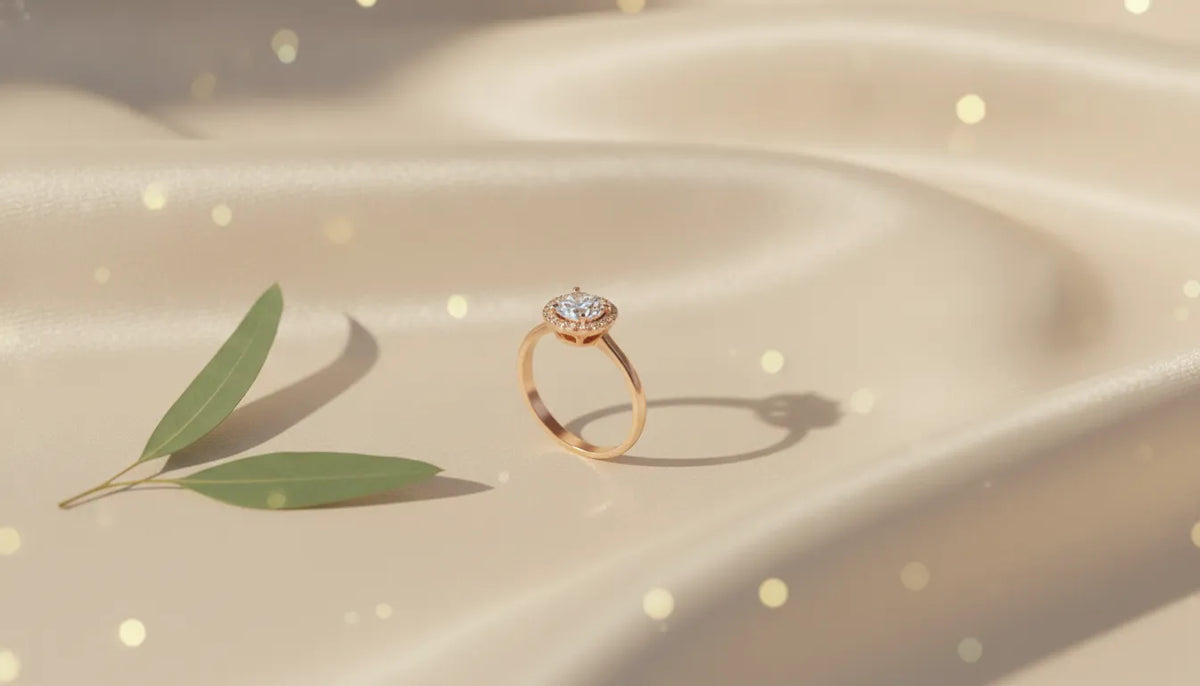
A solitaire uses one center stone in a prong setting, keeping attention on its silhouette and allowing the shape to lead. A halo places smaller stones around the center, creating a defined border that can make the outline read as more substantial. With a three-stone design, a larger center is flanked by two smaller stones, so the chosen shape becomes part of a wider horizontal composition. Explore this three-stone engagement ring design when you want to consider how the center and side stones work together.
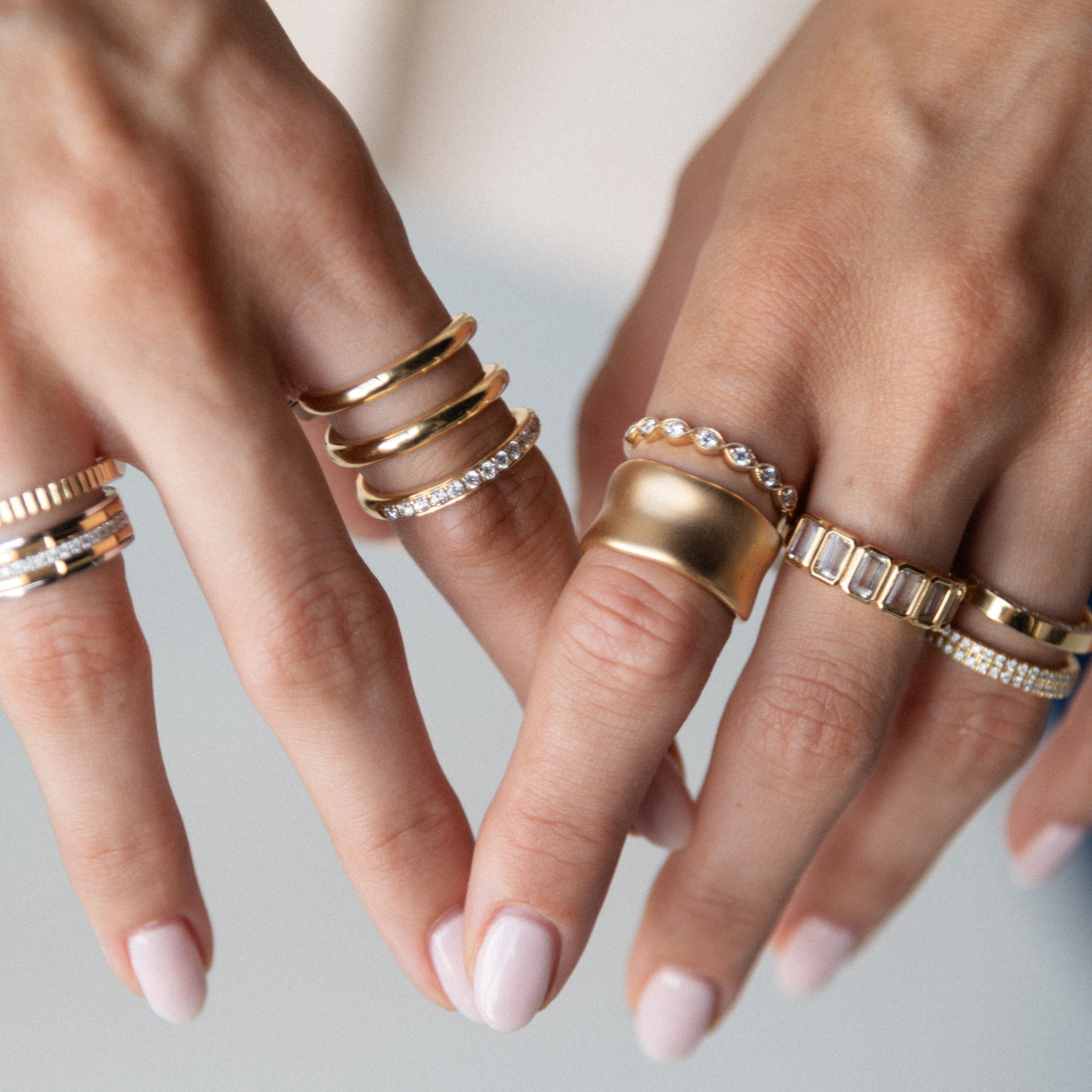
Pave changes the relationship in a different way. Small stones along the band add detail beneath the center, drawing the eye from the shank toward the main shape. This can make a minimal silhouette feel more embellished without changing the center stone itself. If you are considering a non-diamond center, the surrounding setting can also help frame its color and outline. LUCE's guide to colored engagement ring stones offers a useful next layer of comparison.
Check height before choosing a wedding band
When stacking a wedding band, setting height usually matters more than whether an elongated stone faces north-south or east-west. A low-profile setting may need a curved or contour band to sit neatly around the center, while a higher or stackable setting may leave room for a straighter band. The practical fit depends on the actual gallery and basket, so view the engagement ring and band together rather than judging the shape alone. An east-west orientation can change the finger coverage of an elongated stone, but it does not automatically determine how the bands will stack. See the source discussion of setting height for that distinction.
How Should Band Width and Comfort Guide Your Choice?
The center stone is only part of how an engagement ring feels and reads on the hand. Band width, shank shape, and the amount of visual detail around the stone can change the ring's proportion, balance, and ease of movement. A shape that looks compelling on its own should still feel natural when you close your hand, type, or move through an ordinary day.
As a starting point, GIA notes that a simple design can be a helpful choice for shorter fingers because a more complex arrangement may require more visual space and overwhelm the finger. That is guidance, not a universal rule. Finger length, width, knuckle shape, personal style, and the scale of the center stone all affect the result. A streamlined setting may feel right to one wearer, while another may prefer more surrounding detail and a stronger visual presence.
Band width deserves the same practical attention. A medium-to-wide band can create a balanced proportion on a larger finger, but it should not feel tight. GIA also cautions that some shanks can feel constricting and make ordinary movement uncomfortable. The best width is therefore not just a visual decision. It must leave enough room for the finger to flex and for the ring to sit securely without pinching.
When comparing engagement ring stone shapes, try similar silhouettes on bands with different widths. Notice whether an elongated stone feels balanced north to south, whether a wider shape provides the coverage you prefer, and whether the setting shifts as you move. Look at the ring from above and from the side, then wear it for several minutes. That small fitting exercise can reveal more than a photograph, helping you choose a proportion that feels personal rather than following a fixed formula.
GIA's guidance on engagement ring styles and finger proportions offers useful starting points for the conversation, but your comfort and preferences should have the final say.
How to Choose Your Shape in West Palm Beach
Once you understand how different silhouettes read on the hand, compare them in a way that reflects your lifestyle and personal taste. A focused visit can turn an abstract shortlist into a confident design direction.
- Start with three shape families. Choose one classic, one elongated, and one less expected option. This gives you a useful visual range without asking you to compare every possibility at once. Notice which outlines feel most like your style, rather than deciding from a carat-weight description alone.
- View the stones in person. LUCE supports online research as well as in-person jewelry viewing, so West Palm Beach shoppers can visit the showroom in the NORA District and compare silhouettes on the hand. Look at each stone from several angles and in different light. The experience can reveal differences in presence and proportion that are difficult to judge from a screen.
- Check proportion and comfort together. Pay attention to how much of the finger each shape covers, how the band sits, and whether the setting feels comfortable when you move your hand. Try the ring with the kind of wedding band you may eventually wear. There is no single shape that works for everyone, so treat these observations as personal guidance rather than universal rules.
- Decide what should be customized. If your preferred silhouette is clear but the setting or band is not, move into the design details one choice at a time. LUCE's design your own engagement ring program can be a natural next step. You can also explore this guide to custom engagement ring design before your appointment.
Ready to compare your shortlist? Contact LUCE's jewelry team to plan your next step.
Frequently Asked Questions
What are the most popular engagement ring stone shapes?
Round, oval, pear, marquise, cushion, princess, emerald, Asscher, and heart shapes are all established choices. The right starting point is the silhouette you enjoy seeing on your hand, then the facet style, setting, and proportions that support it. Popularity alone does not determine how a ring will wear.
What is the difference between a stone shape and its cut?
Shape is the outline or silhouette viewed from above, while cut style describes how the facets are arranged and angled. Two stones with the same outline can look noticeably different when their facet patterns differ. GIA explains the distinction between diamond shape and cut style.
Which shapes can make a finger look longer?
Oval, marquise, pear, and rectangular silhouettes have a north-south axis that can emphasize visual length. That effect depends on the stone's proportions, orientation, band, and setting, so treat it as a styling consideration rather than a universal rule. Trying several shapes on your own hand gives the clearest comparison.
How should I choose a shape for comfort and everyday wear?
Begin with comfort, fit, and movement, then evaluate the shape and setting together. Check whether the shank feels constricting, whether the ring stays oriented as you move, and whether the setting works with a future wedding band. A lower-profile or simpler design may feel easier for some wearers, but personal fit matters more than a fixed rule.
Can I see different stone shapes before choosing a ring?
Yes. Compare multiple silhouettes in person or through a guided design appointment, noting how each looks from the top and side and how it pairs with your preferred band. West Palm Beach shoppers can visit LUCE in the NORA District, while online researchers can begin with the available design guidance before narrowing their choice.
Ready to Explore Your Engagement Ring Shape?
Seeing how different silhouettes look on your hand can make the decision feel more personal and practical. If you are comparing proportions, settings, or orientations, LUCE can help you narrow the details that fit your style and plans. Contact LUCE through the verified contact page to discuss engagement ring stone shapes and your next steps.