How to Care for Fine Jewelry: A Practical Guide
A single loose prong can lead to the total loss of a family heirloom. Regular checks and careful storage are the only ways to prevent lasting damage to your fine jewelry. Learning these basic care steps ensures your treasures stay secure and bright for years.
Ask LUCE about professional jewelry repair and restoration.
Learning how to care for fine jewelry involves a mix of smart daily habits, safe home cleaning, and regular expert help. You should remove your solid gold pieces before doing chores, sleeping, or swimming to prevent snags and chemical damage. To maintain sparkle at home, use a mild dish soap solution and a soft toothbrush to gently clear away dirt. For the best results, store each piece in its own fabric-lined pouch so they do not scratch one another. The Gemological Institute of America notes that different metals and gems often need certain cleaning ways to keep them safe. Expert checks twice a year also help find loose stones or worn prongs before they fail.
How to care for fine jewelry every day
Fine jewelry is a part of your daily life. It tells your story and marks your wins. At LUCE, we craft pieces to be future heirlooms. But even solid gold and diamonds need care to stay bright. Learning how to care for fine jewelry every day is the best way to keep your pieces safe. Small shifts in your routine can stop wear before it starts. This helps your jewelry last for many years.
Start your daily jewelry routine
A good routine helps you avoid many common risks. One of the best rules is to put your jewelry on last and take it off first. This means you should get dressed and use all your beauty products before you reach for your gems. Hair spray, perfume, and lotion can dull the surface of your gold and stones. Some sprays may even lead to a film that hides the natural fire of a diamond.
Taking your jewelry off as soon as you get home is also a smart move. This stops snags on clothing or seats. It also keeps your pieces away from household grime. By making this a habit, you make sure that your jewelry stays in a safe spot. This simple step keeps your gems clean and ready for your next trip out. You should try to keep a small bowl in your room to store your pieces at the end of the day.
Know when to take it off
There are times when it is best to leave your jewelry in a dry, cool place. High impact tasks can bend metal or loosen stones. You should remove your rings and bracelets before you work out or go to the gym. Heavy lifting can put too much stress on a gold band. Even everyday wear habits for gold chains can lead to stretching if they catch on things during a fast move.
Harsh liquids are a major threat to fine jewelry. Chlorine in pools and salt in the sea can damage the look of your metal. As per experts at the Gemological Institute of America, you should also avoid bleach and ammonia during chores. These liquids can dull the polish of your favorite pieces. It is also wise to skip wearing jewelry while you sleep. This stops chains from kinking and prevents prongs from catching on your bed sheets.
Build small safety habits
Small habits act like a shield for your jewelry. When you take a piece off, check it for loose stones or worn prongs. If you notice a rattle, it may be time for a check-up. We suggest getting a pro to look at your pieces once a year. This helps find small issues before a stone falls out. Keeping your jewelry in a soft, lined box is another way to help. It keeps pieces from rubbing and scratching each other.
Working on maintaining your gold jewelry's shine makes a big change. You can use a soft cloth to wipe away oil and dust after a long day. This keeps the luster high without using any water. These daily steps ensure that your fine jewelry stays as bright as the day you first put it on. By following these tips, you protect the value and beauty of your collection for the future.
How should you clean fine jewelry at home?
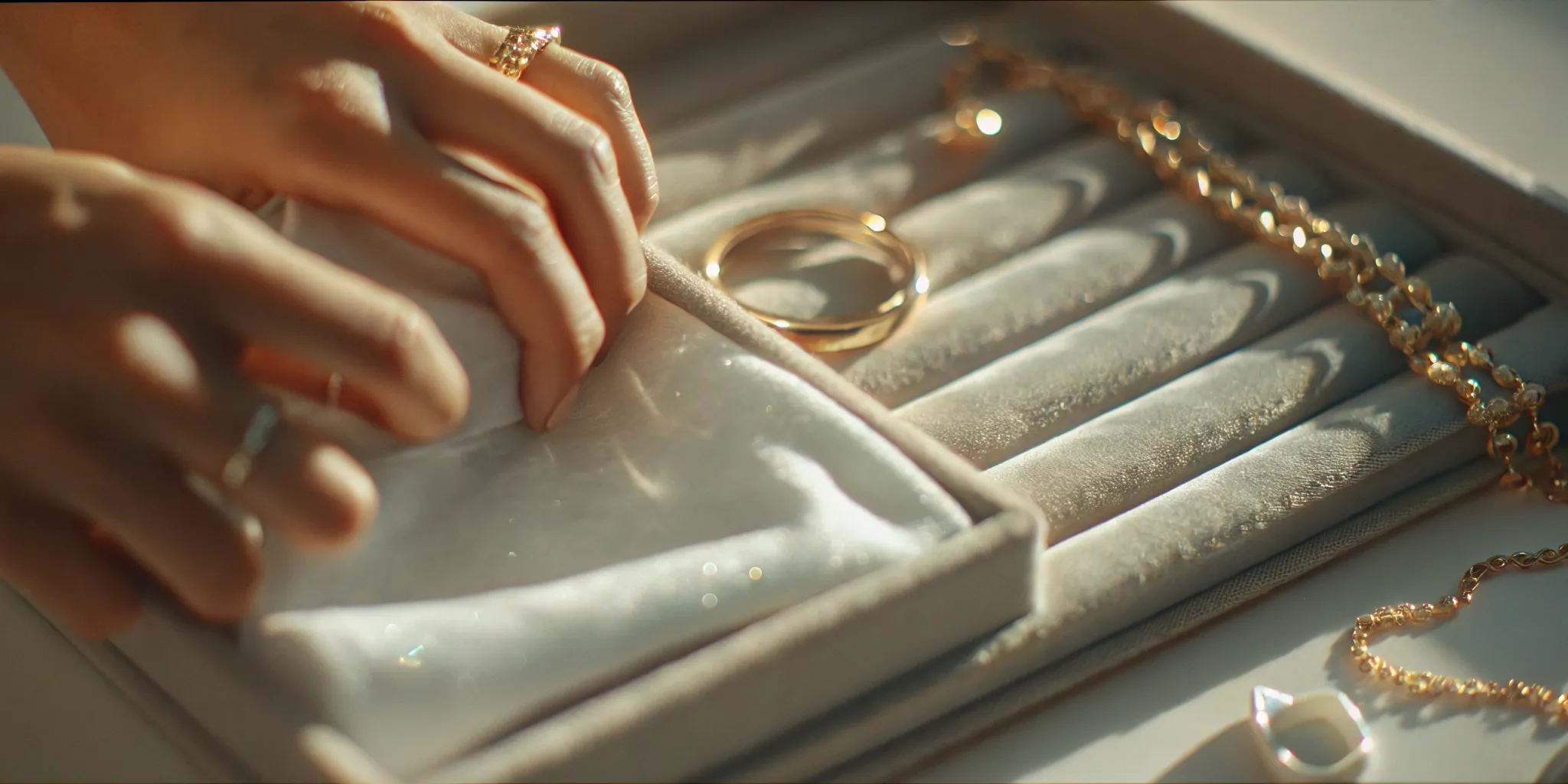
Keeping your fine jewelry bright and clean is a key part of making sure it lasts for years. While how to care for fine jewelry can seem hard, most items only need a simple touch to look new again. Regular care at home helps keep the sparkle in your diamonds and gold between visits to our shop. At LUCE, we want your jewelry to stay as fine as the day you first wore it.
Before you start, check each piece for loose stones or bent prongs. If you see a problem, do not try to clean the item yourself. Moving a loose gem can cause it to fall out of its setting. In these cases, it is best to seek professional jewelry repair services to keep your piece safe. Once you know the setting is firm, you can move forward with a gentle wash at home.
The best way to wash gold and gems
The safest way to clean most fine jewelry uses tools you likely have in your kitchen. A mild soap and warm water bath is the standard for gold, platinum, and hard gems like diamonds. This method is useful because it cuts through skin oils and dust without hurting the metal. Using soft tools prevents scratches while helping you reach the tight spots behind your stones.
For items like necklaces, keeping your gold jewelry's shine often just needs a ten-minute soak. This loosens dirt that builds up during daily wear. Avoid using hard brushes or rough cloths, as these can dull the polish on soft metals. Stick to a new, soft-bristle toothbrush to get the job done right.
Steps for a safe home clean
- Block your sink drain or use a bowl to make sure your jewelry cannot fall down the pipes.
- Mix a few drops of mild dish soap into a bowl of warm water and stir until it forms a light sudsy mix.
- Place your jewelry in the water and let it soak for about ten to twenty minutes to loosen dirt and oils.
- Gently scrub the metal and stones with a very soft-bristle toothbrush, focusing on the spaces under the gems.
- Rinse the piece in a bowl of clean, warm water to remove all soap film and loose dirt.
- Pat the jewelry dry with a soft, lint-free cloth or let it air dry fully before you put it away.
Gems to avoid and machine risks
Not every stone can handle a soak in water. Organic and porous gems like pearls, opals, and turquoise need a much lighter touch. These stones can absorb liquids or soaps, which may change their color or cause them to crack. According to the Gemological Institute of America, you should never show porous gems to harsh chemicals or ammonia-based cleaners.
For these fine items, simply wipe them with a damp, soft cloth after each wear. Never dip pearls in water, as this can weaken the silk thread that holds them together. If your piece is an antique or has a glued setting, water may dissolve the bond. Use care and stick to dry cleaning methods for any jewelry that feels fragile or shows signs of age.
You might see home ultrasonic cleaners for sale, but use them with great care. These machines use sound waves to shake dirt loose, but the shakes can also loosen gems or crack stones with marks inside. While they work well for hard-to-reach spots, they are not safe for every piece in your box. The GIA warns that ultrasonic cleaners can damage many types of gemstones if used the wrong way.
If you are unsure if your jewelry is safe for a machine, it is better to skip it. Our team at LUCE can provide a deep, professional clean that protects your jewelry's value. We check the health of your settings while we work, giving you peace of mind. Keeping your fine jewelry clean is a team effort between your home care and our expert shop services.
Fine jewelry care by metal and gemstone
To learn how to care for fine jewelry, you must first know what is in each piece. Every metal and stone reacts in its own way to heat, light, and soap. A diamond is very tough, but a pearl is soft and can break easily. You should treat your items with a light touch to keep them bright for a long time.
Caring for precious metals
Gold and platinum are the top choices for high-end rings and chains. Gold is a soft metal that can scratch if it rubs on other items. To keep your pieces safe, store them in soft cloth bags. When you clean them at home, use warm water and a few drops of mild dish soap.
Use a soft brush to reach small spots, but do not scrub too hard. For maintaining your gold jewelry's shine, dry each piece with a clean cloth after you rinse it. Platinum is stronger but can get a dull look over time. If you want the shine back, a pro jeweler can polish it for you.
Cleaning diamonds and hard stones
Diamonds are known for their strength, but they still need to be cleaned to stay bright. Skin oils and dust can build up on the back of a stone and block the light. You can clean most diamonds with a mix of water and a small amount of ammonia. A mild ammonia solution is safe for most clear stones.
Use a brush with soft hairs to clear out dirt from under the prongs. Some people use machines that use sound waves to get dirt out of tiny gaps. But these can loosen stones or harm gems with cracks. Keeping your gems clean helps them catch the light and stay in place.
Special care for fragile stones
Soft gems like pearls, opals, and emeralds need a very gentle hand. Pearls are porous and can be hurt by hairspray or makeup. You should put your pearls on last when you get ready. After you take them off, wipe them with a damp, soft cloth to remove oils.
Never soak pearls in water or put them in a machine. Emeralds and opals are also quite brittle. Emeralds often have oil inside to hide tiny cracks. Harsh soaps or heat can strip this oil and make the stone look dull.
Opals hold water, so they can crack if they get too dry. Keep these stones away from direct sunlight for long spans of time. Seeking professional jewelry repair and restoration is the best path if a stone looks cloudy.
| Material | Safe Cleaning Method | Main Risk Factor | Best Storage Step |
|---|---|---|---|
| Gold | Warm water and mild soap | Scratches and dents | Soft fabric pouch |
| Platinum | Dish soap or pro polish | Surface dulling | Separate box slot |
| Diamonds | Material-safe care confirmed by a jeweler | Oil and grease build-up | Check prongs often |
| Pearls | Damp, soft cloth only | Chemicals and heat | Flat in a soft tray |
| Emeralds | Room-temp water only | Brittle cracks | Avoid ultrasonic waves |
| Opals | Mild soap and water | Drying out or heat | Keep in cool spot |
Every piece of jewelry tells a story, and keeping it clean helps that story shine. Home care is great for weekly upkeep, but a yearly check with a jeweler is wise. They can look for loose stones or worn prongs that you might miss. If you are in doubt, just use a soft cloth and cool water.
What is the best way to store fine jewelry?
Keeping your fine jewelry safe starts with how you put it away at night. Most people just drop their rings on a night stand or keep them all in one bowl. But this can lead to deep scratches and knotted chains. When pieces rub against each other, the hard gems can mar soft gold. To learn how to care for fine jewelry well, you must have a plan for where each piece lives. Good storage turns your jewelry from items you wear into future heirlooms that stay in top shape for many years.
Use separate spots for every piece
The best way to stop damage is to give each item its own space. You should use a box lined with soft cloth that has many small slots. This stops your rings from hitting your earrings. If you do not have a big box, small cloth bags work well too. These soft wraps keep pieces from rubbing. This can avoid damage and other harm to the metal over time. It is a simple way to protect the value of your set.
For chains and necklaces, tangles are the biggest risk. When a thin gold chain gets a knot, it can stretch or even snap when you try to fix it. To avoid this, hang your necklaces or lay them flat in a long tray. Always close the clasp before you put a chain away. This small step keeps the links from looping into a mess. It also makes it easier to pick out what you want to wear each morning without stress.
Keep jewelry away from light and damp air
Where you keep your jewelry box matters as much as the box itself. You should find a spot that is dry, cool, and dark. Too much heat or direct sun can fade some gems or hurt how they look. Also, high moisture in the air can make some metals lose their shine faster. This is why you should pick a place with a steady heat.
Do not store your fine pieces in the bathroom. The steam from your shower creates a wet area that is bad for gold and silver. A closet or a heavy dresser in your bedroom is usually the best choice. Keeping your pieces in a steady spot helps maintain the proper care for delicate diamond bracelets and other fine items you love. It prevents the metal from dulling and keeps the gems bright.
Make a list of what you own
A good storage system also helps you keep track of your pieces. It is smart to keep a full list of all your jewelry. Take a photo of each item and write down when you bought it. This list is very helpful for insurance if you ever lose a piece. It also reminds you of what you have so you can wear and enjoy every item. You can keep this list in a safe spot or on your phone.
When you travel, do not just toss your jewelry into a bag. Use a travel case made for jewelry. These cases have tabs for earrings and rolls for rings to keep them tight and safe. Taking these steps ensures your jewelry stays fine. It protects the items and keeps your jewelry ready for the next person in your family to wear. This careful habit keeps your jewelry looking new for a long time.
When does fine jewelry need professional care?
Expert care is a key part of how to care for fine jewelry. While home cleaning keeps your pieces bright, it cannot replace a pro. A skilled jeweler can find small flaws before they grow into big risks. They check for loose parts and thin spots that you might not see. Regular visits to a shop keep your pieces safe and pretty for a long time. This help ensures your items stay in top shape as you wear them.
Signs your jewelry needs an expert
Daily wear can slowly weaken your best items. You should look for small signs that show it is time for a pro check. If you hear a rattle when you move a ring, a stone might be loose. Snagging on your clothes is another clear sign. This often means a metal prong has bent or moved. Worn clasps on a chain and stretched links on a bracelet also need fast help. Experts suggest using professional jewelry repair services when prongs are loose or the metal shows heavy wear.
You should have your pieces checked after a hard bump. A sharp hit can shift a gem or crack the metal. Expert checks and cleanings ensure settings stay strong and stones stay in place. Catching these issues early helps you avoid the loss of a rare gem. It is much better to fix a prong than to lose a diamond. Most pros suggest a check-up once or twice a year. But pieces you wear every day may need more care than those you keep in a box. Regular checks give you peace of mind that your jewelry is safe.
Why home cleaning has limits
Cleaning at home is good for a quick shine, but it has limits. Some dirt hides in hard spots behind the gems. A simple brush cannot always reach these tight gaps. Pros use tools like ultrasonic cleaners to help. These tools use high-frequency sound waves in a liquid to pull dirt from deep cracks. They create heat and pressure to remove grime that soap alone will not touch. This is the best way to get a deep clean for most hard stones.
But these tools are not safe for every gem. Fast shakes can harm soft stones like pearls or opal. An expert knows which pieces can take the heat and which need a light touch. Using the wrong tool at home could crack a stone or ruin a setting. Pros also have the right soaps and cloths to buff out small marks. They can bring back the glow of gold without wearing down the metal. This care helps keep your items looking new for years. It protects the fine details that make your jewelry special.
The value of restoration and repair
Sometimes, simple cleaning is not enough to fix a piece. Old or worn jewelry may need more work to look its best. This is where professional jewelry repair and restoration can help. Fixing a piece can take a dull item and make it look new again. This work often involves fixing thin bands or replacing worn tips. It can also include resetting stones that have shifted over time. These repairs keep your jewelry strong enough for daily wear.
Working with an expert helps your jewelry last. It ensures your pieces can be passed down as family gifts. Expert care can restore your jewelry to its first state and prolong its beauty. Investing in this help now protects the value of your gems for the future. It is a smart way to honor the past of your most prized items. Regular care keeps your jewelry ready to wear and enjoy every day. Your jewelry will look as good as the day you first bought it.
A simple fine jewelry care schedule
Keeping the shine of your pieces does not need hours of work. Instead, a simple plan helps you spot small issues before they become big problems. Knowing how to care for fine jewelry makes sure your items stay in a good state for years. This active way of working turns everyday luxury into a future heirloom that lasts through many families.Weekly checks for daily wear
If you wear a piece every day, it needs a quick look once a week. Check for dirt behind gems or in the small gaps of a gold chain. This is also the best time to look for loose stones or bent prongs. If a ring snags on your clothes or a stone seems to rattle, it may need professional jewelry repair services to keep it safe. Daily wear puts stress on metal and stone settings. By looking at your jewelry often, you can catch wear and tear early. This steady habit is the first step in a good care plan. It keeps your pieces looking their best and helps prevent the loss of precious gems.Monthly gentle cleaning at home
A monthly cleaning helps remove oils, skin creams, and dust that dull the shine of your jewelry. For most gold and diamond pieces, you can use a mild dish soap and warm water mix. It is safe to clean most diamond jewelry with this gentle method. Use a soft, clean toothbrush that you keep only for your jewelry. Be very light with your touch so you do not move any stones in their mounts. When you clean your jewelry near a sink, always use a drain plug or a mesh screen. This simple step stops your pieces from falling down the pipe. After a quick soak and a light brush, rinse the piece and pat it dry with a lint-free cloth. Note that soft gems like pearls or turquoise need special care and should stay away from harsh soaps or deep soaking.Annual expert checks
Even with great home care, your jewelry needs an expert eye once or twice a year. A jeweler can use tools like a loupe to find tiny cracks or worn parts that you cannot see. They may also use an ultrasonic machine to reach dirt in very tight spots. These professional jewelry repair and restoration visits keep your pieces secure and bright. Fixing a worn prong or a loose clasp is a key part of sustainable jewelry care. Choosing to fix a piece instead of buying a new one saves raw goods and honors the history of the item. This care plan helps you enjoy your jewelry today while keeping it ready for the next person who will own it.Frequently asked questions about fine jewelry care
Can I clean all fine jewelry with soap and water?
No. A mild soap-and-water method may suit some durable pieces, but it is not safe for every gemstone, finish, or setting. Pearls, opals, emeralds, porous gems, antique pieces, and jewelry with glued elements may need different care. Ask a jeweler before cleaning a piece when you are unsure of its materials or construction.
Can I wear fine jewelry in the shower or pool?
It is best to remove fine jewelry before showering, swimming, or entering a hot tub. Soap and personal care products can leave residue, while chlorine and salt water may harm some metals, finishes, and stones. Store each piece in a safe, dry place before you get in the water.
How do I know if a stone is loose?
Stop wearing a piece if a stone rattles, shifts, sits unevenly, or if its prongs catch on fabric. Do not keep testing it, since more movement can make loss more likely. Place it in a soft pouch and bring it to a jeweler for an inspection.
How often should fine jewelry be professionally inspected?
The right schedule depends on how often you wear the piece, its setting, and its condition. An everyday ring may need closer attention than an occasional necklace. Check your jewelry at home often, and ask a jeweler for a service schedule that fits each piece.
Ready to keep your favorite fine jewelry looking like new?
If you do not clean your gold and gems now, dirt can build up and hide small cracks that cause your jewelry to break later. Waiting to fix a loose gem or a thin ring band can result in losing a piece you love, so acting today is a smart choice. When you set up an expert check now, you ensure your items stay strong and bright for daily wear while saving money on future fixes. You can find out more about expert jewelry repair on our site and take steps to keep your family heirlooms safe for years. Acting now keeps your jewelry in top shape so you can wear it with pride every day and pass it down to your kids.
Ready to book? Contact LUCE to get personalized fine jewelry care, repair, or restoration guidance.