The 4Cs of Diamond Quality: A Beginner's Guide
Buying a first diamond can feel less like choosing a beautiful piece of jewelry and more like learning a new language. A grading report may be filled with unfamiliar terms, but the basics are designed to make comparison clearer, not more intimidating.
The 4Cs of diamond quality are Cut, Color, Clarity, and Carat Weight. Together, they provide a global standard for describing a diamond's measurable characteristics, helping you understand what you are seeing and compare stones with greater confidence. No single C determines whether a diamond is right for you.
GIA founder Robert M. Shipley coined the phrase in the 1940s because these four factors describe the defining qualities of a faceted diamond. Today, they offer a practical starting point for weighing beauty, rarity, personal taste, and budget, whether you are considering a natural or lab-grown stone. Understanding what each measure actually tells you is the first step toward making a choice that feels both informed and personal.
What Are the 4Cs of Diamond Quality?
The 4Cs of diamond quality are cut, color, clarity, and carat weight. Together, they describe the defining characteristics of a faceted diamond and give shoppers a consistent way to understand what they are considering. The framework applies to both natural and lab-grown diamonds, making it easier to compare stones using the same vocabulary.
The phrase has a practical history. In the 1940s, GIA founder Robert M. Shipley coined "the 4Cs of diamond quality" to help his students remember the four factors that characterize a faceted diamond. Before standardized grading, diamond descriptions could vary widely from one seller to another. A colorless stone might be described as having good "water," while clarity might be summarized as "with or without flaws." These phrases left considerable room for interpretation and made meaningful comparisons difficult.
The 4Cs brought structure to that conversation. Each C focuses on a different aspect of a diamond:
- Cut: How the diamond's proportions and craftsmanship influence its brilliance, fire, and overall visual performance.
- Color: The degree to which a diamond is absent of color, assessed on a standardized scale for traditionally graded colorless diamonds.
- Clarity: The presence and impact of internal inclusions and surface blemishes.
- Carat weight: How much the diamond weighs in metric carats. It is a weight measurement, not a direct measurement of visual size.
These factors should not be treated as a simple ranking system. A larger diamond is not automatically more beautiful, and the highest grade in one category may not be the best choice for every setting or budget. The value of a diamond reflects a combination of characteristics, including rarity, while personal taste determines which balance feels right to you.
Today, the 4Cs are the global standard for diamond evaluation. They transformed how diamonds are evaluated, bought, and sold by replacing vague descriptions with a shared, more transparent framework. The next sections look at each C in detail so you can decide which qualities matter most for your diamond.
Diamond Cut: The Engine of Brilliance
Cut is the C that most directly shapes how a diamond looks when it moves through light. It describes more than the outline or shape of the stone. It considers the precision of the diamond's proportions, the way its facets are arranged, and how those decisions affect the stone's visual performance.
When a diamond is well cut, light can enter through the top, reflect through the facets, and return to the viewer with energy. That interaction creates three familiar effects:
- Brilliance: the brightness created by white light reflected back to the eye.
- Fire: flashes of spectral color that appear as the diamond moves.
- Scintillation: the sparkle seen as light and the stone shift from one angle to another.
These qualities are why cut directly influences a diamond's beauty. A stone with impressive carat weight or high clarity can still appear dull if its proportions do not handle light effectively. Conversely, a thoughtfully cut diamond can look lively and bright without maximizing every other grade. Cut describes a diamond's fire, brilliance, and proportions, according to the Gemological Institute of America.
How GIA evaluates cut
For standard round brilliant diamonds, GIA grades cut on a scale from Excellent to Poor. The assessment considers factors such as brightness, fire, scintillation, weight ratio, durability, and how well the facets interact with light. The grade is not a simple statement about whether a diamond is attractive. It is a structured way to communicate how successfully the stone's design supports its appearance.
Shape matters here. GIA's cut grade applies specifically to standard round brilliants, while fancy shapes such as oval, emerald, pear, and cushion diamonds are evaluated using other measurements and visual considerations. That is one reason a grading report should be reviewed alongside the actual stone, particularly when comparing different shapes.
What to prioritize when shopping
Start with the diamond's light performance, then consider how color, clarity, and carat weight fit your preferences and budget. Look at the stone in more than one lighting environment and from different angles. A trained jeweler can also help you compare proportions and explain what you are seeing without reducing the decision to a single letter or number.
For a closer look at how proportions affect sparkle, explore LUCE's guide to understanding diamond cut quality. The goal is not to chase the highest grade in isolation. It is to find a diamond with the balance of brightness, personality, and presence that feels right for you.
Diamond Color: From D to Z
In the 4Cs of diamond quality, color measures a diamond's absence of color, rather than how vividly colored it appears. For most traditional white diamonds, less visible color is considered more rare. The grading scale gives shoppers a consistent way to compare that characteristic instead of relying on subjective descriptions.
The Gemological Institute of America grades diamond color from D through Z. D represents the highest color grade: a colorless diamond with no detectable body color under the grading conditions. Because truly colorless diamonds are the rarest, D-grade stones generally command the greatest value when other qualities are comparable. You can review the GIA's explanation of diamond color grading for additional detail.
What the D-to-Z scale means
- D to F: Colorless. These diamonds have little to no noticeable body color and can offer a crisp, bright appearance.
- G to J: Near-colorless. Any warmth is usually subtle, especially once the diamond is mounted, making this range a popular choice for balancing appearance and value.
- K to Z: Increasingly noticeable color. By the lower end of the scale, yellow or brown tones can be readily visible.
A near-colorless diamond is not automatically a compromise. Many shoppers choose the G to J range because it can deliver a bright look while allowing more of the budget to go toward cut. Carat weight, or clarity. The effect also depends on the diamond's shape, setting metal, and lighting. Round diamonds, for example, may reveal color differently from elongated shapes, while a warmer metal can make subtle warmth feel intentional.
Choosing the right color for your diamond
Color is best judged alongside the other Cs, not in isolation. Compare diamonds in the same lighting and look at them from the top and side. A D grade may be meaningful if a completely colorless appearance is your priority, while a G. H, I, or J grade may be a thoughtful choice for everyday luxury and overall value. Viewing stones in person can help you decide which differences are visible to your eye and which exist primarily on the grading report.
Diamond Clarity: Understanding Inclusions and Blemishes
Clarity is the part of the 4Cs of diamond quality that addresses a stone's internal and external characteristics. Gemologists examine internal features, called inclusions, and surface features, called blemishes, as well as how those features affect the diamond's appearance. [GIA explains that clarity considers both inclusions and blemishes.]
What are inclusions and blemishes?
Inclusions form within a diamond as it develops. They can include tiny crystals, clouds, or other internal features. Blemishes occur on the surface and may include marks created during cutting, polishing, or everyday wear. These characteristics are part of what makes each diamond individual, but their location, size, number, and visibility all influence its clarity grade.
Rather than judging clarity casually by eye alone, gemologists use a standardized process. The GIA clarity scale evaluates a diamond under 10x magnification and ranges from Flawless to Included. A Flawless diamond has no inclusions or blemishes visible to a skilled grader under 10x magnification. At the Included levels, clarity characteristics are visible to the unaided eye and may affect transparency, brilliance, or durability depending on their nature and position.
Which clarity grade is right for an engagement ring?
Many engagement-ring shoppers consider VS, or Very Slightly Included, and SI, or Slightly Included, grades because they can offer a thoughtful balance of visual purity and value. The right choice depends on the diamond's shape, size, cut quality, and where its clarity characteristics appear. Two diamonds with the same written grade can look different in person, so a report is only one part of the decision.
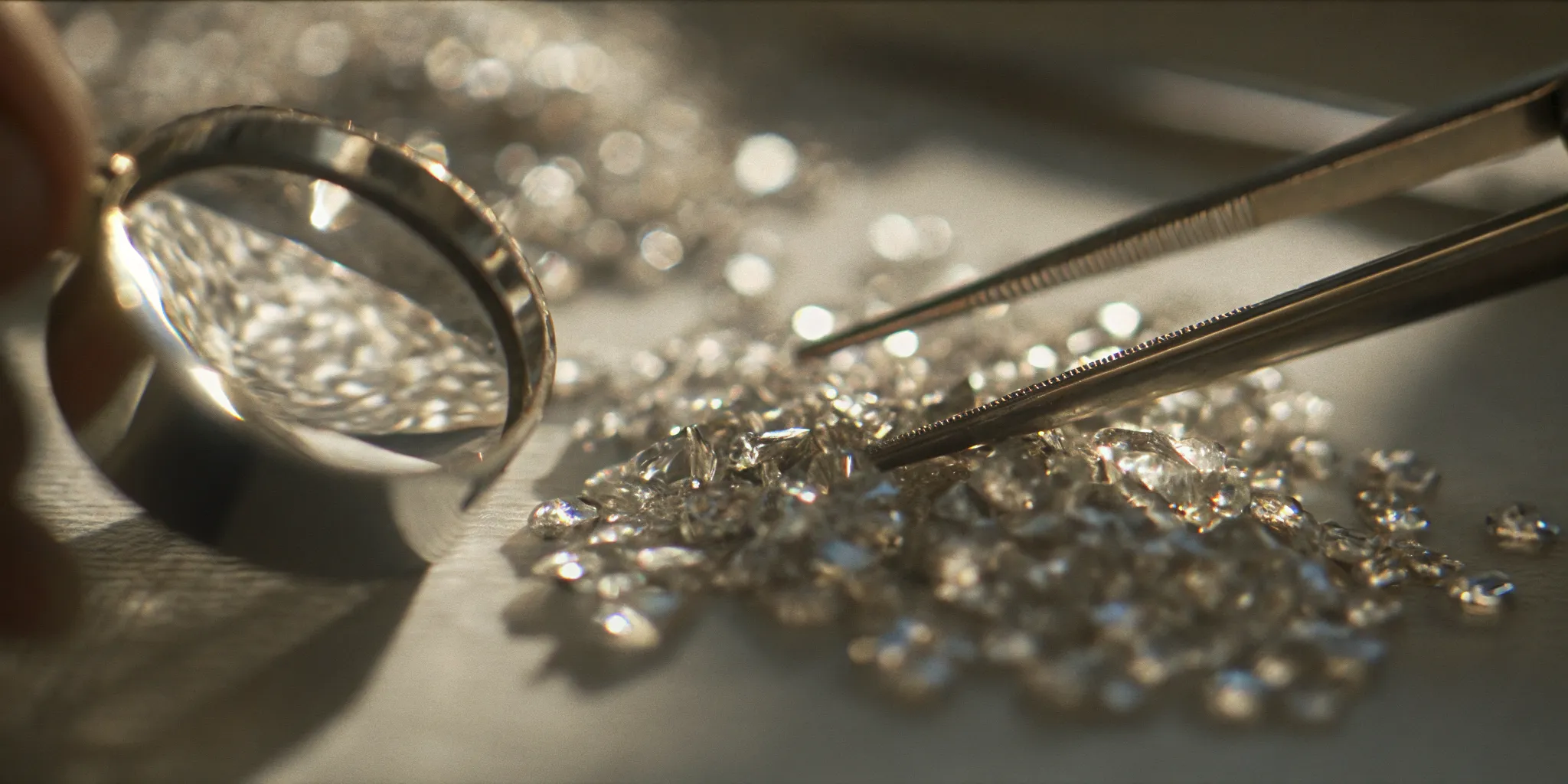
Seeing a stone under magnification can help you understand what the grade means in practice. A characteristic tucked beneath a setting or hidden by a facet pattern may be less noticeable than one directly below the table. For a deeper look at the role of diamond clarity in engagement-ring value, explore our guide, then compare diamonds based on the overall appearance you love rather than chasing the highest grade automatically.
Carat Weight: Size and Substance
Carat weight is the metric measurement of how much a diamond weighs, not a direct measurement of its visible size. One carat equals 200 milligrams, or one-fifth of a gram, and each carat is divided into 100 points. A diamond described as 0.75 carat, for example, weighs 75 points. This precise system gives buyers a consistent way to compare weight across diamonds, even when their shapes and proportions differ.
Carat weight is also the oldest measurement within the 4Cs of diamond quality. Its method of measurement has been used consistently since the 1500s, long before modern grading reports created a shared language for color, clarity, and cut. GIA identifies carat weight as the only C with this centuries-old measurement history.
Why carat weight affects price
As diamonds become larger, they generally become rarer. That rarity can make price rise disproportionately rather than in a simple one-to-one relationship with weight. Two diamonds with the same carat weight may have very different prices because carat is only one part of the evaluation. Cut, color, clarity, shape, and the quality of the grading report all influence how a diamond looks, how uncommon its characteristics are, and what it is worth.
Visible size depends on more than the number on a grading report. A diamond's outline, depth, table, and proportions affect how much surface area appears from above. For that reason, a well-proportioned diamond may look larger or more lively than another diamond with the same weight. The right comparison is not simply "How many carats?" but "How does this weight work with the diamond's cut and shape?"
Choosing the weight that feels right
Carat weight should support your priorities, whether that means presence on the hand. A particular setting, comfortable everyday wear, or room in the budget for stronger cut or clarity. Viewing diamonds side by side under magnification can make those tradeoffs easier to understand. A knowledgeable jeweler can help you compare the complete 4Cs profile rather than treating weight as a standalone measure.
How the 4Cs Work Together for Your Perfect Diamond
No single grade tells the whole story of a diamond. Cut influences how the stone returns light, while color and clarity describe aspects of its appearance and carat weight describes its mass. These characteristics create a complete picture of quality, rarity, appearance, and value.
| Factor | What It Measures | Grading Scale | Key Priority |
|---|---|---|---|
| Cut | Proportions, brilliance, fire, and light performance | Excellent to Poor (round brilliants) | Most directly affects visual beauty |
| Color | Absence of body color (white diamonds) | D (colorless) to Z (noticeable color) | Popular sweet spot: G to J |
| Clarity | Internal inclusions and surface blemishes | Flawless to Included (11 grades) | VS and SI offer best value for most |
| Carat | Metric weight (1 ct = 200 mg) | Measured in metric carats and points | Weight affects rarity and price exponentially |
That balance matters because diamond value is based on a combination of factors, including rarity. Diamonds with certain combinations of qualities are less common and therefore can be more valuable than diamonds without those characteristics. A larger carat weight, for example, does not automatically make one diamond the better choice if its cut, clarity, or color does not support the look you want.
Think in terms of priorities, not a single 'best' grade
The right balance depends on the diamond's shape, setting, and how you want it to look when worn. Some buyers prioritize lively brilliance and choose to put more of their budget toward cut. Others may value a higher color grade or a particular clarity appearance. The goal is not to maximize every grade on paper. It is to identify the combination that delivers the beauty and presence you value.
When comparing stones, review the grades together and look at the diamond in person when possible. A trained professional can help you understand how the characteristics interact, rather than treating each letter or number as an isolated score. Explore LUCE's diamond jewelry collection for examples of how diamonds are presented in finished designs.
Why standardized grading builds confidence
Choosing a diamond may involve personal preference, but evaluating one is a matter of precision, not preference. Standardized 4Cs grading gives buyers a consistent way to compare diamonds and understand their documented characteristics. It also replaces vague descriptions with information that can be reviewed and discussed clearly.
That consistency gives consumers trust and confidence when they are making a significant purchase. Once you understand the grading information, your final decision can return to the personal details that matter most: the diamond's appearance. The design, and the meaning behind the piece. If you want to make those choices from the beginning, learn more about designing your own ring with guidance from LUCE.
Frequently Asked Questions
How much is a 4C diamond worth?
There is no single price for a diamond with a particular 4Cs profile. Value reflects the combination of its cut, color, clarity, carat weight, shape, and rarity. Two diamonds with the same carat weight can look and price differently because their other characteristics differ. A grading report and an in-person review help you compare quality rather than shop by one number alone.
Do lab-grown diamonds have the 4Cs?
Yes. Lab-grown diamonds can be evaluated using the same four characteristics: cut, color, clarity, and carat weight. The 4Cs describe a diamond's measurable quality characteristics, not where the stone was formed. When comparing natural and lab-grown options, consider the grading information alongside your priorities for appearance, origin, budget, and long-term meaning.
What is the fifth C of diamonds?
The commonly recognized framework has four Cs: Color, Clarity, Cut, and Carat Weight. Some retailers use a fifth C to mean certification, confidence, or cost, but those terms are not part of the original 4Cs standard. A report from a respected gemological laboratory can add useful documentation, while the four Cs remain the basis for discussing the stone's quality.
Which diamond quality is best?
"Best" depends on your priorities, because there is no single combination that suits every buyer. Cut strongly affects a diamond's fire and brilliance, while color, clarity, and carat weight influence its appearance, rarity, and price. GIA explains that choosing a diamond is a matter of preference, while evaluating one is a matter of precision: the 4Cs create a consistent way to compare diamonds.
Schedule Your Diamond Consultation
Seeing diamonds under magnification can make the 4Cs feel clearer. It can help you compare what matters most to your personal style and priorities. Book an in-person consultation at LUCE's NORA District showroom to view diamonds closely and learn how cut, color, clarity, and carat weight work together.