Layered Necklace: How to Style Every Layer
A polished necklace stack rarely comes from adding every favorite piece at once. It works because each layer has a role: one creates a clean foundation, another adds length or texture, and a final piece brings focus without competing for attention.
Shop LUCE's necklace collection
To build a layered necklace look, start with one everyday chain, then add a second necklace with clear spacing and a different scale, texture, or pendant. The best layered necklace feels personal and balanced, not overly matched.
There is no single formula for every neckline or wardrobe. LUCE's modern fine-jewelry assortment ranges from delicate chains and lariats to station necklaces and statement designs, making it easier to develop a combination around your own style. Begin with the piece you already reach for most, then build outward with intention.
How to Start Building a Layered Necklace Look
The easiest way to build a layered necklace look is to begin with one piece you already enjoy wearing. Choose an everyday necklace that feels comfortable, suits your wardrobe, and can stand on its own. This first layer becomes the visual and practical foundation for everything you add later.
1. Start with your most-worn necklace
Look for a necklace that works with more than one outfit. A simple chain, a subtle pendant, or a lightweight bead chain can all provide a useful starting point. The goal is not to create a dramatic stack immediately. It is to identify a piece that feels like you and can remain in regular rotation.
LUCE's assortment includes styles ranging from delicate designs to statement pieces, with chains, lariats, station necklaces, and chokers represented across the collection. A LUCE necklace collection gives you room to compare different shapes and proportions before deciding what your everyday base should be. If you prefer a little surface texture without a bold pendant, a lightweight gold bead chain can be an especially versatile place to begin.
2. Add one distinct second layer
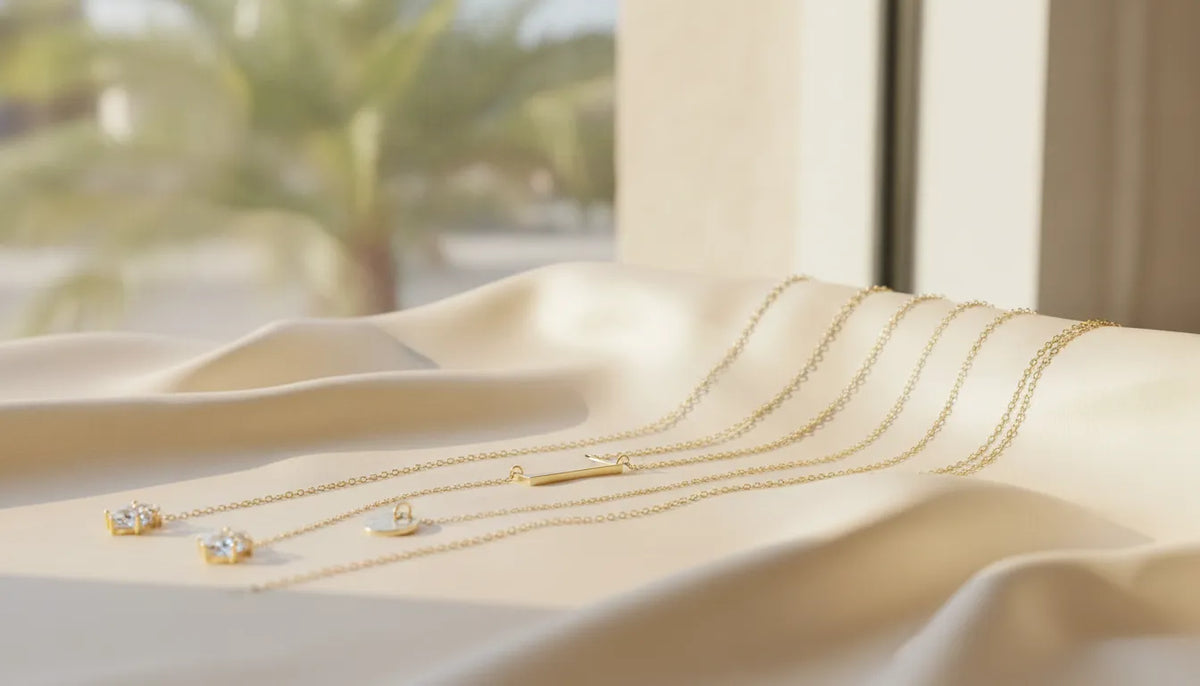
Once you know which necklace you reach for most, add a second piece that contributes something different. Change one characteristic at a time. You might choose a longer length, a different chain texture, or a small pendant that sits below the first necklace. This creates separation and makes each piece easier to see.
Pay attention to scale as well as length. Two equally delicate necklaces may blend together, while two substantial pieces can compete for attention. A finer foundation paired with a more defined link or pendant often creates a clearer focal point. LUCE's necklace examples include both delicate options and linked statement designs, so the assortment can support a gradual approach rather than a one-size-fits-all formula.
3. Wear the pair before adding more
Spend time wearing the first two layers with the necklines you choose most often. Notice whether the chains stay separated, whether a pendant lands comfortably, and whether the combination still feels natural when you move. If the pair works, add a third piece only when it fills a real styling role, such as bringing in texture, extending the vertical line, or framing a pendant.
A layered necklace should feel collected, not crowded. Building slowly lets your everyday jewelry reflect personal expression while keeping the final look polished and wearable.
How Should Necklace Lengths and Spacing Work?
The easiest way to make a layered necklace look intentional is to give each piece its own visual space. Start with a short necklace, add a medium-length layer, then finish with a longer piece if you want more movement. As a styling guideline, aim for roughly one to two inches between the ends of neighboring necklaces. It is not a product specification or a rule you must follow exactly. The right spacing depends on your neckline, pendant size, chain weight, and the way each necklace sits when you move.
| Layer. | Styling role. | What to check. |
|---|---|---|
| Short | Frames the base of the neck. | It stays visible above the neckline. |
| Medium | Connects the foundation to the focal piece. | It has room to sit apart from the short layer. |
| Long | Adds movement or carries a pendant. | It clears the fabric and does not overlap another focal detail. |
Start short, build through the middle, and finish long
A short layer frames the base of the neck and establishes the top of the composition. A medium necklace can sit below it with enough room to remain visible, while a long layer draws the eye toward the center of the outfit. This short, medium, and long sequence is a practical starting point for building a stack rather than trying to coordinate several similar lengths at once.
If you prefer a quieter look, stop after two necklaces. The shorter piece can provide structure, and the second can add a pendant or a little more texture. For a fuller arrangement, add the third necklace only when it contributes a distinct length or shape. LUCE's necklace assortment includes chains, lariats, station necklaces, and chokers, so there are several ways to create separation without making every layer look identical.
Give pendants room to breathe
Spacing is especially important when one layer has a pendant. A pendant should not land directly on top of another pendant or compete with a clasp, bead, or station detail. Before leaving the house, move each piece into place and check the stack from the front and side. If two focal details overlap, either switch their order, choose a longer layer, or let one necklace sit alone.
Reduce tangling with small habits
Different lengths and chain styles help necklaces sit at different heights, which can reduce the chance of constant overlap. Varying the texture or width can also make each layer easier to identify and adjust. Put the shortest necklace on first, then add the longer pieces, and fasten each clasp securely. When you take the stack off, separate the necklaces instead of placing them together in a dish. Store each one flat or hang them separately between wears. These simple habits matter as much as the initial length plan.
For more pieces to use as a starting point, browse the LUCE necklace collection and compare how each style might work as a short, medium, or long layer.
Mix Scale, Texture, and Pendant Shapes
Once your lengths are working, give each layer a distinct visual job. A delicate chain can keep the look light, a textured style can add movement, and a larger link or pendant can create the focal point. The goal is contrast with a sense of connection, not a collection of pieces competing for attention.
Start with the quietest layer. A lightweight gold bead chain can work as a delicate base when you want subtle texture beneath a smoother chain or pendant. Small beads catch the light differently than a continuous link, so the necklace adds dimension without needing to be the centerpiece. A clean foundation, such as a round box chain, can create a similar effect when you prefer more structure.
Next, change the chain language. Pair a fine or smooth chain with one that has visible links, beads, or another tactile pattern. Varying texture helps the eye separate the layers, especially when the necklaces are close in color. Keep the contrast intentional: if one piece has a strong surface pattern, let the neighboring necklace provide breathing room rather than adding another equally busy design.
Scale works best when it builds gradually. Try a petite pendant or fine chain first, then add a medium-weight necklace, and reserve the broadest shape for the layer you want people to notice. The statement link necklace is an example of the kind of substantial linked style that can act as that focal layer. It may be the strongest element in the stack, so balance it with simpler pieces instead of placing another large link directly beside it.
Let pendants have clear space
Pendants need room to read. If two drops land at the same point, they can visually merge and make the stack feel crowded. Place pendant shapes at different heights, or pair one pendant with an uninterrupted chain so the eye has a clear resting place. You can also contrast shapes: a small geometric pendant beside rounded beads creates interest, while similar shapes repeated at different scales feel more coordinated.
Before leaving the house, check the stack from a normal standing distance. If every layer feels equally noticeable, simplify one. A successful layered necklace combination usually has one focal point, one supporting texture, and one quiet base. That balance leaves space for your personal style to show through.
Can You Mix Metals and Still Look Intentional?
Absolutely. A layered necklace does not need every piece to match perfectly. It needs a point of connection. When yellow gold is paired with a cooler-toned metal, the contrast can feel considered rather than accidental if you repeat a detail. Keep the overall scale balanced, or let one finish lead the look.
Choose a visual anchor
Start by deciding which metal should set the mood. Yellow gold can bring warmth and softness to the stack, while a cooler metal can sharpen the contrast. You do not need an equal number of each. One metal can be the foundation, with the second appearing in a pendant, clasp, or shorter chain. This creates hierarchy, so the eye reads the combination as one composition instead of several unrelated necklaces.
For a quieter approach, keep the most visible or substantial layer in your primary metal and introduce the contrast through a finer piece. For a more graphic look, reverse that order and let the cooler tone sit closer to the neckline. The best choice depends on your wardrobe, skin tone, and the jewelry you already wear. There is no universal ratio that makes a stack correct.
Repeat, then vary
Repetition is what makes contrast feel deliberate. If one necklace is yellow gold and another is a cooler metal, echo that relationship elsewhere with earrings, a ring, or a bracelet. The repeated metal does not have to be identical in width or design. A small, consistent detail is often enough to connect the look.
Finish matters, too. Pairing two highly polished pieces can create a clean, reflective effect. Adding a textured chain gives the combination more depth without adding more color. LUCE's necklace assortment includes 14K and 18K yellow gold, with styles ranging from delicate to statement designs. You can build contrast through material tone while still keeping the quality and scale coherent. LUCE also uses solid precious metals only, rather than plating or vermeil, a material standard worth confirming on the relevant product page before you combine pieces.
Finally, give the metals room to be seen. Distinct lengths and a little open space prevent the tones from blending into visual clutter. Try the complete layered necklace with your usual earrings and rings, then remove the piece that competes most. Intentional styling often comes from one clear edit, not another addition.
Match the Stack to Your Neckline and Occasion
Your neckline is the frame for a layered necklace, so let it guide the shape and visual weight of the stack. The goal is not to match every detail perfectly. It is to keep the jewelry visible, balanced, and appropriate to the setting.
Crewnecks and high necklines
A crewneck creates a clean, rounded border near the collarbone. A shorter necklace, such as a choker or close-fitting chain, can echo that shape. Add a longer pendant or station style only if it clears the fabric and creates visible separation. For an everyday outfit, keep the shortest layer simple and let one textured or slightly more substantial necklace provide interest. Too many pieces at the same height can disappear into the neckline or look crowded.
V-necks and open collars
Use the downward line of a V-neck as a styling cue. A pendant that follows the center of the V can make the stack feel intentional, while a shorter chain keeps the look anchored above it. With an open button-down collar, try a close layer at the base of the neck and a second piece that falls into the opening. A lariat can work especially well here because its vertical drop complements the shape of the collar without requiring a dense cluster at the throat.
Dressier necklines
For a silk blouse, slip dress, or evening neckline, reduce the number of competing elements and choose one clear focal point. A delicate chain paired with a refined pendant can feel polished without overwhelming the fabric. Alternatively, a statement link necklace can stand on its own when the neckline is simple. LUCE's LUCE necklace collection includes styles ranging from delicate pieces to statement designs, making it easier to build around the outfit rather than force one formula.
For casual dressing, texture and movement can make a stack feel relaxed. A lightweight bead chain with a clean chain or small pendant adds dimension while remaining wearable. For a more formal occasion, keep the spacing deliberate and choose fewer, better-defined layers. Check each piece's dimensions and care information on its product page before combining it, especially when you want a particular pendant or chain to sit at a specific point.
Finish by balancing the necklace stack with the rest of your jewelry. If the neckline already carries a strong focal point, choose understated earrings and let your rings or bracelet repeat the same metal without competing for attention. With a quieter necklace combination, sculptural earrings or a more noticeable ring can provide contrast. Coordinated does not mean identical. Repeating one metal, texture, or geometric detail across your earrings, rings, and bracelet is usually enough to make the full look feel considered.
Layered Necklace Checklist: From First Piece to Final Look
A polished stack usually comes together more easily when you make one decision at a time. Use this checklist before you buy, dress, or leave the house. It keeps the look intentional while leaving room for personal expression.
- Choose the anchor necklace. Start with the piece you expect to wear most often. A clean, structured chain such as a round box chain can provide a foundation for a pendant or a more textured layer. If you prefer subtle movement, a lightweight gold bead chain can establish a delicate base. The right anchor should feel like part of your everyday wardrobe, not a piece you have to build an outfit around. Browse the LUCE necklace collection for different chain, lariat, station, and choker styles.
- Add one layer at a time. Put on the anchor and assess it before adding anything else. Then introduce a second necklace with a different length, chain weight, or texture. A short, mid, and long arrangement is a useful starting point, but it is not a rule. If one piece has a pendant or a strong silhouette, let it become the focal point and keep the neighboring layers quieter.
- Check spacing and neckline clearance. Aim for visible separation rather than a cluster of chains. About one or two inches between lengths is a practical starting point, but your neck, pendant size, and clothing will determine what looks balanced. Try the stack with the actual neckline you plan to wear. Make sure pendants do not disappear under fabric, compete with a collar, or land directly on top of one another. A V-neck may call for a longer focal layer, while a high crew neckline often benefits from shorter pieces that remain visible.
- Inspect scale, materials, and product details. Look at the full combination in a mirror, then check each product page for metal type, stone details, dimensions, care instructions, and warranty information. Mixing a delicate base with a substantial linked layer can create contrast, while a graduated bead necklace can add visual rhythm. LUCE lists 14K and 18K yellow gold among its necklace materials and uses solid precious metals rather than plating or vermeil. Still, verify the details for each specific piece, especially if you have sensitive skin or need a particular fit.
- Reduce tangles between wears. Different lengths and chain styles can help pieces sit at separate heights, but storage matters too. Fasten each necklace, then store it flat or hang it separately instead of leaving the stack in a shared pile. This makes the next styling session quicker and helps you inspect the pieces before wearing them.
- Ask for a second perspective when useful. If you are unsure about proportions, metal coordination, or which layer should lead, personalized styling guidance can make the process easier. LUCE offers styling and custom-design consultations, so you can bring a few pieces or describe the look you want and receive advice tailored to your collection.
Talk with the LUCE team about your custom necklace layers
Frequently Asked Questions
What is a layered necklace set?
A layered necklace set is a group of necklaces designed or styled to be worn together. The pieces usually vary in length, scale, or texture, creating a composed look without asking you to build the combination from scratch. You can also create the same effect with individual necklaces that reflect your personal style.
How much space should you leave between necklaces?
Use about one to two inches between necklace lengths as a practical starting point. So each piece has room to be seen rather than sitting directly on top of another. A short, medium, and long combination can make spacing easier to judge. Adjust the arrangement for your neckline, pendant size, and comfort. This approach is a starting point, not a strict rule.
Can I build my own layers instead of buying a set?
Yes. Start with one necklace you wear often, then add a different length, chain weight, or texture. A structured chain can anchor a delicate piece, while a pendant or link style can create a focal point. Building your own stack gives you more flexibility as your collection grows and makes the final combination feel distinctly yours.
How can I keep layered necklaces from tangling?
Choose noticeably different lengths and vary chain styles so the pieces sit at separate heights. Before storing them, separate each necklace and lay it flat or hang it individually. If a combination still twists during wear, change the spacing or move the heaviest pendant to a lower layer.
What should I check if I have sensitive skin?
Check the metal details for every necklace before wearing it, especially when several pieces will rest against your skin. LUCE lists 14K and 18K yellow gold among its necklace materials, and its product pages are intended to provide metal and care details. If you suspect a reaction, remove the jewelry and consult a medical professional. Nickel allergy can cause an itchy rash where nickel contacts skin, according to Mayo Clinic.
Ready to Build Your Layered Necklace Look?
A thoughtful starting piece can make the rest of your necklace stack feel more personal and intentional. Browse LUCE's necklace collection to explore options for different lengths, textures, and focal points, or contact the LUCE team for personalized styling guidance. The right combination should reflect how you dress and what you enjoy wearing, whether you are creating an everyday look or refining a future heirloom collection.