
Signet Ring Guide: Meaning, Style, and Fit
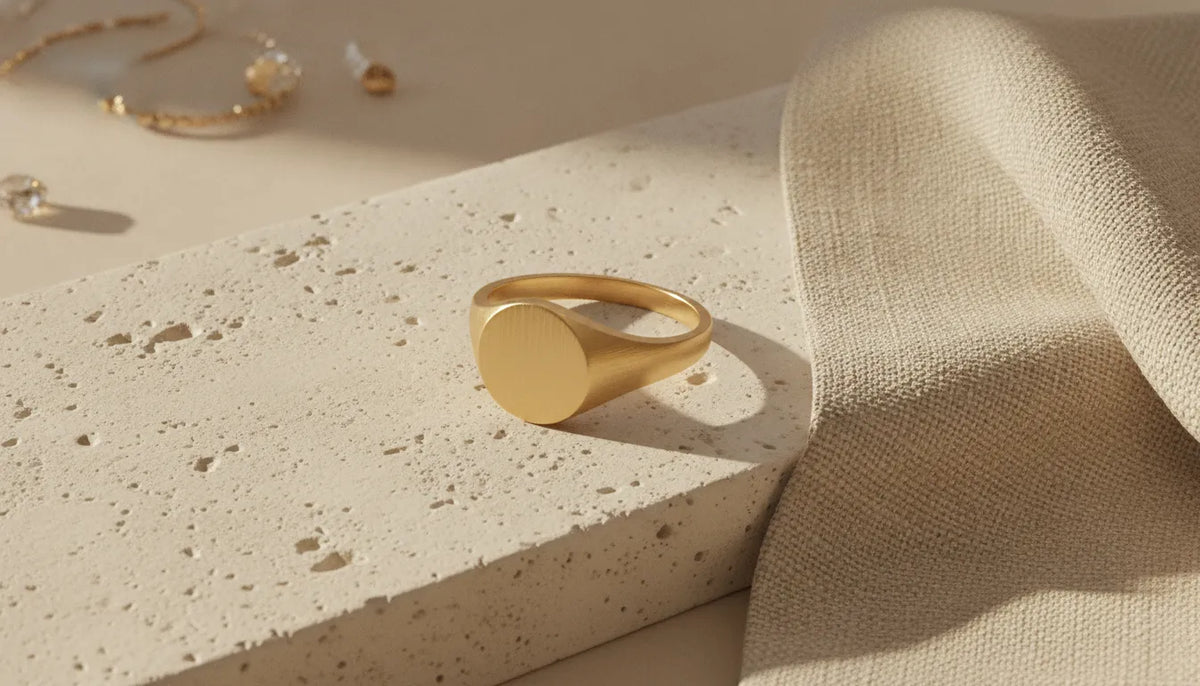
A flat or gently raised face gives a signet ring its unmistakable presence, but its appeal is not only visual. This is a piece shaped around identity: historically, an engraved face could mark a letter, object, or wearer with a personal sign. Today, that same sense of authorship can feel quietly modern, whether the design carries a monogram, a symbol, or no engraving at all.
A signet ring is a ring with a distinct face traditionally used for an engraved seal. And its meaning often comes from what that face communicates about the wearer. Choosing one well means balancing history with your own style, including the face shape, metal, proportions, fit, engraving, and how you plan to wear it.
Before comparing metals or deciding which finger feels right, it helps to understand how the form developed and why its defining shape still matters. That context makes the practical choices ahead feel less like rules and more like ways to make the piece genuinely yours.
What Is a Signet Ring? Meaning, Shape, and Purpose
A signet ring is a ring with a distinct face, traditionally designed to carry an engraved symbol, monogram, or other identifying mark. The face may be flat, softly rounded, or raised above the shank, the part of the ring that wraps around the finger. That broad surface gives the design its visual character and creates room for an engraving that can feel intentional rather than purely decorative.
Historically, the engraved face served a practical purpose. A signet could be pressed into wax to identify the sender of a letter and provide legal authentication. In that sense, it functioned as a portable form of identification. Over time, its meaning expanded beyond sealing correspondence. Signet rings became associated with personal identity and status, using heraldic imagery, religious devices, monograms, and rebuses to communicate something about the wearer.
Today, the symbolism is more personal and less formal. Wearing a signet ring can express how you want to be perceived, but it can also mark something meaningful only to you. An initial, family emblem, date, abstract motif, or simple polished face may represent heritage, belonging, a milestone, or a particular point of view. The ring does not need to announce its meaning to everyone in order to hold significance.
Signet ring definition:
- Face: The prominent top or front surface, often flat or raised, that gives the ring its signature silhouette.
- Shank: The band that supports the face and determines much of the ring's weight and presence on the finger.
- Engraving: A symbol, monogram, lettering, or other design that can connect the ring to identity and personal meaning.
- Purpose: Once a tool for identification and authentication, now often a piece of personal expression and everyday jewelry.
That balance between structure and meaning is what separates a signet from a plain band. Its face creates a clear focal point, while the engraving or surface treatment gives the piece a story. Traditional materials include gold and silver, and contemporary designs may add gemstones, diamonds, or other details when they support the intended look. For a broader view of modern ring silhouettes, explore LUCE rings, while keeping this guide's focus on what defines the form rather than on any single product.
From Wax Seals to Modern Heirlooms: A Short History
Long before a signet ring became a considered piece of personal style, it served a practical purpose. Early signets were made as seals attached to a wire and fixed to the finger, creating a portable form of identification. Pressed into wax, the design could identify the sender of a letter and provide legal authentication. Wax seals also secured boxes and doors, helping protect personal goods. The ring was not simply decorative. Its impression carried information about the person who wore it.
As signet rings developed, the design on the face became increasingly expressive. Heraldic imagery, religious devices, monograms, and rebuses could communicate identity and status. These motifs gave the wearer a way to send a message without saying a word. The signet's meaning was therefore both functional and personal: it could authenticate an object, while also suggesting how its owner wished to be recognized.
A surviving example in The Metropolitan Museum of Art shows how much information a single ring can hold. The museum records a gold signet ring with Tutankhamun's throne name from Egypt's New Kingdom, dated to approximately 1336-1327 B.C. The ring is inscribed with Tutankhamun's prenomen, Neb-kheperu-re. The Met also notes signs of wear from frequent use as a seal. That detail connects the object to its original role, making its history tangible rather than abstract.
By the nineteenth century, the practical need for a signet ring had declined, but the style continued to be worn by fashionable men. In the modern era, jewelers continue to reinvent the form for contemporary life. The face may still carry a letter, symbol, or engraved mark, but it can also be chosen for its shape, texture, and quiet sense of identity.
That history matters when you shop for one today. It gives the ring a design language rooted in authorship and recognition, while leaving room for your own interpretation. You do not need to recreate an inherited emblem or make a formal statement. A modern signet can mark a personal milestone, reflect your initials, or simply feel like the right everyday object. Its heirloom quality comes from the meaning you give it and the way you live with it, not from an unsupported promise of financial value.
How to Choose the Right Signet Ring Proportion
Proportion is what makes a signet ring feel intentional rather than overwhelming. Instead of choosing by a fixed width or following a rule tied to one finger. Look at the relationship between the ring's face, band, finger, and the other jewelry you wear. The right balance should feel visually grounded when your hand is relaxed and comfortable when you move it through an ordinary day.
Start with the shape of the face
First, consider the outline of the face. An oval or rounded face can soften the overall look, while a square or rectangular face brings sharper structure. A longer face may echo the length of the finger, and a wider face can create a stronger horizontal presence across the hand. Neither approach is inherently better. The most flattering choice is the one that complements your finger's proportions and the style you want to communicate.
Compare three broad profiles rather than searching for an exact measurement. A compact face usually reads quietly and leaves more visual space around the finger. It can be a good starting point if you prefer subtle jewelry or plan to wear several rings together. A medium face offers a clearer signet silhouette without dominating the hand. A bold face becomes the focal point, especially when its surface is engraved, textured, or set with stones. Try each profile with your hand relaxed and from different angles, since a ring that looks balanced from above can feel bulky at the side.
Match the face to the band
The band should support the face without disappearing beneath it. A substantial face paired with an extremely delicate band can look top-heavy, while a broad band under a small face may make the design feel dense. Look for a gradual visual transition from the shoulders of the ring into the face. Rounded shoulders can make a larger style feel more wearable; crisp shoulders emphasize a tailored, architectural effect.
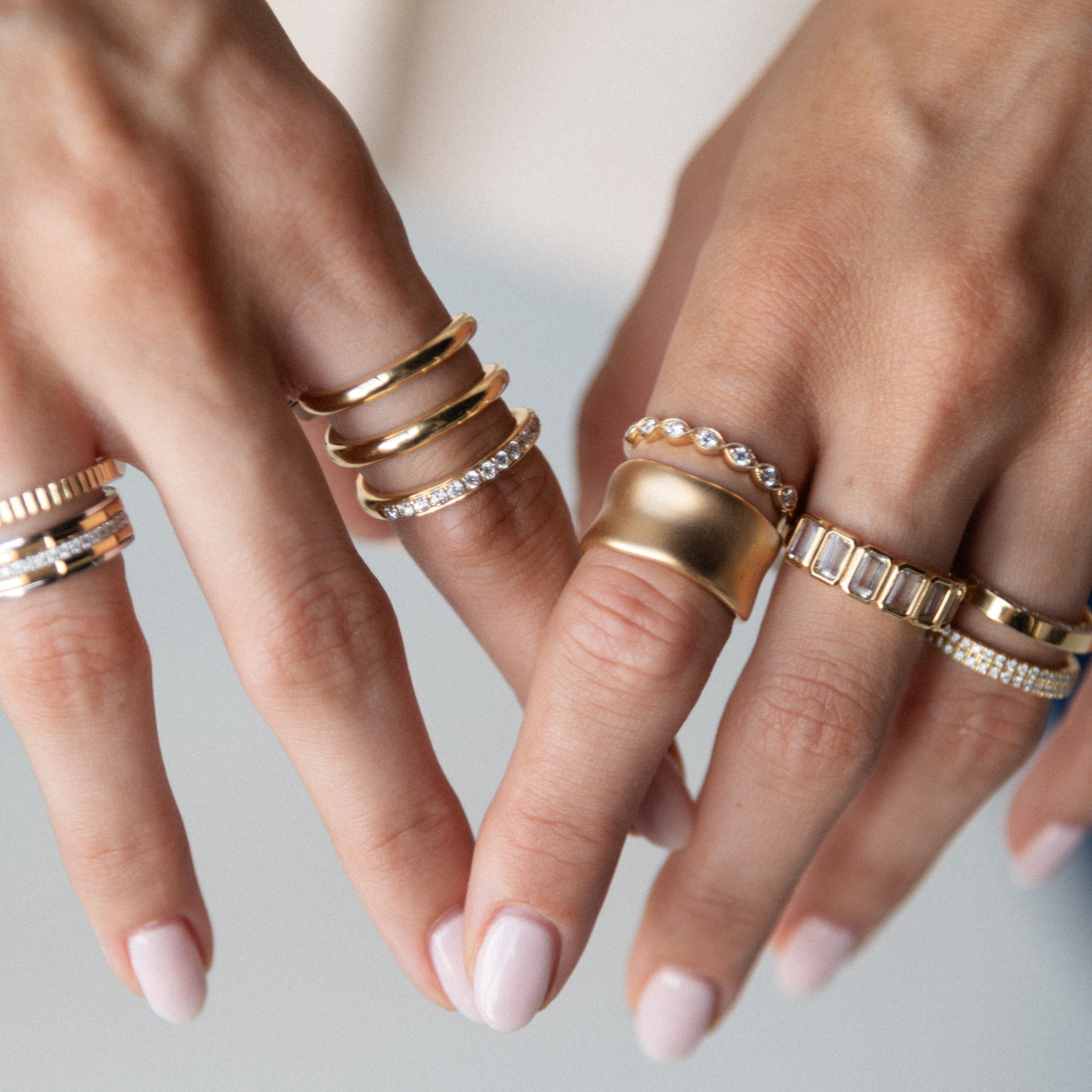
Also account for what sits beside the ring. A signet ring with a bold face may need breathing room if you wear a substantial band next to it. A compact or medium face can often share space more easily with slimmer bands. For more ideas on balancing a feature ring with surrounding jewelry, see this guide to diamond pinky ring styling.
Use visual weight as your final test
Visual weight comes from more than size. A dark engraving, high-contrast stone, deep texture, or polished surface can make a face appear stronger. A low-contrast finish or open space can make a similar silhouette feel lighter. Ask whether the ring looks proportional to your hand, whether the edges interfere with neighboring fingers, and whether the design still feels like you when viewed in motion. Your preferred finger, stacking habits, and daily routine should guide the final choice more than tradition or a number on a size chart.
Which Finger Should You Wear a Signet Ring On?
The pinky is the traditional choice for a signet ring, a placement connected to the ring's long history as a personal mark. In earlier use, an engraved face could be pressed into wax to identify the sender and authenticate a letter. That history gives the pinky a sense of heritage, but it does not make the finger a rule. Today, the best placement is the one that feels intentional, comfortable, and right for your proportions.
The pinky tradition, updated
Wearing a signet ring on the pinky preserves its classic character while keeping the piece visually distinct from engagement or wedding jewelry. It can work especially well when the ring has a compact face or when you want the design to read as a personal signature. Try it on both hands before deciding. Your dominant hand may make the ring feel more present, while your other hand may offer a quieter, less interrupted fit during daily tasks.
There is no universal meaning attached to the left or right pinky today. If a family custom or inherited ring suggests one hand, that story may guide you. Otherwise, choose based on comfort and how the ring balances with the jewelry you already wear. Exploring ring stacking and proportions can also help you see how finger placement changes the overall composition.
Other fingers and midi-ring styling
A contemporary signet ring can sit on the index, middle, or ring finger when its scale and shape suit the hand. The index finger gives the piece a more graphic presence. The middle finger creates visual weight at the center of the hand. On the ring finger, it can sit alongside other bands, provided the combined widths do not feel crowded. These are styling choices, not coded signals, so personal preference should lead.
You can also wear a signet ring as a midi ring, positioned on the first knuckle rather than at the base of the finger. This creates a fashion-forward proportion and can make a smaller design feel more deliberate. Because a midi ring sits higher, check that it stays secure when you bend your finger and that the face does not press against the neighboring knuckle.
Let comfort make the final decision
Wear each option for long enough to notice how it moves through ordinary activities. The band should feel secure without pinching, and the face should clear the adjacent knuckle when your hand closes. Leave enough room for natural movement, especially if the design is broad or has a raised face. Finger size can also change with temperature and activity, so a placement that feels perfect in one moment may need a little more clearance throughout the day. The right answer is ultimately the finger that lets the signet ring feel like part of you, rather than a rule you have to follow.
Gold, Silver, and Other Metals for Everyday Wear
The right metal for a signet ring is less about a universal "best" and more about the way you live. GIA recommends balancing durability, maintenance, and style, then considering how the ring will hold up against your daily activities and how much upkeep you are willing to do. That makes your routine a useful starting point: think about handwork, exposure to wear. And whether you prefer a metal that asks for occasional care or one that stays visually low-maintenance.
| Metal | Everyday-wear guidance | What to consider |
|---|---|---|
| 14K gold | Suitable for everyday wear | A practical choice when daily durability matters alongside a classic gold look. |
| 18K gold | Suitable for everyday wear | Works for a refined gold signet ring when you are comfortable weighing style against your routine. |
| 24K gold | Not recommended for everyday wear because it is too soft | Better reserved for situations where frequent daily contact is not the priority. |
| Sterling silver | Suitable for everyday wear | May need polishing to remove tarnish, particularly when it is not worn often. |
| White gold | Suitable for everyday wear | May need replating every few years, depending on the piece and its finish. |
| Titanium | Suitable for everyday wear and very light | A useful option if minimizing the feeling of weight on your finger is important. |
GIA's everyday-wear guidance classifies both 14K and 18K gold as suitable for regular use, while identifying 24K gold as too soft for that role. Sterling silver is also considered suitable, but its appearance can benefit from polishing if the ring sits unworn for a period of time. White gold brings a different maintenance consideration: it may require replating every few years. Titanium is suitable for everyday wear and notably light, which can appeal to someone who wants a substantial-looking signet without a heavy sensation.
For a signet ring you plan to wear often, choose the combination that fits your habits rather than selecting by color alone. 14K or 18K gold and titanium are among the materials represented in LUCE's broader fine-jewelry context. But the appropriate choice for a particular design depends on its specifications and your intended use. A jeweler can help you compare the finish, care expectations, and feel of the metal before you commit. Custom jewelry design consultation can be especially useful when the ring is meant to express something personal while still fitting comfortably into everyday life.
GIA's everyday-wear metal guidance provides the source for the care and suitability comparisons above.
Engraving, Everyday Wear, and Care
Engraving gives a signet ring its most personal layer. A monogram can reference your initials, while a symbol, family mark, or meaningful number can hold significance without explaining itself to everyone who sees it. Historically, signet designs included heraldic imagery, religious devices, monograms, and rebuses, visual puzzles that communicated identity through a compact mark. The tradition was practical as well as expressive: a signet pressed into wax identified the sender of a letter and could serve as legal authentication. Today, the same idea works in a quieter way. The face becomes a small canvas for something that feels recognizably yours.
Think about scale and longevity before choosing the engraving. Letters and simple symbols tend to remain legible on a small face, while a more involved mark may need a larger surface or a simplified treatment. You can explore the custom ring design process if you want help translating a personal reference into a wearable design. Professional guidance is an option when you are weighing layout, lettering. Or the relationship between the engraving and the ring's proportions, but the meaning should still come from you.
Build care around the way you wear it
A signet ring can be an everyday piece, but everyday wear does not mean every activity is equally suitable. GIA recommends considering how a ring will hold up against your daily activities and evaluating how much maintenance you are willing to do before choosing a metal. Remove the ring before activities that expose it to hard impact, abrasion, chemicals, or unnecessary moisture. Take it off for tasks such as heavy cleaning, strenuous work, or exercise when it could catch, scrape, or be knocked against a hard surface. These habits protect the ring and make its care more predictable.
For routine maintenance, keep the ring clean with a soft cloth and follow care guidance appropriate to its metal and any stones. Store it separately from pieces that could scratch it, especially when you are not wearing it. Sterling silver may need polishing if it is left unworn and develops tarnish. White gold may require replating every few years, depending on its condition and construction. If the engraving becomes difficult to read, the surface is noticeably damaged, or the fit changes. Pause regular wear and ask a qualified jeweler to assess it rather than trying an abrasive home fix.
Care is ultimately part of the design decision. Choose an engraving you will still value, match the metal to your routines, and let maintenance support the ring's role as a personal piece for daily life.
Frequently Asked Questions
What is a signet ring?
A signet ring is a ring with a defined face that traditionally carried an engraved mark, such as a monogram, emblem, or symbol. Historically, the design could be pressed into wax to identify the sender and authenticate a letter. Today, the same format is primarily a personal expression, whether the face is engraved or left clean.
What is the history of signet rings?
Signet rings began as wearable seals and became associated with identity, status, and heritage. The Metropolitan Museum documents a gold example bearing Tutankhamun's name, dated to approximately 1336-1327 B.C. Modern jewelers continue to reinterpret the form for contemporary proportions and styling. Source: The Metropolitan Museum of Art.
Which finger should you wear a signet ring on?
The pinky is the traditional choice, but there is no single required finger. You can wear one on the index, middle, or ring finger, depending on the face proportion, your other jewelry, and what feels comfortable. A smaller design can also work as a midi ring on the first knuckle.
Can signet rings be worn every day?
Yes. Choose a comfortable fit and a metal suited to your routine, then remove the ring for activities that expose it to impact, harsh chemicals, or abrasive materials. Regular cleaning and occasional professional inspection can help preserve the finish and any engraving.
What materials are signet rings made from?
Gold and silver are traditional choices, and modern designs may also include diamonds, gemstones, or contrasting details. For everyday wear, GIA classifies both 14K and 18K gold as suitable, while its table describes 24K gold as too soft. The best choice balances durability, maintenance, color, and the way you want the ring to wear. Source: GIA.
Ready to Find Your Signet Ring
A signet ring can feel especially personal when its proportions, metal, and details reflect how you plan to wear it. For help refining those choices or exploring a custom design, contact LUCE for an individual conversation grounded in your style and everyday routine. Contact LUCE to get started.