Moissanite Engagement Ring Alternatives: A Clear Guide
Choosing an engagement ring alternative is less about finding a single substitute and more about understanding what you want the center stone to express. Some shoppers prioritize a familiar diamond-like look, while others are drawn to color, distinctive character, or a stone that feels more personal. For West Palm Beach and NORA District couples, the right starting point is an informed comparison rather than a default.
Talk with LUCE Jewelry about your engagement ring options.
Moissanite engagement ring alternatives are gemstones or materials used instead of a natural diamond, including moissanite, lab-grown diamond, sapphire, ruby, emerald, morganite, and other options. GIA notes that shoppers may choose among them for cost, personal taste, style, or distinctiveness, and each category has different visual and care considerations: GIA explains the range of diamond alternatives.
The meaningful distinction is not simply whether a stone sparkles. It is what the material is, how it looks in the setting, what care it requires, and whether it fits your lifestyle and long-term vision for the ring. Start by separating these categories clearly, then compare the details that matter most to you.
What Are Moissanite Engagement Ring Alternatives?
A diamond alternative is any gemstone or material used in place of a natural diamond in jewelry, including an engagement ring. The phrase describes a broad category, not one specific stone. People may explore these options because of personal taste, design preferences, or a desire for a distinctive ring. The right choice depends on the visual character, material identity, care needs, and meaning you want the ring to carry.
Alternative, simulant, or diamond?
These terms are related, but they are not interchangeable. A simulant is a material that resembles diamond while having different optical and physical properties. GIA identifies moissanite and cubic zirconia among common simulants, along with glass. A simulant is not a diamond, and that distinction should be clear when you are comparing stones or reviewing purchase documentation. GIA notes that choosing a simulant can be a good option when the decision is informed.
A lab-grown diamond belongs to a different category. It has the same crystal structure as a natural diamond, with tightly bonded carbon atoms, and nearly the same chemical, optical, and physical properties. Laboratories can distinguish lab-grown and natural diamonds using advanced instruments, even though the difference may not be visible to the eye. In other words, lab-grown diamond is not a simulant, although both may be considered when someone is looking beyond a mined diamond.
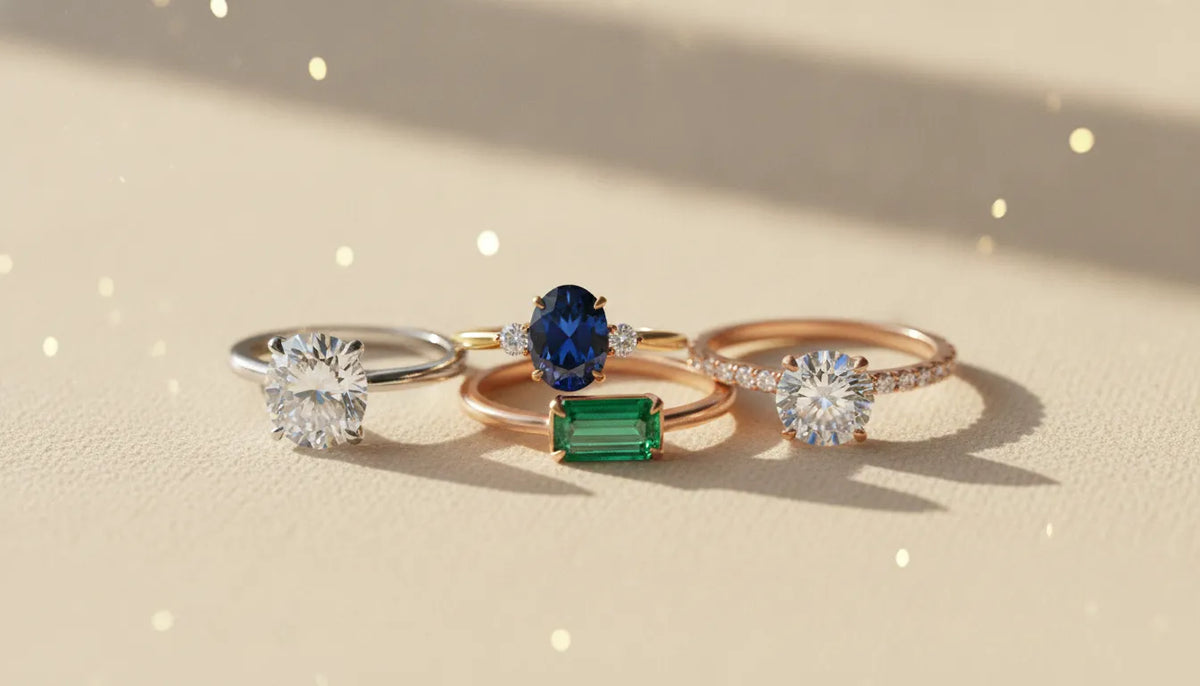
Natural gemstones create another path. Sapphire, ruby, emerald, morganite, spinel, and aquamarine can bring color, history, or a more individual point of view to an engagement ring. Colorless sapphire, sometimes called white sapphire, can echo a diamond's appearance while remaining a distinct natural gemstone. Start by deciding whether you want diamond-like sparkle, a true diamond with a different origin, or the color and character of a gemstone. That framework keeps the conversation focused on your ring rather than on finding one universally best substitute.
For a personalized comparison in West Palm Beach, LUCE Jewelry can help you assess the differences in a clear, low-pressure setting.
How Do the Main Alternatives Compare?
The right choice depends on what you want the center stone to communicate, how you expect to wear it, and which details you want documented at purchase. GIA distinguishes simulants from diamonds because they differ in optical and physical characteristics, while lab-grown diamonds share the crystal structure and nearly the same chemical, optical, and physical properties as natural diamonds. GIA's comparison of simulants and lab-grown diamonds is a useful neutral reference.
A practical comparison for engagement-ring shoppers
| Category | Visual character | Care or documentation questions | Shopper fit |
|---|---|---|---|
| Moissanite | Bright, lively sparkle with its own optical character rather than a diamond identity. | Ask how the stone is identified and what care the setting and stone require. | For someone who wants pronounced sparkle and an informed non-diamond choice. |
| Lab-grown diamond | Can potentially look indistinguishable from a natural diamond by eye. | Ask for clear disclosure of origin and documentation describing the stone. | For shoppers who want diamond properties while considering a laboratory-grown origin. |
| Natural diamond | Classic diamond optical character with a geological history formed over millions to billions of years. | Review the stone's documentation, characteristics, and care guidance. | For someone drawn to natural formation, tradition, and a classic engagement-ring look. |
| Sapphire | Available in color, or in a colorless form with a softer visual effect than diamond. | Ask whether the stone is treated, how it should be cleaned, and how the setting supports it. | For shoppers who value color, symbolism, or a distinctive alternative with a natural-gemstone identity. |
| Colored gemstones | Ruby, emerald, morganite, spinel, and aquamarine bring individual hues and character. | Ask about treatments, care, and whether the stone suits your intended wearing pattern. | For someone who wants the ring's color and personal meaning to lead the design. |
| Cubic zirconia | A readily available synthetic simulant with a diamond-like appearance. | Confirm that it is identified as cubic zirconia and ask about replacement or care expectations. | For shoppers exploring an accessible simulant and prioritizing appearance over diamond identity. |
There is no universal winner. A simulant can be a good option when the decision is informed, and a colored gemstone can make the ring feel more personal. Before choosing, compare the stone in the setting, ask direct questions about identity and care, and choose the visual character that feels right for the person wearing it.
Which Colored Gemstones Make Meaningful Alternatives?
Color can make an engagement ring feel personal before any setting detail is added. GIA identifies sapphire, ruby, spinel, and aquamarine as colored gemstone alternatives, while also noting that natural ruby, emerald, sapphire, and morganite bring rich hues and individual character. The right choice depends less on finding a universal winner and more on matching the stone's appearance. Symbolism, and care needs to the way you plan to wear the ring.
Match the color and character to your story
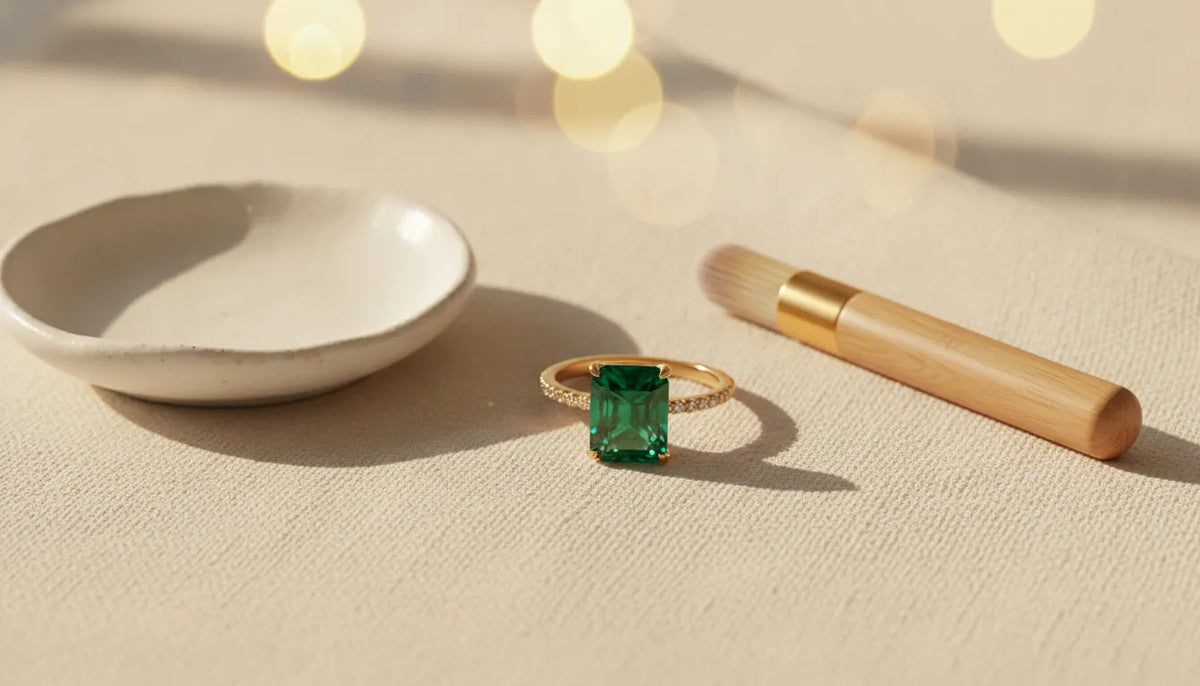
Sapphire offers a familiar alternative in blue and other natural colors, with a strong connection to loyalty and enduring style. Ruby brings a saturated red associated with love and passion. Emerald creates a vivid green focal point with an unmistakable presence. Morganite offers a softer, romantic color, while spinel and aquamarine give shoppers less expected ways to bring color into an engagement ring. These distinctions matter when the goal is a ring that reflects a favorite color, a personal memory, or a meaningful piece of symbolism.
Custom engagement ring gemstones can help you think through color, proportion, setting, and lifestyle together. For more inspiration around expressive choices, explore unique engagement ring designs.
Consider daily wear before choosing a colorless look
White sapphire, also called colorless sapphire, is a natural gemstone that can imitate the look of a diamond. GIA reports a Mohs hardness of 9 and excellent toughness, but notes that it is less brilliant than a natural diamond. That difference may appeal to someone who prefers a quieter, more understated appearance. But it is still important to compare how the stone looks in the intended cut and setting.
Not every colored gemstone should be treated as equally suited to constant wear. Before choosing emerald, morganite, spinel, aquamarine, ruby, sapphire, or white sapphire, ask how the stone's properties, setting, and maintenance fit your routine. A thoughtful jeweler can help you weigh color and meaning alongside protection, cleaning, and the practical demands of an engagement ring.
Sources: GIA's guide to diamond alternatives and GIA's jewelry buyer's guide.
Is a Lab-Grown Diamond the Same as a Diamond Alternative?
The answer depends on what "alternative" means. In everyday jewelry language, a diamond alternative is any gemstone or material chosen in place of a natural diamond. That broad category can include moissanite, cubic zirconia, colored gemstones, and lab-grown diamonds. But lab-grown diamonds are not diamond lookalikes. They are diamonds with a different origin.
How lab-grown diamonds differ from simulants
According to the Gemological Institute of America, lab-grown diamonds have the same crystal structure as natural diamonds, with tightly bonded carbon atoms. As a result, they have nearly the same chemical, optical, and physical properties as natural diamonds. Natural diamonds form over millions to billions of years, while lab-grown diamonds are created through controlled growth processes. Origin is the key distinction, not whether the material is diamond.
Moissanite and cubic zirconia belong to a different category: diamond simulants. They can be selected for their own visual character, but they are not diamonds and are unrelated to diamonds at the atomic level. Their optical and physical characteristics allow experienced professionals to distinguish them from diamond. GIA notes that choosing a simulant can be a thoughtful option when the shopper understands exactly what they are selecting.
To the unaided eye, a lab-grown diamond and a natural diamond can potentially be indistinguishable. That does not mean their histories are the same. Gemological laboratories can separate them using advanced instruments that detect differences in their growth histories. For an engagement ring, clear disclosure helps ensure that the stone's identity matches your expectations and the meaning you want the ring to carry.
If you are comparing moissanite engagement ring alternatives, start by deciding whether you want a diamond with a different origin or a different gemstone altogether. That single distinction makes the rest of the conversation, from visual preference to documentation and setting design, much easier to navigate.
What Should You Ask Before Choosing an Alternative?
The right choice becomes clearer when you evaluate the stone, the setting, and the way you expect to wear the ring together. Bring these questions to a jeweler so the conversation stays focused on informed decisions rather than a single stone being presented as the universal answer.
A practical question list for your consultation
- What exactly is the center material? Ask whether it is a diamond, a lab-grown diamond, a simulant such as moissanite, or a natural colored gemstone. These are different categories with different optical and physical properties. GIA distinguishes synthetic diamonds, simulants, and treated simulants, so clear language matters when comparing alternatives.
- What documentation accompanies it? Ask what information identifies the stone, what its growth or geological history is, and which details will be recorded with your purchase. A transparent explanation helps you understand what you are choosing and what you may want to retain for future reference.
- How will hardness and care fit my routine? Diamonds, natural and synthetic, rate 10 on the Mohs scale, while other stones require their own care discussion. Ask about cleaning, impact, heat, chemicals, and recommended inspections rather than assuming every bright stone can be treated the same way.
- Does the setting protect the stone? Discuss prong placement, bezel coverage, stone height, and how the design interacts with a wedding band. A setting should support the material and the way you move through daily life.
- What suits my lifestyle and personal style? Explain how often you plan to wear the ring, your work and activities, and whether you want color, brilliance, or a quieter visual presence. These details can narrow the field more meaningfully than appearance alone.
- What can be customized? Ask about the metal, proportions, accents, engraving, and future stack. For more context on evaluating artisan engagement ring craftsmanship and exploring ethical diamond ring design, review LUCE's related guides before your appointment.
Talk with LUCE Jewelry about your ring options.
How Can You Personalize an Alternative Ring in West Palm Beach?
Personalization starts with the way the center stone feels, not simply the category it belongs to. A moissanite, sapphire, lab-grown diamond, or another alternative can create a different visual character. But the finished ring also depends on the setting, metal, proportions, and details that give it meaning. Consider whether you prefer a clean solitaire, a three-stone composition, a low-profile setting, or a design with symbolic accents. The goal is a ring that feels natural on your hand and connected to your story.
Build the design around your life and your story
Stone choice and setting should work together. A larger-looking center may call for balanced band proportions, while a more delicate stone can suit fine details or understated side accents. The metal can shift the overall mood, and the shape of the setting can make the ring feel architectural, softly classic, or distinctly modern. Discuss how you wear jewelry, whether you want a wedding band to sit flush, and which design details will remain meaningful beyond the engagement.
Meaning can come through color, an unusual silhouette, a hidden engraving, or an accent selected for a personal reason. LUCE's guide to custom engagement ring gemstones offers broader context for weighing gemstone character, lifestyle, and protective settings. For further inspiration, the bespoke engagement ring design guide explores how a personalized approach can turn a ring into a future heirloom.
At LUCE, the design process is available online and in West Palm Beach at the NORA District store. The accessible-luxury approach includes transparent pricing and no-pressure browsing, so you can compare directions before deciding what belongs in the final ring. You can bring an early idea, a reference image, or simply a sense of what you do not want. A conversation can help connect those preferences to a practical custom design without forcing you into a preset formula. When you are ready to explore the options, contact LUCE Jewelry to begin the conversation.
Frequently Asked Questions
What is the difference between a simulant and a lab-grown diamond?
A simulant, such as moissanite or cubic zirconia, is a different material that resembles diamond but is not diamond. A lab-grown diamond has the same crystal structure and nearly the same chemical, optical, and physical properties as a natural diamond. GIA notes that laboratories can distinguish natural and lab-grown diamonds with advanced instruments: GIA explains the categories.
Is white sapphire a good alternative to a diamond?
White sapphire can be a thoughtful choice if you want a natural, colorless gemstone with a softer visual character. It has a Mohs hardness of 9 and excellent toughness, but it is less brilliant than natural diamond, so compare the stones in person before deciding. GIA provides the relevant durability and brilliance context: white sapphire guidance.
Which alternatives work best for a colorful engagement ring?
Sapphire, ruby, emerald, morganite, spinel, and aquamarine each bring distinct color and character. The right choice depends on the hue, symbolism, setting, and how you expect to wear the ring. GIA identifies sapphire, ruby, spinel, and aquamarine among popular colored-gemstone alternatives: review the gemstone options.
What should I ask a jeweler before choosing an alternative?
Ask exactly what the center stone is, whether it is natural, lab-grown, simulated, or treated, what care it requires, and whether the setting suits your daily routine. Also ask what documentation accompanies the stone and how the design can be customized. Clear disclosure lets you choose based on appearance, durability, meaning, and long-term expectations rather than assumptions.
Ready to Explore Your Engagement Ring Options?
Choosing between moissanite, lab-grown diamond, natural diamond, and colored gemstones becomes easier when you can compare each option with your style, setting, and everyday plans in mind. Contact LUCE Jewelry to discuss alternative engagement ring options and custom design with a West Palm Beach team in a low-pressure setting. Contact LUCE Jewelry through the verified contact page to get started.