
Emerald Ring Care: A Gentle Guide for Everyday Wear
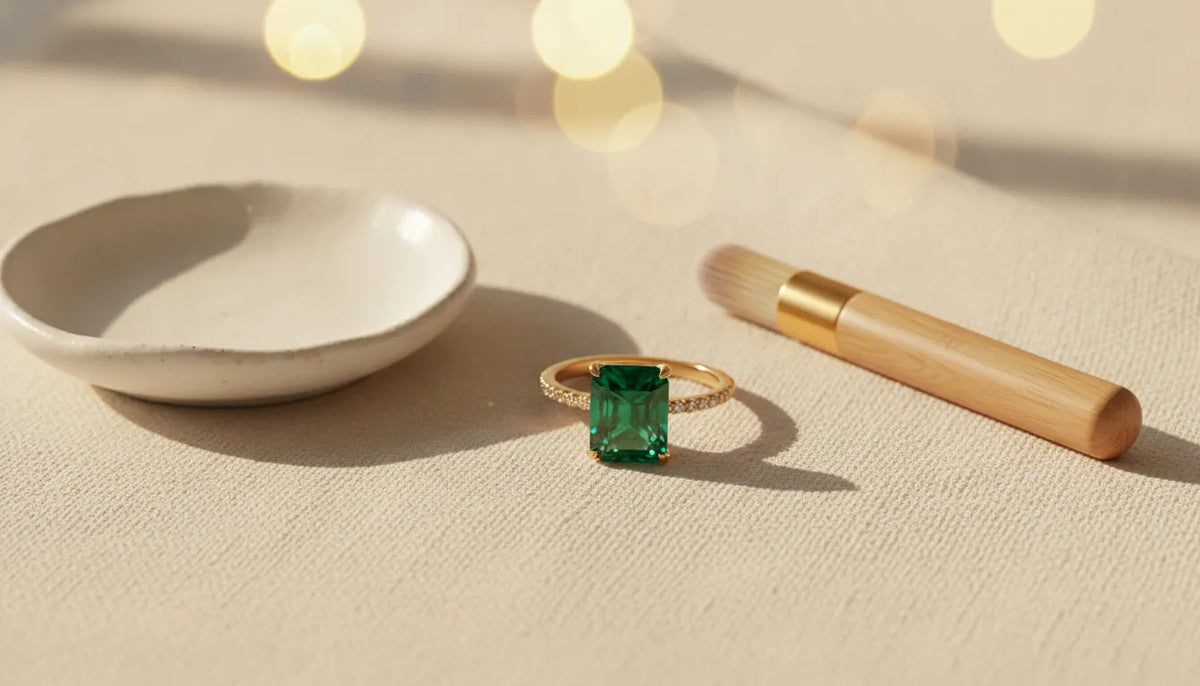
An emerald ring deserves a gentler routine than a piece set with one of the hardest gemstones. Everyday dust, cosmetics, heat, and an unexpected impact can matter more when the stone is naturally included and more brittle than diamond, sapphire, or ruby.
Good emerald ring care starts with lukewarm water, mild soap, and a soft cloth or brush, followed by careful drying. Avoid hot water, harsh chemicals, sudden temperature changes, and ultrasonic cleaners, especially when the emerald has treated fractures. These simple habits help protect both the stone and the finish of its setting.
Contact LUCE Jewelry with questions about your ring.
Before choosing a cleaning method, it helps to understand why emeralds need this considered approach. Their visible inclusions are part of the stone's character, but they can also affect how the gem responds to handling, temperature, and treatment.
Emerald Ring Care Starts With the Stone
An emerald is the bluish green to green variety of beryl, and its character is part of what makes it so appealing. GIA notes that emeralds typically contain inclusions visible to the unaided eye. These natural internal features are not automatically flaws, but they can make an emerald less forgiving of impact, pressure, and rough handling than a stone with greater durability.
Compared with diamonds, sapphires, and rubies, emeralds are softer and more brittle, according to GIA's durability research. That difference matters in daily wear. A ring can look secure while still being vulnerable to a sharp knock against a hard surface, especially if the stone has surface-reaching fissures or the setting leaves an exposed edge. A gentler routine is not about treating the ring as fragile every moment. It is about recognizing that the gemstone may need more deliberate handling than a harder alternative.
Before choosing a cleaning method or wearing an emerald ring for a demanding activity, consider what is known about the stone and its treatment. Emerald care can vary with inclusions, fracture filling, and the design of the mounting. For broader context on how emerald characteristics affect ownership, review these emerald gemstone care considerations.
In practice, protect the ring from avoidable impact, set it down rather than dropping it onto a hard counter, and pause before exposing it to heat, chemicals, or sudden temperature changes. Understanding the stone first makes the rest of an emerald ring care routine easier to follow and less likely to cause accidental damage.
How to Clean an Emerald Ring at Home
For routine at-home cleaning, keep the process gentle and controlled. Emeralds can contain surface-reaching features and may have clarity-enhancement treatments, so a simple wash is safer than aggressive equipment or strong solvents. The recommended approach from Jewelers Mutual's emerald care guidance uses lukewarm water, mild soap, and gentle handling.
- Prepare a safe workspace. Work over a stable bowl or clean towel rather than directly over an open drain. Use lukewarm water, a small amount of mild dish soap or baby shampoo, a soft lint-free cloth, and, if needed, a soft-bristled brush. The water should feel comfortably warm, never hot. Hot water can damage an emerald, so do not use it for soaking or rinsing.
- Make a mild soapy solution. Add the soap to the lukewarm water and mix gently. Avoid bleach, abrasive powders, harsh household cleaners, and solvents. Emerald treatments are not necessarily permanent, and strong chemicals can affect the stone or its appearance.
- Let the ring sit briefly. Place the ring in the solution for several minutes. This gives everyday oils and loose dirt time to soften without requiring force. If you are unsure whether the setting is secure or how the emerald has been treated, skip extended soaking and use a lightly damp cloth instead.
- Clean with a light touch. Rub the ring gently with your fingers or a soft cloth. Paying attention to the underside of the setting and the inside of the band where residue can collect. Use a soft-bristled brush only when necessary, and do not scrub the emerald, prongs, or edges aggressively.
- Rinse with lukewarm water. Rinse away all soap residue using lukewarm, not hot, water. A gentle rinse is enough. Avoid sudden temperature changes, which can place additional stress on an emerald.
- Pat the ring dry. Use a clean, lint-free cloth to pat the ring dry. Do not twist the cloth over the stone or use a rough towel. Let the ring finish air-drying in a secure spot before wearing or storing it.
Do not use an ultrasonic cleaner. Jewelers Mutual specifically advises keeping emerald jewelry away from ultrasonic cleaners, and GIA explains that ultrasonic cleaning can be especially risky for emeralds with filled, surface-reaching breaks. When the treatment history is unknown, hand cleaning with mild soap and lukewarm water is the more cautious choice.
Which Everyday Activities Put an Emerald Ring at Risk?
An emerald ring can be part of an everyday wardrobe, but it deserves more protection than jewelry set with harder gemstones. GIA notes that emeralds are softer and more brittle than diamonds, sapphires, and rubies, so repeated knocks, pressure, and careless exposure can carry greater risk. Daily wear is a personal choice, not a guarantee that every activity is suitable for the ring.
Showering is best treated as a remove-the-ring activity. Soap residue can build up around the setting, and hot water conflicts with the gentler approach recommended for emeralds. Swimming, workouts, household chores, and beauty routines also create opportunities for impact, chemicals, or buildup. Jewelers Mutual advises avoiding heat, harsh chemicals, and sudden temperature changes.
| Activity | Why it matters | Safer habit |
|---|---|---|
| Shower or bath | Hot water and soap can expose the ring to heat and residue. | Remove the ring before bathing. Clean it separately with lukewarm water when needed. |
| Swimming | Chemical exposure and accidental contact can be hard to control. | Leave the ring in a secure, separate place before entering the water. |
| Exercise or sports | Impact, gripping, and perspiration can stress the stone or setting. | Remove it before training, lifting, or contact activity. |
| Chores and cosmetics | Hard knocks, cleaners, lotions, and other chemicals can affect the ring. | Put it on after products are applied and remove it before cleaning or gardening. |
| Sudden temperature changes | Sudden temperature changes can add stress to an emerald. | Avoid moving the ring rapidly between extreme temperatures. |
When in doubt, choose removal over exposure. Keep the ring somewhere secure while you shower, swim, exercise, or work with chemicals. This cautious routine supports the stone without claiming that every emerald or setting responds identically.
Why Emerald Treatments Change the Care Routine
Many emerald fissures are filled with oil, resin, or wax to improve the stone's apparent clarity. That treatment can help an emerald look more transparent, but it is part of the care equation rather than a permanent repair. The Gemological Institute of America explains that these fillings can be damaged or removed over time. So a cleaning method that is routine for a diamond may be unsuitable for an emerald ring. Emerald and diamond ring styles can vary widely, but treatment sensitivity remains an important consideration when caring for the finished piece.
Why treatment changes cleaning choices
GIA advises against using an ultrasonic cleaner on gemstones with filled, surface-reaching breaks. Solvents and mechanical cleaning can affect the filler and alter how the fissures appear, even when the setting itself seems secure. See the guidance from GIA on gemstones and ultrasonic cleaners before choosing a cleaning method.
A gentler routine protects more than the surface
For everyday emerald ring care, keep the routine conservative unless you know the stone's treatment history and have guidance specific to its construction. Avoid ultrasonic cleaning, alcohol-based solvents, acetone, and aggressive chemical products. A soft cloth can remove light surface residue, while a cautious home wash with lukewarm water and mild soap is generally preferable to experimentation. If the emerald's appearance changes, or you are unsure whether it has been treated, pause before applying heat, chemicals, or mechanical cleaning. The goal is not to strip away every natural feature, but to preserve the balance of the stone, its filler, and its setting.
How Should You Store an Emerald Ring?
Give an emerald ring its own protected space rather than placing it loose in a jewelry dish. Store it separately in a soft-lined compartment or pouch, where it cannot rub against other pieces. This simple habit helps prevent scratches and reduces the chance of the ring knocking against harder jewelry when you reach for it.
Keep it away from harder jewelry
Emeralds need a gentler storage routine because they are softer and more brittle than diamonds, sapphires, and rubies. Do not stack an emerald ring directly beside pieces with exposed gemstones or sharp metal edges. If you use a jewelry box, choose a section that closes securely and has enough room for the ring to rest without pressure on the stone or setting.
Wipe it before putting it away
After wearing the ring, use a clean, lint-free cloth for a quick wipe. Gently remove surface oils and dust from the band and the visible parts of the setting without pressing hard on the emerald. This is a convenient routine when a full wash is not necessary, and it keeps residue from sitting on the ring while it is stored. Jewelers Mutual recommends a clean dust-free or lint-free cloth for this kind of quick care: emerald care guidance.
Make a calm pre-wear check
Before putting the ring back on, pause for a moment and look at the stone and setting. Check that the emerald appears secure, the prongs or bezel look as expected, and no new chip, gap, or unusual movement is obvious. If something looks different, set the ring aside rather than testing it through daily wear. A calm check takes only a few seconds and can help you notice a concern before it becomes damage.
When Should a Jeweler Check Your Emerald Ring?
Stop home care and ask a jeweler for guidance when the ring no longer feels secure, looks noticeably different, or raises questions you cannot answer from its paperwork. Emeralds are softer and more brittle than diamonds, sapphires, and rubies, so a concern deserves attention rather than repeated cleaning or testing at home.
Pay attention to changes in the setting or stone
If the ring suddenly spins, feels loose, catches on fabric, or makes a new clicking sound, remove it until the setting can be assessed. A loose prong or shifted stone can worsen with everyday wear. Also set the ring aside if you see a new chip, crack, surface-reaching break, or sharp edge. Do not try to press a stone back into place or test it with an ultrasonic cleaner.
A changed appearance is another reason to pause. Haze, a new-looking fissure, uneven clarity, or an altered surface may reflect dirt, damage, or a treatment concern. Emerald fractures are commonly filled with oil, resin, or wax to improve apparent clarity, and GIA notes that these treatments are not permanent and can be damaged or removed. GIA's guidance on emeralds and ultrasonic cleaners explains why aggressive cleaning is not a safe way to investigate a change.
Ask before using an unfamiliar service or product
If you do not know whether your emerald has been treated, avoid solvents, heat, sudden temperature changes, and any cleaning method described as intensive. Bring available purchase or care information when asking for advice. A jeweler can help determine what should happen next without requiring you to guess at the stone's history.
LUCE lists jewelry repair services as a general resource, but its available guidance does not establish an emerald-specific inspection procedure. If you have a question about your ring, contact LUCE Jewelry with the details and visible concern so the team can point you toward an appropriate next step.
Contact LUCE Jewelry with a question about your ring.
Frequently Asked Questions
Can an emerald ring be worn every day?
It can be, but daily wear calls for thoughtful handling. Emeralds are softer and more brittle than diamonds, sapphires, and rubies, so remove your ring for impact-heavy activities, chores, and situations involving heat or harsh chemicals. Store it separately when you are not wearing it.
Can I wear an emerald ring in the shower?
It is better to remove it before showering. Soap residue can collect around the setting, and care guidance recommends avoiding heat and harsh chemicals. Keep the ring away from sudden temperature changes as well.
Do emeralds need to be oiled?
Do not apply oil at home unless a qualified professional has advised you to do so. Emerald fissures may already be filled with oil, resin, or wax to improve apparent clarity, and these treatments are not permanent. Exposure to solvents or inappropriate cleaning can damage or remove them. GIA explains emerald treatment and cleaning risks.
How should you clean an emerald ring at home?
Use lukewarm water, mild soap, and a soft cloth or soft-bristled brush. Clean gently, rinse thoroughly with lukewarm water, and pat dry with a lint-free cloth. Avoid hot water and ultrasonic cleaners, especially when the stone has filled surface-reaching breaks. Jewelers Mutual provides a gentle cleaning method.
Questions About Your Emerald Ring? Contact LUCE
Emerald care can depend on the stone's condition, treatment, and setting. If you are unsure about a cleaning method, notice a change in appearance, or want to ask what to do next, LUCE Jewelry can help you identify a sensible starting point.
Contact LUCE Jewelry with your question.