
Promise Rings: Meaning, Styles, and How to Choose
A meaningful ring does not need to announce an engagement to mark an important promise. It can honor a relationship, a season of distance, a shared milestone, or a private commitment that belongs to the people wearing it.
Promise rings symbolize love and commitment, but their meaning is personal rather than universal. They are not engagement rings, and they do not require an intention to marry. They can simply express devotion, exclusivity, or a promise shaped by a couple's own story.
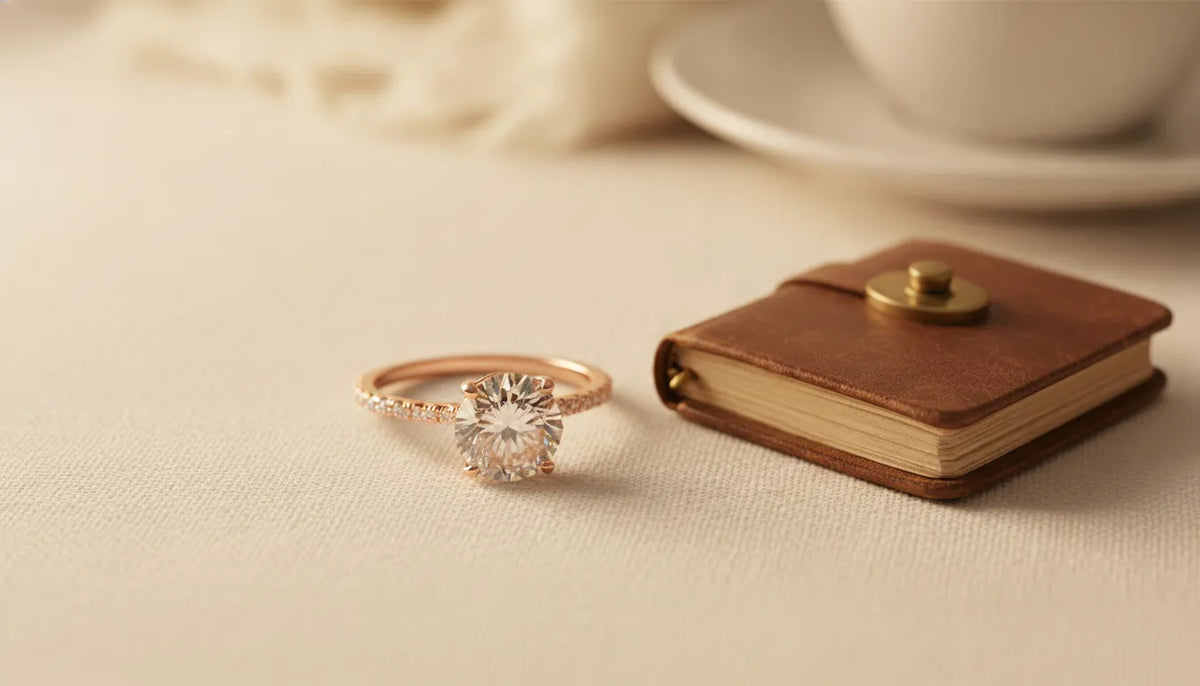
That freedom makes the choice both personal and practical. The right piece should reflect the relationship's meaning while feeling natural on the hand. Whether it is worn alone, layered with other rings, or chosen as an everyday fine-jewelry heirloom. Start by defining what the ring is meant to say, then consider its proportions, materials, fit, and relationship to the wearer's existing style.
What Are Promise Rings?
Promise rings are personal symbols of love and commitment. They can mark a meaningful promise between two people, but the promise itself does not have one universal definition. For some couples, the ring reflects an exclusive relationship. For others, it represents devotion, affection, or a shared understanding about the future. The most important point is that the meaning belongs to the people exchanging or wearing the ring.
The Gemological Institute of America explains that a promise ring can represent a couple's commitment to their relationship and that its meaning is unique to each couple. In that sense, the ring is less about following a prescribed tradition and more about giving a tangible form to something personal. It may be chosen for a milestone, a period of geographic distance, or simply the desire to express care in a lasting way. Some people also choose promise rings when they are devoted to a partner but have no intention of marrying.
How Promise Rings Differ From Engagement Rings
A promise ring is not an engagement ring. An engagement ring generally communicates an intention to marry, while a promise ring can express commitment without making that specific promise. It may serve as a placeholder while a couple waits to marry, but it does not need to point toward marriage at all. Treating every promise ring as a covert engagement ring misses the flexibility that makes this jewelry meaningful.
That distinction can also shape the conversation around the ring. Before giving one, couples may want to discuss what it represents to them and how they would like it to be worn. Clear communication helps avoid assumptions, especially because promise rings can symbolize different kinds of commitment. The design can then support that meaning without needing to imitate an engagement ring.
There is no single correct style for promise rings. A piece can be understated or expressive, selected for its symbolism, its everyday wearability, or the personal connection behind its details. Whether the promise is about love, distance, devotion, or a shared chapter. The strongest choice is one that feels true to the relationship rather than one that follows someone else's definition.
For a sourced overview of the symbolism and distinction, see the Gemological Institute of America's guide to promise ring meaning.
When Do People Give Promise Rings?
There is no single occasion that calls for a promise ring. The right moment is one that reflects a commitment both people understand and value. For some couples, the ring marks a decision to build an exclusive relationship. For others, it represents loyalty during a season of change, a shared future they are beginning to imagine. Or a private promise that does not need to follow anyone else's timeline.
To mark a meaningful relationship milestone
A promise ring can be thoughtful after a relationship reaches a moment that feels important to both partners. That might be an anniversary, moving in together, completing a major personal or professional goal. Or simply recognizing that the relationship has become a steady part of everyday life. The milestone does not need to be traditionally romantic. What matters is that the ring gives shape to a commitment that has already been discussed or felt between you.
Because the meaning of promise rings is unique to each couple, the gift should come with clarity rather than assumptions. A conversation about what the ring represents can make the gesture more personal and prevent it from being interpreted as an engagement announcement. The promise may be about partnership, faithfulness, support, or a shared intention to keep growing together. GIA's guide to promise ring meaning notes that promise rings generally signal commitment to an exclusive relationship, while the specific promise remains personal.
During a period of geographic distance
When partners are living in different cities, attending school in separate places, or traveling for work, a promise ring can serve as a tangible reminder of connection. It does not replace regular communication or solve the practical challenges of distance. Instead, it carries a shared meaning into the days when you cannot be together. GIA identifies promise rings as possible mementos for couples separated by geographic distance, making this a meaningful occasion for a gift with emotional significance.
To express devotion without a marriage intention
Promise rings are not required to point toward marriage. Some people give or exchange them to express lasting devotion while intentionally choosing not to marry. Others may care deeply about a partner but are not ready to discuss marriage, and the ring can acknowledge the relationship without creating a proposal-like expectation. It can also be a personal commitment between partners rather than a public signal.
There is no prescribed age, number of months together, or universal timeline for giving one. A promise ring feels most considered when its meaning is clear, mutual, and appropriate to the relationship you are celebrating.
How Promise Ring Materials and Proportions Shape the Look
Material and proportion do more than determine a ring's color or silhouette. They influence how the piece feels on the hand, how easily it fits into an existing wardrobe. And whether it reads as a quiet daily symbol or a more noticeable statement. As a general overview, one competitor's promise-ring assortment includes sterling silver, gold plating, and 14k gold, alongside wishbone, solitaire, crown, and band silhouettes. These are examples of available design categories, not specifications for any particular LUCE piece.
Use this quick guide when comparing promise-ring designs.
| Consideration | What it can change | Questions to ask |
|---|---|---|
| Material | Color, surface character, care expectations, and how the ring relates to other jewelry | Does the wearer usually choose yellow or white tones, or mixed-metal looks? Will the ring be worn frequently? |
| Width | Visual weight and how much room the ring takes on the finger | Would a slim band feel understated, or would a wider profile better suit the wearer's style? |
| Silhouette | The ring's overall personality, from a clean band to a more directional wishbone or solitaire shape | Should the design feel minimal, symbolic, sculptural, or centered on a stone? |
| Scale and stacking | How the ring balances when worn alone or alongside other bands | Is it intended as a standalone piece, or should it leave visual space for future layers? |
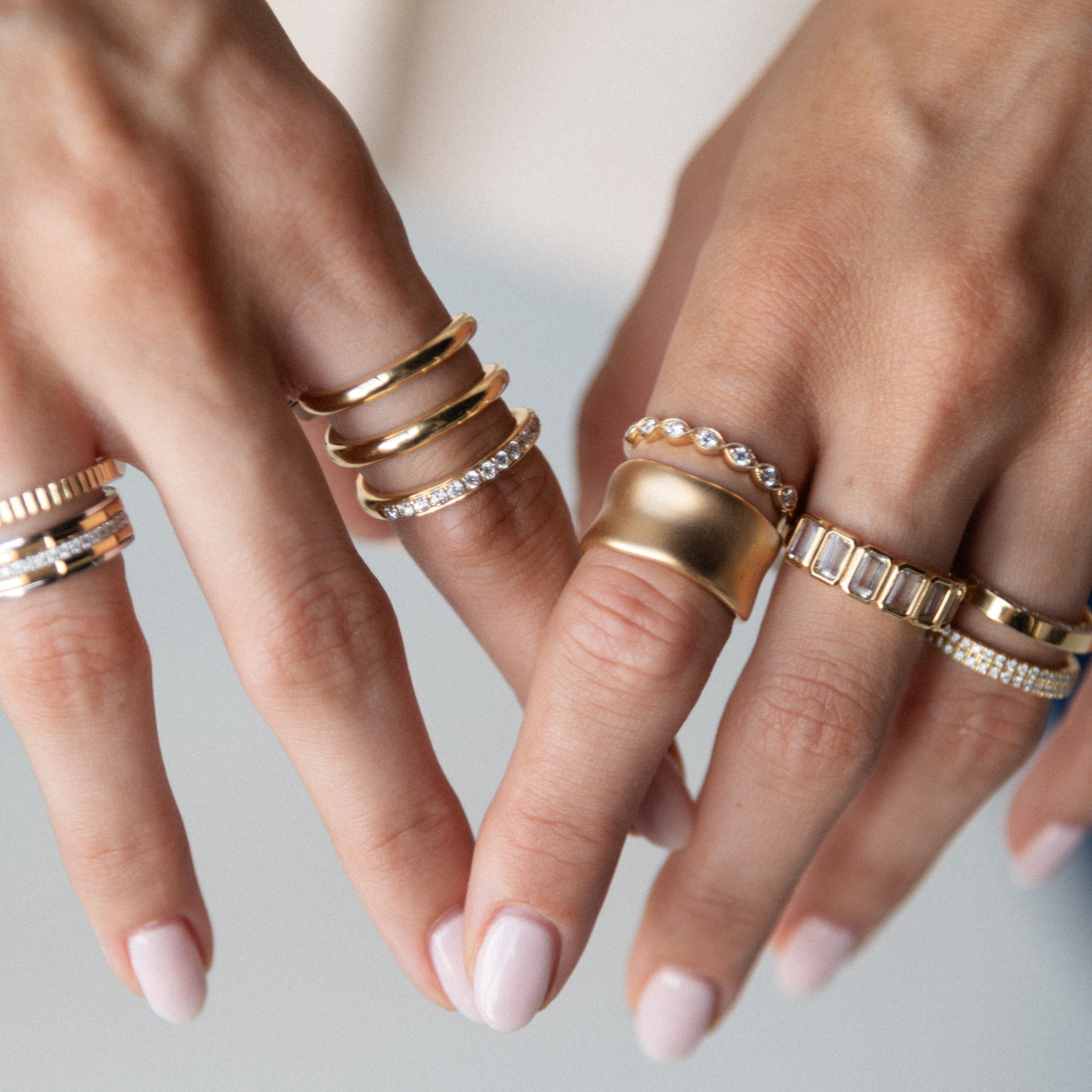
Width is especially important when choosing a ring for everyday wear. A narrow profile can look refined on its own and allow other rings to share the hand without competing for attention. A broader band or more prominent silhouette may feel intentional and complete by itself. But it deserves a closer look at comfort, finger coverage, and how it moves through daily routines. Fit should be assessed alongside width, since a ring that feels attractive in a photograph may be less practical if it catches, shifts, or crowds neighboring fingers.
Material choices can also support a cohesive collection. LUCE works with precious metals including 14K gold, 18K gold, and titanium, and its ring vocabulary includes bands, gemstone designs, stackable rings, cocktail rings, and bypass styles. Those categories provide a useful starting point for thinking about color, structure, and layering, but a specific material or setting should always be confirmed for the individual piece. For a considered choice, weigh the intended meaning, lifestyle, metal preference, durability needs, and whether the promise ring should stand alone or become part of a stack. Sources: promise-ring material and silhouette examples and LUCE ring and material information.
Which Finger Should You Wear a Promise Ring On?
There is no single universal finger for a promise ring. According to the Gemological Institute of America, a promise ring can be worn on any finger. And its meaning is shaped by the couple who gives or receives it. That flexibility is part of the appeal: the ring can carry a private promise without requiring the symbolism of a formal engagement ring.
Many people choose the ring finger of the right hand because it feels intentional while creating visual distance from the left-hand engagement-ring convention. Others wear a promise ring on the left ring finger because that placement feels most natural, meaningful, or comfortable. Neither choice is automatically more correct. The important step is to decide what the placement communicates to you and, if relevant, to explain that meaning to your partner.
Let symbolism guide the choice
Consider the promise behind the ring before choosing a finger. A promise ring may represent commitment to a relationship, devotion, a shared milestone, or a personal agreement between two people. GIA notes that the meaning is unique to each couple, so the finger can become part of that story rather than a rule imposed from outside. You might choose a finger associated with a special memory, wear it beside another meaningful ring, or select the hand that best suits your everyday style. GIA's guide to promise ring meaning offers additional context on the symbolism behind the tradition.
Prioritize comfort and clarity
Practical considerations matter just as much as symbolism. The best finger is one where the ring fits securely, does not interfere with work or other jewelry, and feels comfortable through a typical day. If you plan to stack it, leave enough room for neighboring bands. If you prefer the ring to stand alone, consider how its width and scale look on the chosen finger.
Because a promise ring is not an engagement ring, wearing it on the left ring finger can sometimes create assumptions about your relationship status. If avoiding that confusion matters to you, the right hand or another finger may feel more comfortable. If you do choose the left hand, a clear conversation can make the meaning unmistakable. The right answer is the placement that feels secure, personal, and true to the promise the ring represents.
How to Choose a Promise Ring Thoughtfully
The right promise ring should feel connected to the person, the relationship, and the way the piece will actually be worn. A thoughtful choice does not begin with a trend or a gemstone. It begins with a clear sense of meaning, then moves through practical details such as comfort, proportion, materials, and long-term versatility.
- Define what the ring means. Start by naming the promise in language that feels true to you. Promise rings can express love, commitment, devotion, a shared milestone, or a bond maintained across distance. There is no single required timeline or universal meaning. The more personal the intention, the easier it becomes to choose a design that feels sincere rather than symbolic for symbolism's sake.
- Consider the recipient's daily lifestyle. Think about work, hobbies, travel, and how often the ring should remain on the hand. Someone who uses their hands frequently may prefer a lower-profile, streamlined design. Someone who enjoys expressive jewelry may welcome more texture or a distinctive silhouette. Daily wear also makes comfort and practical durability more important than a look that only works for special occasions.
- Confirm the fit before focusing on appearance. If the ring is a surprise, discreetly borrow a ring worn on the intended finger or ask someone close to the recipient for guidance. A ring should sit securely without feeling tight, and finger size can vary with temperature and time of day. When the size is uncertain, ask the jeweler about measurement, resizing, and the best way to protect the design during that process.
- Choose proportion with the hand and existing jewelry in mind. Width, height, and overall scale affect how a ring feels visually and physically. A slender band may look balanced on its own or layer easily, while a broader or more dimensional style may be intended as a focal point. Review the LUCE rings collection for a sense of the available design language, then compare the proportions with rings the wearer already owns.
- Select metal and gemstones thoughtfully. Consider the wearer's preferred color, existing collection, and tolerance for maintenance. LUCE works with precious metals including 14K gold, 18K gold, and titanium, but the best choice depends on the specific design and intended use. If a gemstone is part of the ring, ask about its durability, setting, care, and suitability for the recipient's routine rather than choosing by appearance alone.
- Decide whether it should stand alone or stack. A promise ring can be a quiet single piece, a future heirloom for everyday luxury, or part of a considered stack. Look at the spacing between bands, the relationship between textures, and whether neighboring rings compete for attention. If the wearer already stacks rings, bring those proportions into the conversation before selecting a new piece.
- Ask about personalization and service. Engraving, a meaningful gemstone, a custom proportion, or a styling adjustment may make the ring feel more specific to the relationship. Ask what can be personalized, how the process affects timing, and what care or follow-up service is available. LUCE offers custom design consultations and styling services, giving shoppers a way to discuss meaning and craftsmanship without pressure.
The strongest choice is not necessarily the most elaborate one. It is the ring whose scale, materials, and details support the promise behind it and fit naturally into the recipient's life.
Promise Rings Compared With Engagement Rings
The clearest difference is the intention behind the ring. Promise rings are not engagement rings. They can represent devotion, an exclusive relationship, or a personal commitment that does not include an intention to marry. For some couples, a promise ring may serve as a meaningful placeholder while marriage is a future possibility. For others, it marks a relationship that is deeply valued without pointing toward a wedding. The Gemological Institute of America notes that promise rings can also become mementos when partners are separated by geographic distance, which shows how broad their meaning can be.
An engagement ring generally communicates a specific proposal or agreement to marry. A promise ring does not carry that universal expectation. That distinction matters more than the size, metal, or presence of a gemstone. A simple band can be just as intentional as a more detailed design when it reflects what the couple has agreed the ring means.
Intent shapes the design language
Because promise rings do not need to signal a proposal, their design language can feel more open-ended. A band, a personal gemstone detail, or a sculptural silhouette may suit the wearer better than a traditional engagement-ring format. The goal is not to imitate a future engagement ring or create uncertainty about the relationship. It is to choose a piece that feels true to the commitment being marked now.
Consider how the ring will function in everyday life. Someone who wants a quiet reminder may prefer a low-profile design that stands alone. Someone who enjoys expressive jewelry may choose a more distinctive shape or wear the ring alongside other pieces. There is no required level of formality, and the ring does not need to follow engagement-ring proportions to feel significant.
Talk about meaning before choosing
The meaning of a promise ring is unique to each couple, so a thoughtful conversation should come before the purchase. Discuss what the promise represents, when the ring will be worn. Whether it is intended as a private symbol or a visible expression, and how you both want others to understand it. Be direct about whether marriage is part of the promise, a possibility for later, or not part of it at all.
That clarity helps prevent an affectionate gesture from being mistaken for a proposal. It also makes the selection more personal. Rather than choosing a ring because it resembles an engagement style, choose one that captures your shared intention. Suits the wearer's lifestyle, and can remain meaningful as the relationship grows.
For a broader perspective on promise-ring meaning and its distinction from engagement rings, see the GIA guide to promise rings.
Frequently Asked Questions
What is a promise ring meant for?
A promise ring marks a meaningful commitment, but the promise itself is personal. It may express love, devotion, exclusivity, a shared milestone, or connection during a period of geographic distance. It does not require one universal relationship timeline or imply an engagement. The Gemological Institute of America explains that the meaning is unique to each couple.
Which finger gets a promise ring?
There is no single required finger. GIA notes that a promise ring can be worn on any finger, so comfort, fit, and the meaning you attach to the piece can guide the choice. Some people wear it on the left or right ring finger, while others choose a different finger to keep its symbolism distinct from an engagement ring.
When is the right time to give a promise ring?
The right time is when both people understand what the gesture means. That might be a relationship milestone, a meaningful birthday, an anniversary, a period of long distance, or a private moment with no formal occasion. Four months is not automatically too early or too late. The important step is to discuss the promise clearly so the ring does not create expectations that were never intended.
Should promise rings match?
They can match, coordinate, or be completely different. Matching bands may emphasize a shared commitment, while different metals, widths, stones, or silhouettes can respect each person's style and daily routine. Start with the meaning and how each ring will be worn, then choose a visual relationship that feels intentional rather than identical.
How can I find the right promise ring size?
Use a professional measurement whenever possible, ideally at the same time of day and on the finger where the ring will be worn. Consider whether the design is narrow or substantial, whether it will be stacked, and whether the wearer prefers a close or relaxed fit. If the ring is a surprise, borrow a ring that fits the intended finger and have a jeweler measure it, rather than guessing from a different finger.
Contact LUCE to Choose a Promise Ring
The right promise ring can reflect a meaningful commitment while still feeling personal to the person wearing it. If you are considering proportions, styling, or fine-jewelry options, contact LUCE Jewelry to talk through your ideas with the team. Whether you are visiting in West Palm Beach or shopping from elsewhere. A thoughtful conversation can help you narrow the design direction and choose a piece that feels considered, comfortable, and true to your relationship.