Types of Earring Backs: Fit, Security, and Style Guide.
The right earring back does more than keep a piece in place. It influences how an earring sits on the lobe, how quickly it goes on and off, and how comfortable it feels through a full day. This guide to the types of earring backs explains the main mechanisms, compares their strengths, and helps you match a backing to studs, hoops, drops, and dangles.
Explore LUCE earrings to find fine-jewelry styles you can wear and build around.
What are the main types of earring backs?
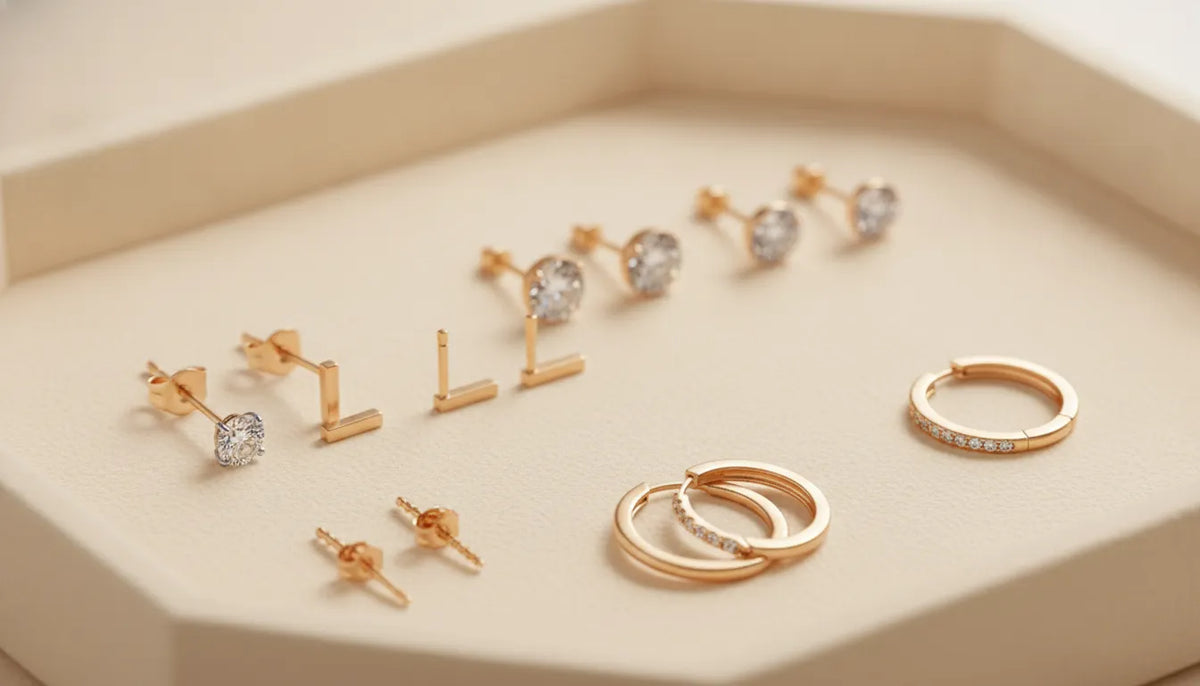
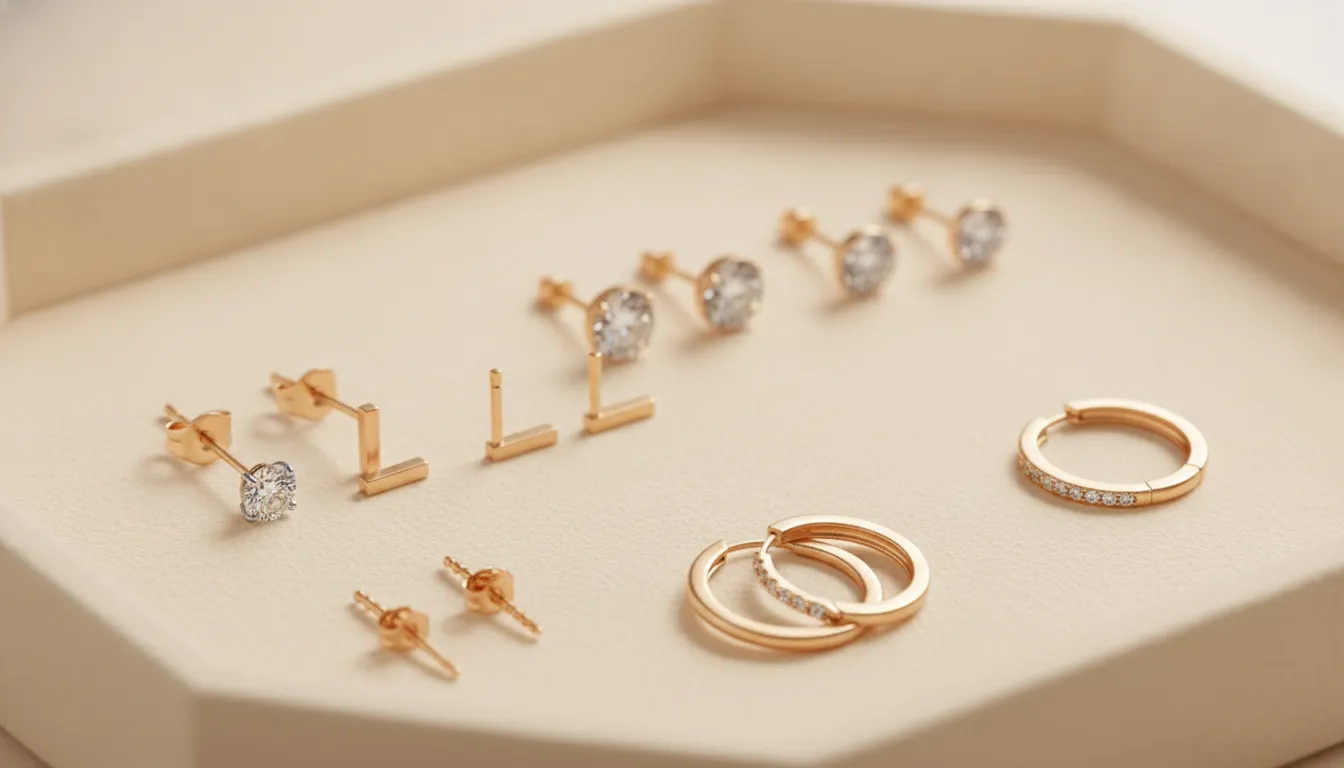
Earring backs fall into a few basic groups. Friction backs slide onto a post. Threaded backs screw into place. Locking backs use a release mechanism. Hinged backs close around an earring. Wires and clips support drop or non-pierced styles. The best option depends on the earring's weight, the post or wire design, your preferred feel, and how much security you need.
It helps to separate the closure from the earring itself. A stud may use a removable back, while a hoop or huggie often has a built-in latch that completes the silhouette. Drop earrings can use a separate lever back, a shepherd's hook, or another wire construction. The visible shape is only part of the decision. The post length, the thickness of the post, the available thread, and the amount of movement all affect whether a backing is compatible.
Security also has a practical meaning. A closure can be mechanically strong but still unsuitable if it is difficult to fasten, too tight behind the lobe, or incompatible with the earring post. The most useful choice is the one you can put on correctly, feel comfortable wearing, and inspect before each longer wear.
- Push or butterfly backs: A friction-fit back slides over a straight post and is the most familiar everyday option.
- Bullet or bell backs: A rounded or cone-shaped friction back offers a smooth profile behind the lobe.
- Screw backs: A threaded back turns onto a matching threaded post for a deliberate, secure fit.
- Flat backs: A low-profile disc sits behind the ear and can feel neat against hair or a pillow.
- Locking backs: A release button or spring mechanism helps secure the back to its post.
- Latch and lever backs: A hinged closure folds around or catches the post, making it useful for moving earrings.
- Omega backs: A hinged clip supports the post and distributes the feel of a heavier earring.
- Shepherd's hooks: A curved wire passes through the piercing and supports a drop or dangle without a separate back.
- Clip-on backs: A hinged or screw-adjusted clip holds an earring without a pierced ear.
How do push backs, butterfly backs, and bullet backs work?
Push backs use friction to grip a straight earring post. Two small metal loops or a shaped plate press against the post, while the outer portion gives you a surface to hold. Butterfly backs are the most recognizable version. Bullet or bell backs use a rounded or cone-like outer shape, but they follow the same basic slide-on principle.
These backs are easy to use, widely compatible with stud earrings, and convenient when you change jewelry often. They are a natural match for lightweight to moderate-weight studs and simple everyday earrings. Because they rely on friction rather than a thread or latch, check that the back still grips the post before wearing a valuable pair for a long day. A back that slides too freely may need replacing.
| Back type | How it closes | Often suits | What to consider |
|---|---|---|---|
| Push or butterfly | Friction grip on a straight post | Everyday studs. | Fast to use, but grip should be checked over time. |
| Bullet or bell | Friction grip with a rounded outer form | Studs and small drops. | Smooth profile and easy handling. |
| Screw | Threaded post and threaded back turn together | Valuable or frequently worn studs. | Secure feel, but slower to put on and remove. |
| Flat | Low-profile disc grips or threads onto the post | Studs and low-profile looks. | Comfort depends on disc size and post length. |
| Latch or hinge | Hinged arm catches or encloses the post | Hoops and huggies. | Convenient, with the closure integrated into the earring. |
| Lever back | Spring-loaded lever closes around the wire | Drop and dangle earrings. | Helps keep a moving earring attached. |
| Omega | Hinged clip supports the post | Heavier statement earrings. | Supportive, though the clip feel is personal. |
Are screw backs more secure than push backs?
Screw backs can offer a more deliberate hold because the threaded back must turn onto a matching threaded post. They are often considered for valuable studs, earrings worn during active days, or anyone who wants a backing that is less likely to slide off accidentally. They are not automatically the right choice for every person or earring, however. The thread must be kept clean, the post and back must match, and the wearer must be comfortable taking the extra time to fasten them.
Push backs are not inherently poor quality. A well-fitting friction back on a suitable post can be practical and secure for everyday studs. The useful comparison is not simply screw versus push. Consider the earring's weight, how often you remove it, how much post is available, and whether you prefer quick changes or a more intentional closure.
What are flat backs and locking backs used for?
Flat backs are designed around a low-profile disc or plate behind the ear. The shape can reduce the amount of hardware that catches on hair or presses into the head. But comfort still depends on the disc's size, the post length, and the wearer's ear anatomy. Some flat-back systems use a threaded post, while others use a compatible push-on component, so always pair the back with the post it was designed to fit.
Locking backs, including La Pousette-style systems, use a release mechanism rather than a simple friction plate. A button, spring, or internal component holds the back in position until it is intentionally released. These backs can be a thoughtful option for fine studs that need a higher-security closure, but correct operation matters. Read the maker's instructions, make sure the release is fully closed, and never force a back that does not fit its post.
Contact LUCE if you would like help thinking through an earring style, post, or backing before you choose.
Which earring backs suit hoops, huggies, drops, and dangles?
The earring's silhouette usually points you toward its closure. Hoops and huggies often use a latch, hinged post, or click-style closure built into the hoop itself. This keeps the form clean and avoids a separate backing that could interrupt the circle. Before wearing a hinged hoop, confirm that the post has passed fully into the receiving notch and that the closure has clicked into place.
Drop and dangle earrings commonly use lever backs, latch backs, or shepherd's hooks. A lever back encloses the wire with a hinged arm. While a shepherd's hook leaves the wire open and relies on the earring's shape and fit through the piercing. Lever backs can feel reassuring for moving earrings, while hooks offer a lighter, more fluid look. Neither is universally best: consider the length, movement, weight, and occasion.
Studs offer the widest choice. Push, bullet, screw, flat, and locking backs may all be appropriate when the post and back are compatible. For a small, lightweight stud you change frequently, a simple friction back can be convenient. For a valuable stud worn often, a threaded or locking system may better match your priorities. The back should sit close enough to stabilize the earring without pinching.
How should you choose an earring back for comfort and security?
Start with the job the earring needs to do. A tiny stud for a short outing has different requirements from a substantial drop worn for an evening. A backing that feels comfortable to one person may feel too tight or too prominent to another. Use this checklist to narrow the options without treating a security label as a guarantee.
Pay attention to the relationship between the front of the earring and the hardware behind the lobe. A larger stabilizing disc can help an earring sit more evenly, but it may not suit every piercing or sleeping position. A compact back may disappear visually, yet offer less support for a design that moves throughout the day. If you are unsure, compare the earring's balance while it is worn rather than choosing from the closure name alone.
- Match the mechanism to the post or wire. A threaded back needs a threaded post, and a hinged closure needs its matching receiving point.
- Consider the earring's weight. Heavier earrings may need a supportive back, a larger stabilizing disc, or a closure designed for movement.
- Think about your routine. Choose a closure you can fasten correctly and comfortably every time you wear it.
- Check the fit behind the lobe. The back should stabilize the earring without leaving a painful pressure point.
- Factor in movement. Drops and dangles benefit from closures that keep the earring attached as it swings.
- Inspect the hardware. Look for a bent post, weak hinge, loose grip, or damaged thread before wearing the pair.
- Plan for the setting. If you sleep, exercise, travel, or change jewelry often, choose a backing that fits those habits rather than relying on a generic ranking.
How do you care for and replace earring backs?
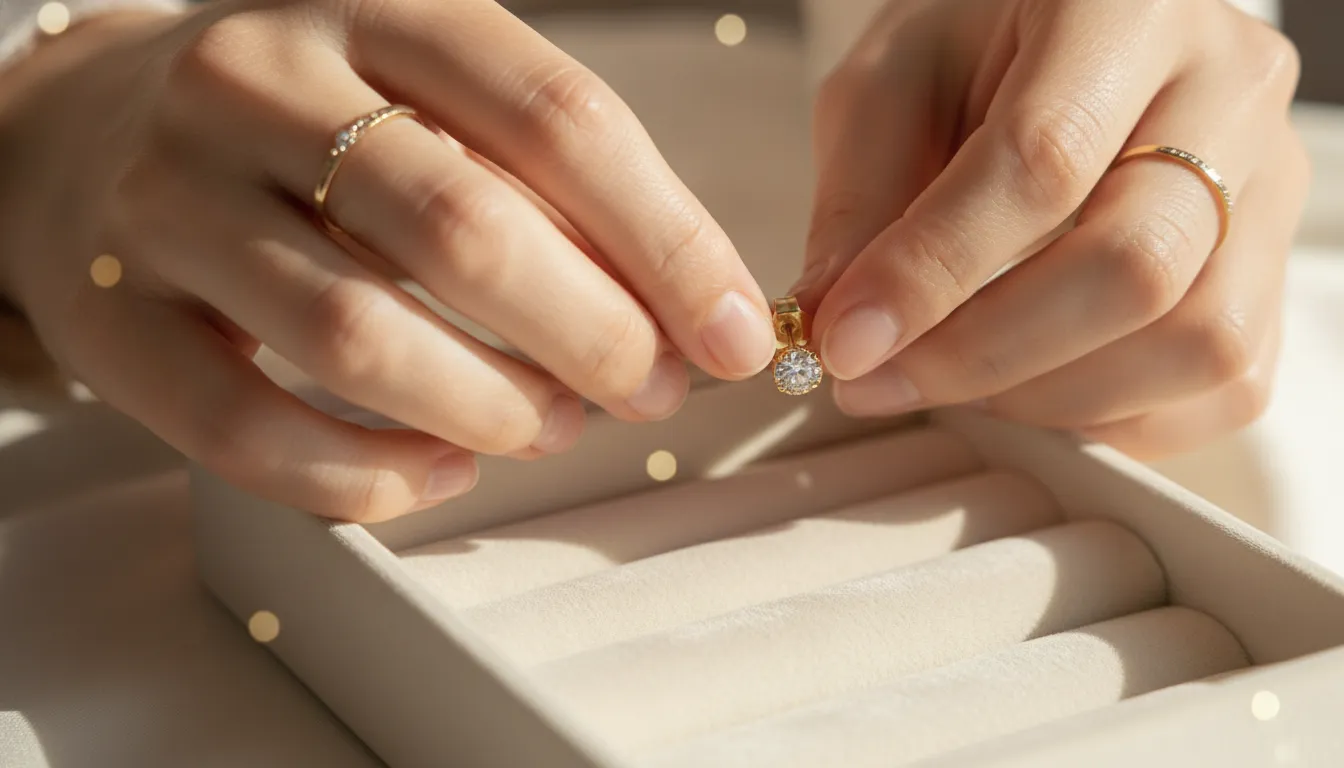
Small earring backs collect skin oils, dust, and product residue, especially when they are worn frequently. Wipe compatible metal backs gently with a soft, lint-free cloth and follow the care guidance for the material. Keep backs in a small compartment or pouch so they do not disappear into a jewelry box, and store pairs together when possible.
Replace a back when it no longer grips, the hinge does not close cleanly, the release button sticks, or the threaded component feels damaged. Do not mix a random replacement with a specialty post if the parts are not designed to work together. If an earring feels loose, tilts sharply, or causes pressure, remove it and have the fit assessed by a qualified jeweler rather than forcing the hardware.
When traveling, bring a few compatible spare backs for everyday studs, but keep valuable earrings in a secure case. A small spare can prevent a rushed choice, while a careful inspection before leaving home helps you catch a weak closure before it becomes a lost piece.
Browse the LUCE earrings collection for modern fine-jewelry styles, then reach out if you want a closer conversation about fit and wearability.
Frequently asked questions about earring backs
What is the most common type of earring back?
The push or butterfly back is the most familiar type. It slides onto a straight post and uses friction to stay in place. It is commonly paired with stud earrings because it is quick to use and compatible with many standard posts.
What type of earring back is best for studs?
Push, bullet, screw, flat, and locking backs can all suit studs when they match the post and the earring's weight. Choose based on how often you remove the studs, how much security you prefer, and whether the backing feels comfortable behind your ear.
What type of earring back is best for drop earrings?
Lever backs, latch backs, and shepherd's hooks are common choices for drop earrings. Lever and latch mechanisms enclose the wire, while a shepherd's hook gives a lighter open-wire profile. The drop's length, weight, and movement should guide the choice.
Are flat backs more comfortable?
Flat backs can feel comfortable because their profile is low behind the ear, but comfort depends on the disc, post length, fit, and the wearer. A flat back is not automatically better for every ear or every earring.
How do I know if an earring back is secure?
A secure back should fit its post correctly, hold the earring in a stable position, and close or grip without slipping or pinching. Test the closure gently before wearing the earring and inspect it regularly for wear. If the mechanism feels loose or damaged, replace it or ask a jeweler to assess it.
Can I use any earring back with any earring?
No. Posts, threads, wires, hinges, and release systems are not interchangeable in every design. Use a compatible back that fits the earring's construction, and ask a jeweler before substituting hardware on a valuable or specialty piece.