Custom Designer Jewelry Process: From Idea to Heirloom
A custom piece of jewelry should feel personal before it ever reaches the workbench. For shoppers in West Palm Beach and the NORA District, the experience begins with a conversation, not a fixed menu of choices. You bring the story, inspiration, or milestone, and the jeweler helps translate it into a considered design.
Start a custom jewelry conversation with LUCE.
The custom designer jewelry process moves from an initial conversation through concept development, gemstone selection, and a transparent cost estimate before production. That collaborative path can support a meaningful redesign, a bespoke engagement ring, or an entirely original piece. Decisions are shaped around your style, intended wear, materials, and project details.
At LUCE, the goal is a piece that feels contemporary enough for everyday luxury while carrying the meaning that may make it a future heirloom. Understanding each stage makes it easier to prepare, ask useful questions, and know what to expect as an idea becomes finished jewelry.
What Is the Custom Designer Jewelry Process?
The custom designer jewelry process is a guided collaboration that turns a personal idea into a considered finished piece. Rather than selecting a ready-made design, you work with a jeweler to define what you want to create. Shape the concept, and make decisions that give the jewelry its meaning and character. At LUCE, that journey is described as moving from the first sketch through the final polish, with thoughtful guidance along the way.
Different starting points, one collaborative approach
Custom design can begin with something you already own. A redesign may give inherited or sentimental jewelry a new silhouette while preserving the story attached to it. It can also begin with a milestone, such as a bespoke engagement ring created around your relationship and the way you want to wear it. Or the starting point may be entirely open: an original piece shaped around your own references, taste, and imagination. LUCE describes its service as available for meaningful redesigns, bespoke engagement rings, and pieces that are entirely your own.
Those projects are different in subject, but the process remains personal rather than one-size-fits-all. The design should reflect the reason you are making the piece, how you expect to wear it, and the details that feel most like you. The goal is not simply to modify an existing object or reproduce a reference. It is to develop a piece with a clear point of view and lasting personal relevance.
From conversation to final polish
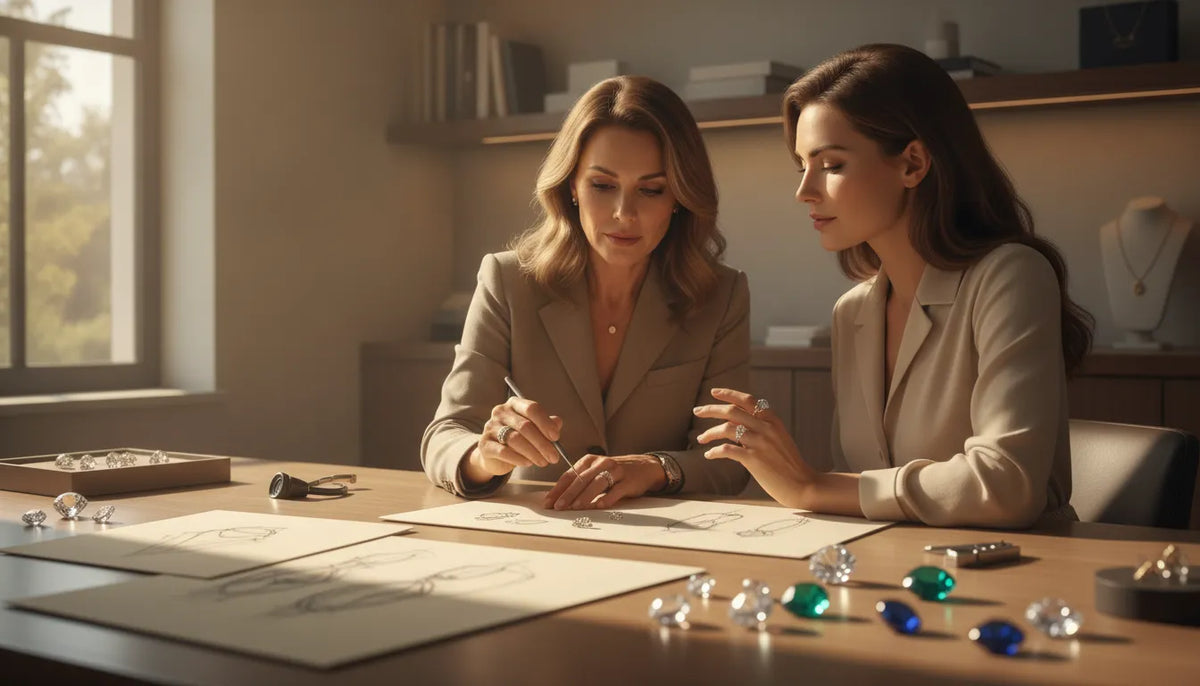
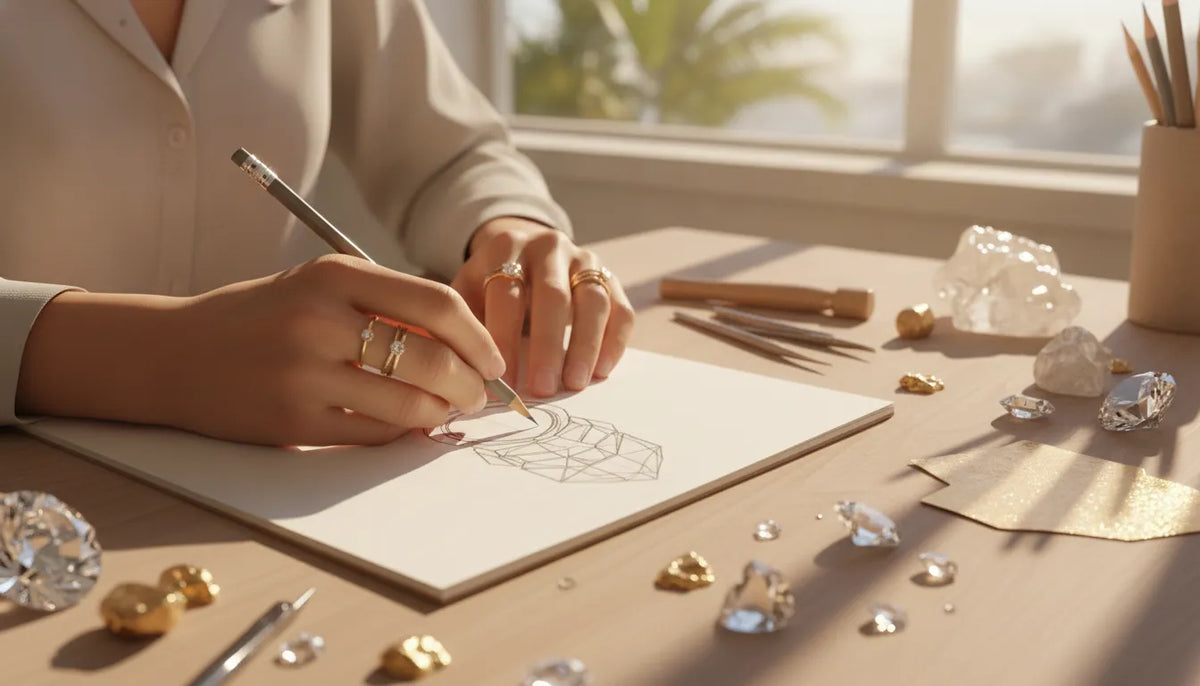
The first step is a conversation about your ideas, inspiration, and what you are hoping to create. You do not need to arrive with a finished drawing. Images, heirloom pieces, design references, or even a feeling you want the jewelry to express can give the discussion a direction. From there, the concept develops through collaborative design decisions and a first sketch. Guidance continues as the piece takes shape, so the final direction remains connected to the original intention.
That collaborative path continues through the final decision and polish. LUCE's custom jewelry design process is built around staying involved from the first idea through the finished piece, with the design refined as the vision becomes clearer. For West Palm Beach and NORA District shoppers, that makes custom jewelry less intimidating. It is a conversation-led way to create something personal, whether you are reimagining a keepsake, marking a milestone, or starting with a blank page.
Step 1: Start With the Story, Purpose, and Design Brief
A strong custom piece begins before a sketch. The first conversation gives you and your jeweler a shared understanding of what the design needs to express, how it should be worn, and what practical boundaries matter. LUCE describes this opening step as a discussion of your ideas, inspiration, and what you hope to create.
Bring the meaning behind the piece
Start with the occasion or purpose. You may be marking an engagement, anniversary, birthday, family milestone, or a personal moment that does not need an explanation beyond your own story. A redesign may carry an existing stone or inherited piece into a new form. An original design may begin with a feeling, an image, or a detail you want to keep close. There is no required level of certainty. Inspiration can come from jewelry you already wear, architecture, nature, travel, vintage references, or simply the way you want the finished piece to feel.
Define style, budget, and timing
Consider the visual language that feels most like you. Do you prefer clean and modern lines, classic proportions, softer curves, or something more sculptural? Styles can range from classic to modern, and your preferences help guide the conversation rather than lock you into a finished answer. It is also useful to share budget parameters early. You do not need to know an exact price before the consultation, but an honest range helps keep recommendations relevant as the design develops.
Timing belongs in the brief as well. Share the date or occasion you are planning around, even if it is still flexible. The jeweler can then explain which details may affect the schedule and what timing should be confirmed for your project. Clear expectations at the beginning make later decisions easier.
What to bring to a consultation
Bring reference images, saved designs, sketches, or pieces whose proportions you admire. If the project is a redesign, bring the jewelry or gemstones you want discussed, along with any information you have about them. Notes about ring size, preferred metal, daily wear, and comfort can also help. Most importantly, bring questions. A welcoming consultation should leave room to explore possibilities, understand tradeoffs, and shape a direction together without pressure.
Step 2: Shape the Concept and Choose Materials
Once the design brief is clear, the idea begins to take a more defined shape. LUCE identifies concept and design as the second step in its custom process, where a broad direction becomes a considered piece through sketches, proportions, and guided decisions. Early drawings can clarify the relationship between the central element, surrounding details, negative space, and the overall scale of the jewelry. The goal is not simply to make a piece look striking on paper, but to make sure its proportions feel right for the person who will wear it.
Material choices are part of that conversation. Metal affects color, weight, structure, and the way a design feels against the skin. Gold, platinum, silver, or another suitable option may be considered based on the design and project requirements, but availability and suitability should be confirmed for the individual piece. A metal surface can also be smooth, textured, polished, or finished in a way that changes how the design catches light.
Gemstone selection follows as the third step in LUCE's published journey. Shape is especially important because it can influence the proportions and structure of the finished design. Common options include round, square, oval, pear, marquise, and heart shapes. GIA notes that a gemstone's shape helps determine the overall ring design, so choosing a stone is not an isolated decision. It should work with the intended silhouette, setting, and way the piece will be worn.
Design decisions to consider together
- Proportion: Consider the relationship between the stone, band, links, or surrounding details so no element feels accidental or oversized.
- Setting: Prong, bezel, and other setting approaches affect the appearance of the stone as well as how it is held in place. Secure settings require sound engineering, not just visual appeal.
- Comfort: Think about profile, edges, weight, movement, and whether the piece needs to work for everyday wear.
- Practical constraints: Cost, timeline, size, style, and manufacturing methods all influence what can be made successfully. GIA describes these constraints as part of responsible jewelry design and development.
These choices are collaborative rather than purely technical. A refined concept balances personal meaning with durability, comfort, and the realities of making the piece. Asking how a material or setting supports the intended use can keep the design beautiful, wearable, and aligned with the original story.
Sources: GIA guidance on gemstone shape and GIA jewelry design and technology principles.
Step 3: Review the Estimate Before Production
Before production begins, the estimate should turn an appealing concept into a clear, shared plan. LUCE identifies a transparent cost estimate as the fourth step in its custom design journey. It is the point to confirm what the proposed piece includes, which decisions are still open, and how the design reflects your priorities.
Ask for the estimate to identify the main components of the project: the selected metal, gemstone or stones, setting approach, labor, and the scope of the finished piece. If the design includes a meaningful redesign or an unusual detail, make sure that work is described rather than left to assumption. You should also understand whether the estimate covers only production or includes other agreed services, such as sourcing or finishing. LUCE's exact fee and deposit structure should be confirmed directly for your project rather than inferred from a general article.
Use the estimate to make informed design choices
Budget and timeline are not separate from design. GIA describes custom jewelry development as working within practical constraints that can include cost, time, size, style, and manufacturing methods. A change in stone selection, scale, metal, or construction may affect the overall plan. That does not make one choice better than another. It gives you a useful way to decide where to invest, where to simplify, and which details matter most to the story behind the piece.
Before approving, ask the following questions:
- Confirm which materials, stones, setting, and finishing work are included.
- Ask which design details are fixed and which can still be adjusted.
- Clarify the timeline and the factors that could change it.
- Ask when you will approve the final design and scope.
- Confirm what happens if a material or stone becomes unavailable.
| Estimate detail | Why it matters |
|---|---|
| Metal and gemstones | Confirms the core materials and selected specifications. |
| Setting and construction | Clarifies how the stones will be held and how the piece will be made. |
| Finishing and scope | Shows what work is included before production begins. |
| Timing and decision points | Sets expectations for approvals and the expected schedule. |
Take time to review the answers. A thoughtful estimate should leave you comfortable with the design, the scope, and the next decision before production starts.
Sources: LUCE custom design process and GIA jewelry design and technology guidance.
Step 4: Approve, Make, and Finish the Piece
Approval is the point where the developing concept becomes a clear production direction. It is not the same as receiving a finished piece. Before work begins, review the design, materials, proportions, practical details, estimate, and expected timing with the jeweler. Ask questions while changes are still part of the conversation. LUCE describes its custom service as collaborative from the first sketch through the final decision, with guidance and design recommendations along the way.
Once the concept is approved, the production phase turns those decisions into a wearable object. The exact method depends on the design and should be confirmed for your project. A piece may involve coordinated work across fabrication, construction, stone setting, and finishing rather than one single technique. Jewelry-making education from North Bennet Street School describes the field as requiring hand skills, focus, and a thorough understanding of materials. Its curriculum includes metal forming, soldering, polishing, engraving, and setting stones in precious metals.
Secure settings and thoughtful construction
Craftsmanship is also engineering. A setting must hold the gemstone securely while supporting the intended look and comfortable wear. The Gemological Institute of America notes that jewelry designers need to understand how strong prongs must be to keep a gemstone in place. That practical judgment matters when evaluating the relationship between the stone, setting, metal, scale, and everyday use.
LUCE says its skilled artisans bring designs to life with care and precision. A quality check should compare the finished piece with the approved design, then examine details such as stone security, surface finish, symmetry, edges, and overall wearability. Small refinements in polishing or finishing can make the difference between a piece that merely matches a sketch and one that feels resolved on the body.
For local context, LUCE's family jewelry heritage helps explain the brand's connection to long-term craftsmanship without suggesting that a named family member made every custom piece. The result should reflect your story and the decisions you approved, with care that supports its role as a future heirloom.
How Long Does Custom Designer Jewelry Take?
Timing depends on the design, the materials selected, and how much specialized work the piece requires. A straightforward custom design generally moves more quickly than a piece with intricate construction, unusual proportions, or stones that need to be matched. The best way to plan is to discuss the expected timeline early, before making decisions around an engagement, anniversary, travel date, or other milestone.
As a general reference, the Gemological Institute of America advises allowing at least two weeks for a ring with a straightforward design. That is a planning guideline, not a promise for every project. GIA also notes that complex designs or work requiring matched stones may take five to six weeks or longer. Stone sourcing, design refinement, fabrication, setting, and finishing can all affect the schedule. You can review the broader planning guidance in GIA's custom jewelry timeline advice.
Straightforward designs and more involved projects
A relatively simple piece may have a clear concept, readily available materials, and a setting that does not require extensive engineering. More involved work may include several stones that must coordinate in size or appearance. It may also involve a detailed structure, a redesign that incorporates existing jewelry, or a form that requires additional fabrication and finishing. These distinctions do not determine an exact deadline, but they explain why two custom pieces can have different production schedules.
LUCE's customer information gives a typical estimate of two to three weeks for custom work. Treat that as general guidance only, since current timing must be confirmed for your specific project. During an initial conversation, share the date you hope to receive the piece and ask which decisions or materials could affect the schedule. If your occasion is date-sensitive, begin the LUCE custom jewelry design process as early as practical, then confirm the current timing before moving forward.
Talk with LUCE about your custom jewelry timeline.
Frequently Asked Questions
How much does custom jewelry cost?
There is no single price because the total depends on the design, metal, gemstones, setting, labor, and scope of the project. A consultation should clarify your priorities and budget parameters, followed by a transparent estimate before production begins. Ask what is included, which decisions can affect the total, and when the estimate can be confirmed.
How long does custom jewelry take?
Timing depends on the complexity of the design, material availability, and whether stones need to be matched. The Gemological Institute of America advises allowing at least two weeks for a straightforward custom ring. GIA also notes that complex or matched-stone work can take five to six weeks or longer. Review the GIA timeline guidance, then confirm the current schedule for your specific piece before planning it around a milestone.
What should I bring to a custom jewelry consultation?
Bring inspiration images, meaningful jewelry or stones you may want to redesign, and notes about how you plan to wear the piece. It also helps to consider your preferred style, approximate budget, desired materials, and occasion. You do not need a finished concept. The conversation is designed to help shape your ideas into a clear direction.
Can an existing piece be redesigned into something new?
Yes, redesign is one of the purposes LUCE lists for its custom design service, alongside bespoke engagement rings and entirely original pieces. Bring the existing jewelry so the team can discuss its condition, sentimental details, and which elements may inform the new design. Material reuse and stone suitability should be confirmed for the individual project.
How do I care for a custom piece after it is finished?
Follow care guidance for the specific metal, gemstones, and setting, and ask the jeweler when professional cleaning or inspection is appropriate. If the piece may need future sizing or additional protection, ask which options suit its materials, setting, and intended wear. Thoughtful maintenance helps a personal piece stay wearable as it becomes a future heirloom.
Contact Us to Begin Your Custom Design
A thoughtful conversation can help clarify your ideas, priorities, and next steps before your piece takes shape. To discuss a custom jewelry design consultation with LUCE, contact LUCE through our contact page. Share what you are imagining, whether you are exploring a meaningful redesign, an original piece, or a future heirloom, and the team can guide the conversation from there.