Men's Wedding Bands: A Guide to Fit and Style
A wedding band can look simple on display, but the right choice depends on how it feels and functions every day. Profile, width, interior shape, metal, finish, and fit all affect how a ring sits on the hand and wears over time. They also shape how it works with your style.
Contact LUCE for thoughtful guidance on your options.
The best men's wedding bands balance proportion, comfort, durability, and personal taste. Start by considering your daily routine and the presence you want on your hand, then compare widths, profiles, metals, finishes, and sizing details before choosing a design.
There is no universal width or material for every wearer. A band that feels substantial on one hand may feel restrictive on another. A finish that looks refined at first may require a maintenance routine you do not want. Begin with the way the ring should fit into your hand and routine. Then use the details that follow to refine the choice.
How should men's wedding bands fit your hand and routine?
A well-fitting band should feel secure without demanding attention throughout the day. Start with your hand proportions. Then consider the profile, width, interior shape, and work your hands regularly do. There is no hard and fast rule for men's wedding bands. Choose the band that feels balanced on your finger and suits your routine. GIA also emphasizes that lifestyle and personal style should guide the decision.
Let width follow proportion, not a fixed measurement
Men's bands commonly fall around 5mm to 8mm, but that range is a starting point rather than a universal formula. A 4mm to 6mm band tends to look subtle and refined, while an 8mm or wider band creates a more deliberate statement. A 6mm width is often described as a balanced classic, yet the same width can look different on a narrow finger than on a broader hand.
Try more than one width before deciding. Someone with a slimmer finger may prefer a 5mm or 6mm band for a lighter visual proportion. Someone with larger hands may appreciate the presence of 7mm or 8mm. The numbers may look close on paper, but a 6mm and an 8mm band can feel noticeably different once worn.
Understand profile and comfort-fit interiors
Profile describes how high the band sits and how its interior and exterior are shaped. A comfort-fit interior is slightly domed. It reduces the metal contacting the finger and helps the ring slide on more easily. This construction can be useful with a wider band, but it changes the fit. Comfort-fit bands may run about half a size smaller than standard-fit bands. Do not assume a measurement transfers directly between constructions.
GIA identifies both wide bands and convex interiors as special considerations when determining ring size. Try the actual width and interior profile together whenever possible, rather than sizing from a thin sample or a paper chart alone.
Match the band to your daily routine
Your routine should influence both comfort and complexity. If you work with your hands, train, play sports, or spend time outdoors, a simpler profile may be easier to live with than an ornate design or one carrying multiple exposed gems. GIA notes that active wearers may benefit from simpler bands because details and stones can be damaged during strenuous activity.
For example, a client who types and travels daily might prioritize a moderate width with a smooth comfort-fit interior. Someone who works with tools may prefer a lower-profile, uncomplicated band and remove it during tasks where jewelry could be exposed to impact. The right fit is not only about the ring finger at the appointment; it is about how the band behaves across an ordinary week.
Which metals make sense for men's wedding bands?
Metal choice is less about finding one universally superior option. Match the band to the way you live. Consider daily activity, maintenance, how the metal feels on your hand, and whether you may want the ring resized later. The Gemological Institute of America recommends balancing durability, maintenance, and style rather than treating one material as the answer for everyone.
| Metal | Durability and feel | Maintenance and sensitivity | Future resizing |
|---|---|---|---|
| 14K gold | A practical everyday balance, with a familiar precious-metal feel and a range of available colors. | Inspect the alloy details if skin sensitivity is a concern. White gold may require replating over time to maintain its finish. | Generally resizable within a range. GIA identifies 14K gold as suitable for everyday wear and notes that it can be resized up to two sizes. |
| 18K gold | Contains more pure gold than 14K and offers a richer color, but it is typically softer, so it may show wear more readily. | Choose it for its color and precious-metal character, then confirm the alloy composition if you have known sensitivities. | Generally resizable within a range, subject to the band's construction. |
| Platinum | Naturally white, dense, and substantial on the hand. It suits everyday wear, although a larger band may feel heavier. | Often considered a strong option for people concerned about metal sensitivity. Its finish and weight are part of the appeal, not afterthoughts. | Resizable, though GIA notes that resizing can be more expensive than with some alternatives. |
| Titanium | Lightweight and a sensible material to consider for an active wearer who prefers a simpler band. | Its low weight can be comfortable for all-day wear. Confirm the precise alloy and care guidance before choosing it for sensitive skin. | Typically cannot be resized, so accurate measurement and allowance for future fit changes matter. |
| Tungsten | Hard and scratch-resistant, with a noticeably weighty feel that some wearers prefer. | Keep it away from harsh chemicals. Clean it with a soft cloth, warm water, and detergent-free soap. | Generally cannot be resized. Treat sizing as a long-term decision rather than assuming the band can be adjusted later. |
For many shoppers, the most important divide is adaptability. Gold and platinum offer a path for future resizing, while titanium and tungsten usually require more confidence in the original size. Width, interior shape, and the condition of the ring also affect what a jeweler can do, so a resizing statement should never replace an in-person fit check.
LUCE's verified brand context includes jewelry made with 14K or 18K gold and titanium, but the exact material and construction must be confirmed for any specific piece. For a closer look at how karat affects color and wear, read the men's gold ring karats guide. The right choice is the one that supports your routine, feels natural on your hand, and still makes sense for the life you expect the band to have.
Sources: GIA's guide to ring materials for everyday wear and Blue Nile's men's wedding ring guide.
How do finish and details change a band's character?
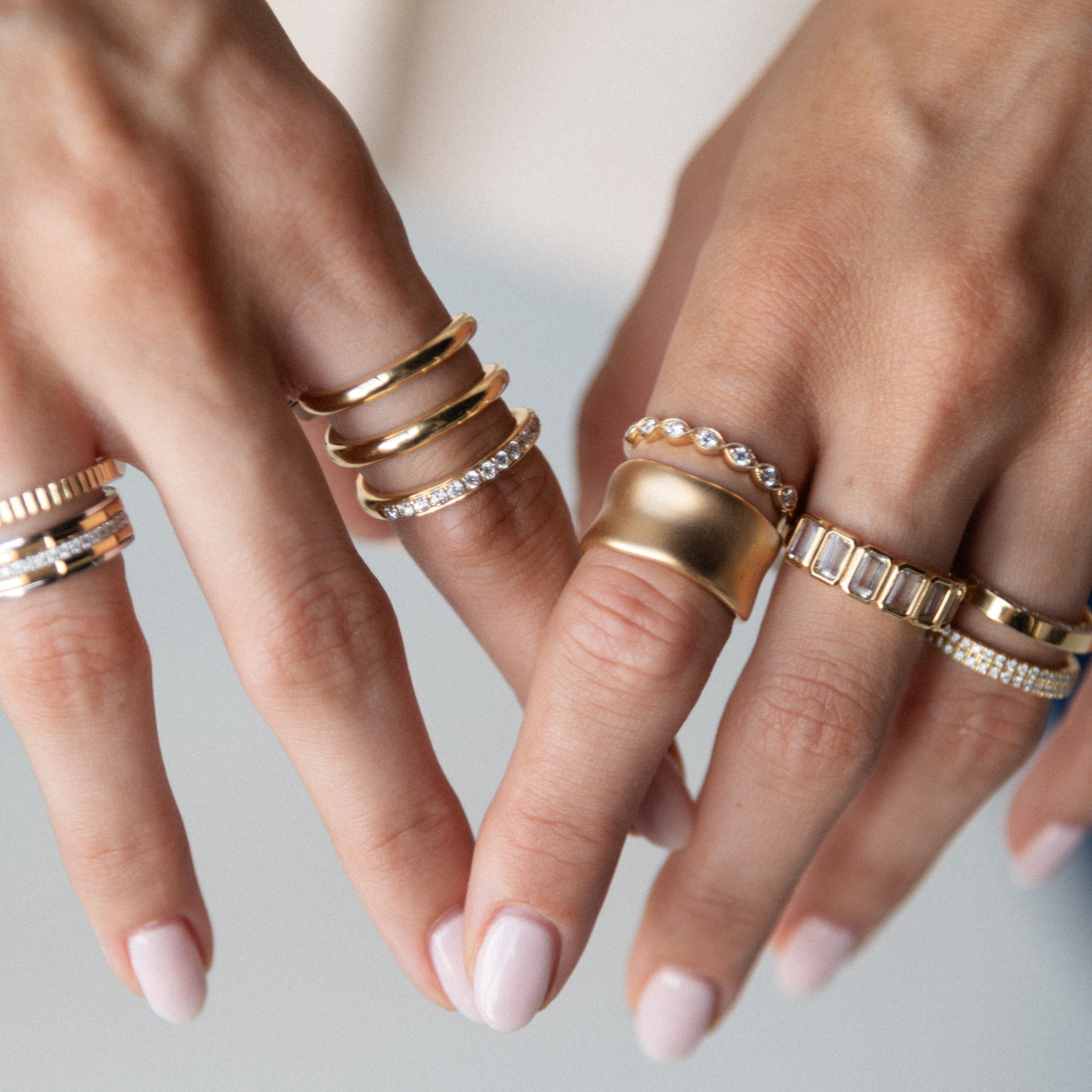
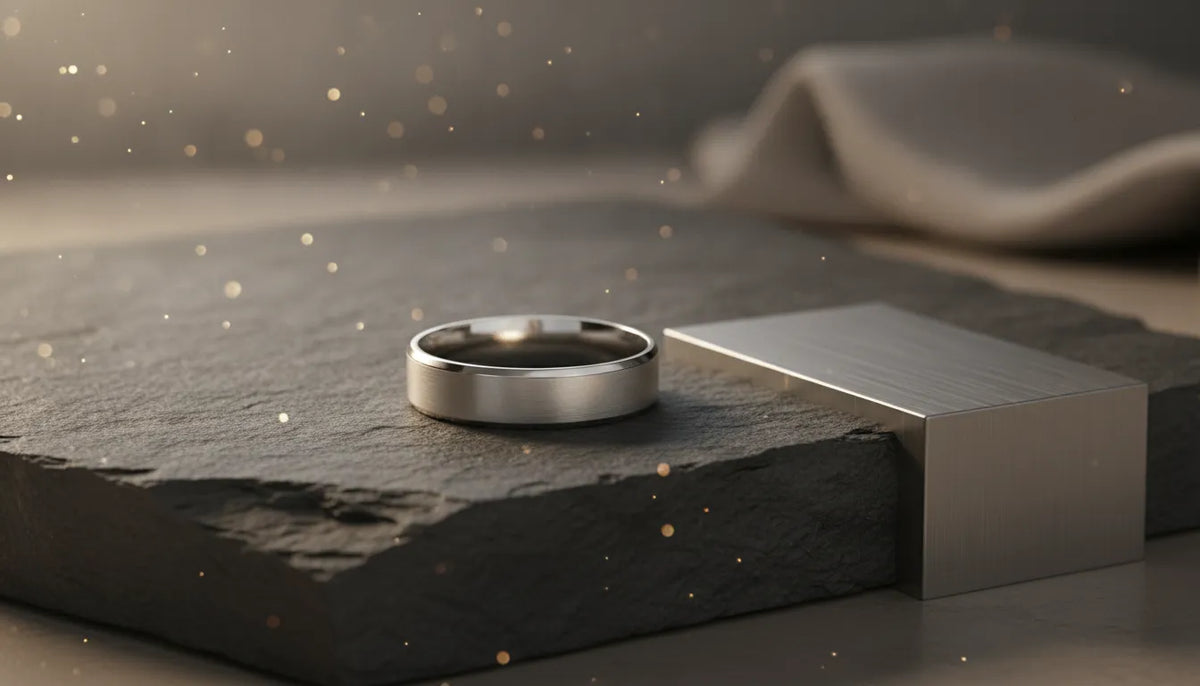
Once the profile and metal feel right, the surface treatment can shift the entire mood of a band. A polished finish reflects light with a bright, dressy effect. It suits a classic approach, but fine scratches become more visible as the ring is worn. Matte and brushed finishes absorb more light, creating a quieter, contemporary look that can be more forgiving of everyday marks. Neither is universally better. The right choice depends on whether you want your men's wedding bands to feel crisp and reflective or understated and tactile.
Mixed finishes add another layer without requiring a complicated design. A polished edge against a brushed center can emphasize the band's shape, while a two-tone treatment can create contrast between two gold colors or between gold and platinum. These details are especially useful when you want visual interest that remains restrained. They also give you a way to coordinate with other jewelry without making every piece identical.
Choosing diamond details for real life
A few diamonds can make a band feel personal without turning it into a formal statement piece. For someone who works with their hands, exercises frequently, or spends time outdoors, simpler detailing may be easier to live with. GIA notes that ornate bands and multiple gems can be more vulnerable during strenuous activity, so the daily routine should guide the design: consider the lifestyle behind the ring choice.
If you want subtle sparkle with a low profile, ask about flush or channel-style settings. A flush-set diamond sits into the mounting, helping protect the stone and reducing the chance of a raised detail catching on clothing or equipment. GIA illustrates how a flush setting can protect a diamond in a men's wedding band: see the setting example. For more ideas on balancing proportion, stone detail, and a masculine point of view, explore this men's diamond ring guide.
Coordinating without matching exactly
Partners do not need identical rings to look connected. You might share a metal, repeat a finish, or echo a design motif while choosing different widths and proportions for each hand. One ring can be fully polished while the other uses a brushed surface with a polished edge. This approach keeps the pair visually related while allowing each person to choose a band that feels comfortable and authentic.
What should you check before choosing your final size?
A ring should feel secure without creating pressure, and the right measurement depends on more than a number. Before finalizing one of the men's wedding bands you are considering, work through the construction, your daily routine, and any personalization plans.
- Measure the intended finger in realistic conditions. Have the finger measured when your hands are at a normal temperature, rather than immediately after intense exercise or exposure to significant heat or cold. Fingers can feel different throughout the day, so note whether the band remains comfortable as conditions change. A sizing chart based on an inside measurement can be useful, but it should support, not replace, an in-person check. GIA's ring-sizing guidance also identifies the ring's construction as an important consideration.
- Account for the band's width. A wider band usually feels snugger than a narrow band in the same nominal size because it contacts more of the finger. Try the actual width, or a closely matched sizing sample, instead of assuming a size that works for a slimmer ring will feel identical. GIA specifically lists wide bands as a special sizing consideration.
- Check the interior shape. A comfort-fit interior has a gentle dome that reduces contact and can help the ring slide over the knuckle more easily. Because that interior changes how the band sits, comfort-fit rings may require a different size than standard-fit designs. Convex interiors should be measured with their shape in mind, not treated as a flat band.
- Test it against your routine. Wear the sample long enough to notice rubbing, spinning, pinching, or resistance when making a fist. Consider work, exercise, travel, and tasks that involve frequent hand use. The fit should feel dependable during ordinary movement, while still allowing the ring to come off without force.
- Plan for future changes and finishing work. Weight, temperature, activity, and other normal changes can affect how a finger feels over time. Ask whether the selected metal can be resized and what range is practical before committing. If you want engraving or a later sizing adjustment, leave enough time in your personal schedule for those steps. Do not assume every metal or construction offers the same flexibility, and confirm the process before placing the order.
Trying the band in person, with its intended width and interior, is the most useful final check. It lets you judge comfort and proportion together before the ring becomes part of your everyday routine.
How can you build a personal decision framework?
Once you have considered fit, metal, and finish, narrow the field by ranking what matters most in daily life. There is no universal best material for a ring. GIA recommends balancing durability, maintenance, and personal style, while considering how the band will hold up to your routine. A useful framework turns those broad preferences into a short, practical brief.
Start with your non-negotiables
- Durability: If you work with your hands, train regularly, or spend time outdoors, prioritize a design and metal suited to that activity. Simpler bands may be easier to protect during strenuous wear. GIA notes that active wearers should consider strength and resistance to scratches when selecting a metal. Read GIA's guidance on everyday ring materials.
- Maintenance: Decide how much upkeep you are comfortable with. A bright polished surface may show fine scratches, while a brushed or matte finish can offer a more understated look and disguise everyday wear more effectively.
- Profile and width: Choose the visual presence first, then confirm how it feels on your finger. Common men's widths are roughly 5mm to 8mm, but hand proportion matters more than a fixed rule. A wider band may feel snugger, so try the exact construction before committing.
- Adaptability: Think beyond the wedding day. Gold and platinum bands are generally resizable within a range, while tungsten and titanium typically are not. If your finger size may change or you want future flexibility, include that consideration early in the decision.
Next, write a one-sentence brief such as: "I want a low-maintenance, medium-width band with a restrained finish that can adapt to everyday wear." That sentence helps separate essential qualities from details that simply caught your eye.
When does custom design make sense?
Custom design can be useful when no ready-made band combines the profile, width, finish, metal, and level of detail you want. It may also help when you are coordinating two rings without requiring identical proportions. Start with the brief above, then discuss which elements need to be built around your hand, lifestyle, or long-term plans. For inspiration, explore these custom wedding bands before deciding which design qualities belong on your shortlist.
Where can you explore men's wedding bands with guidance?
Once you understand the practical choices behind a band, the next step is to see how those decisions translate into real proportions, finishes, and details. LUCE is a modern fine-jewelry destination for shoppers who want a thoughtful, low-pressure way to browse. The men's jewelry collection offers a starting point for exploring the category, while keeping the decision centered on your hand, routine, and personal style rather than a fixed formula.
That perspective matters when you are comparing men's wedding bands. A band can look right in a photograph yet feel too broad, too heavy, or too visually pronounced once it is on your finger. Seeing different silhouettes in person, or discussing the details with a knowledgeable jeweler, can help you evaluate width, interior profile, finish, and how a design works alongside the jewelry you already wear. If you are shopping from outside West Palm Beach, the same questions can guide an online conversation before you narrow your choices.
LUCE also brings access to multigenerational jewelry expertise through a family legacy that reaches back to 1927. That background includes fabrication, polishing, finishing, and diamond setting, giving shoppers useful context for understanding how construction and detail affect a piece over time. It does not mean every band follows the same process or has the same specifications, so ask about the particular design you are considering.
For questions about a men's band, fit considerations, or the best way to continue your search, you can contact LUCE. A conversation can help you turn the guide's general principles into a more personal shortlist without committing to a style before you are ready.
Contact LUCE before the FAQ for no-pressure guidance on style, setting, proportion, and fit.
Frequently Asked Questions
How wide should a men's wedding band be?
Most men's bands fall between 5mm and 8mm, but the right width depends on your hand, existing rings, and preferred presence. A 6mm band is a balanced starting point, while slimmer hands may suit 4mm to 5mm and broader hands may carry 7mm to 8mm comfortably. Source: Love Wedding Bands.
What is comfort fit, and is it worth choosing?
A comfort-fit interior has a slight dome rather than a flat inner surface, reducing contact with the finger and helping the band slide on more easily. It can be especially useful for wider bands, but confirm sizing against the specific construction because the interior shape affects how the ring feels. Source: GIA.
Can a men's wedding band be resized?
Gold and platinum bands are generally more adaptable for future sizing, although the available adjustment depends on the design and construction. Tungsten and titanium typically cannot be resized, so precise measurement matters when choosing either material. Confirm the specific ring's resizing options before ordering.
Should a man's wedding band match his partner's ring?
Not necessarily. You can create a cohesive pairing through a shared metal, finish, or design motif while choosing a width and profile that suit each person individually. Coordinated does not have to mean identical.
Is a polished or matte finish better for everyday wear?
Polished metal has a bright, dressier appearance but can make fine scratches more visible. Matte or brushed finishes offer a quieter look and tend to disguise everyday wear more easily. Choose based on the character you want and the routine your band will face.
Contact LUCE About Your Men's Wedding Band
A thoughtful conversation can help you compare fit, materials, finish, and design direction with greater clarity. To discuss your questions with LUCE, contact us and share what you are considering.