Diamond Wedding Bands: A Guide to Style and Fit
Choosing a wedding band is less about finding one universally perfect style. It is more about balancing the way you want your ring to look, feel, and live with you.
Small decisions about diamond coverage, setting, width, and profile can change the character of the entire stack.
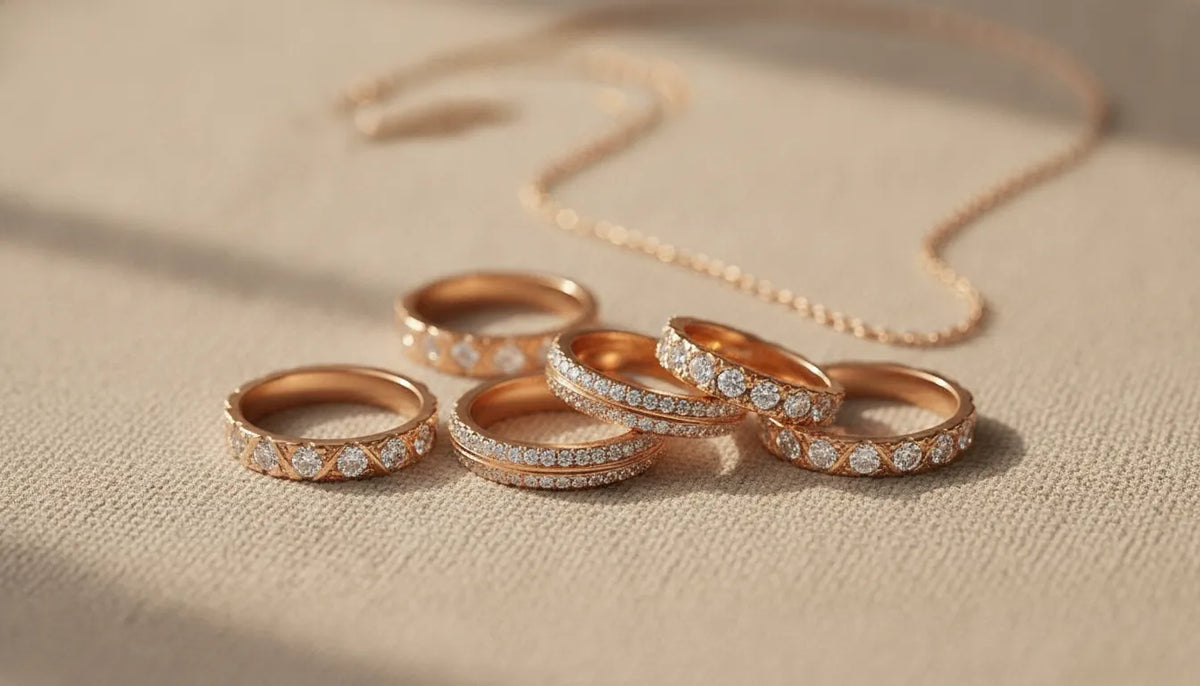
When comparing diamond wedding bands, start with the balance between sparkle, comfort, proportion, and pairing. A half-eternity band can keep the underside simpler, while a full-eternity design carries stones around the circumference. Pavé, channel, bezel, and prong settings each create a different mix of light, metal, protection, and texture, so your daily habits matter as much as your aesthetic.
Contact LUCE for thoughtful guidance on your options.
Before you choose a setting, consider how the band will sit beside your engagement ring or other jewelry. Think about whether its edges feel comfortable and how its width changes the overall balance.
The main styles offer a useful starting point for narrowing those choices.
What Are the Main Diamond Wedding-Band Styles?
Diamond wedding bands can look remarkably different even when they share the same metal and stone shape. The silhouette, diamond coverage, and setting structure determine whether a band feels quiet and streamlined, highly reflective, or designed to become the focal point of a stack. Start by deciding how you want the ring to function: as a solo statement, alongside an engagement ring, or as an anchor in a curated stack. You can browse the LUCE rings collection for examples, then compare the following style families.
Coverage and silhouette
- Straight bands: A straight band follows a consistent line around the finger. It can stand alone, sit beside an engagement ring with an intentional gap, or create a clean foundation for additional rings. Its simplicity makes width and diamond layout especially important to the overall impression.
- Contoured bands: A contoured or curved band is shaped to follow the outline of an engagement ring. This can reduce the gap between the two rings, but the exact curve should be considered alongside the center setting and profile of the ring it will accompany.
- Half-eternity bands: Diamonds cover part of the circumference, typically across the visible top portion. This approach keeps the diamond focus where it is most easily seen while leaving a plain section beneath the finger. Making the band a useful option to evaluate for daily comfort and wear preferences.
- Full-eternity bands: Diamonds continue around the entire circumference of the band. The continuous coverage creates sparkle from more angles, while the uninterrupted diamond layout means proportion, fit, and future resizing considerations deserve close attention before purchase.
Diamond layout and setting language
Pavé, channel, and multi-row describe how the diamonds are arranged rather than whether the band is straight or contoured. In a pavé layout, small diamonds sit closely together along the surface for a continuous-looking field of sparkle. A channel layout places diamonds between two strips of metal, creating a smoother metal edge. Multi-row bands use two or more lines of diamonds to create added visual width and a more graphic presence. These layouts can appear on different silhouettes, so ask about both the band shape and the setting when comparing options.
Band width also changes how a ring reads beside another ring and how the stack feels on the finger. Rather than choosing by diamond count alone, look at the relationship between coverage, setting, profile, and scale. Product-specific grades, dimensions, prices, availability, and setting details should come from the individual product page, not from a collection image or general category description.
Which Diamond Setting Is Right for Everyday Wear?
The right setting depends on what you want to notice first: open sparkle, a smooth outline, a more protected-looking edge, or the texture of visible metal. For everyday wear, compare the way each design presents the diamond with how you prefer to clean, inspect, and live with the ring. No setting is universally best, and a setting should be evaluated alongside the diamond's details rather than treated as a substitute for them.
Sparkle, security, and maintenance are connected
Prong settings hold a diamond with small metal claws, leaving more of the stone exposed so light can enter from multiple directions. That openness can suit someone who prioritizes noticeable sparkle and wants the diamond's outline to remain prominent. It also means the small areas around the prongs deserve regular attention during cleaning and inspection. Ask how the prongs are finished, how they feel against neighboring rings, and what care the jeweler recommends for the specific piece.
Pavé settings place small diamonds closely together along a surface, creating a continuous field of sparkle. They can be a natural choice when you want the band to read as a bright, textured line rather than a sequence of individually prominent stones. Look closely at the spaces between stones and the metalwork that holds them. Everyday maintenance is not only about making the diamonds shine; it is also about keeping the setting clean enough to inspect comfortably.
Channel settings secure diamonds between two strips of metal and create a smooth edge. That streamlined outline may appeal to someone who prefers fewer raised details when wearing a band beside other rings. Bezel settings take a different approach by surrounding each diamond with a thin metal rim. The rim becomes part of the visual design, so the band may feel more defined and metal-forward than an open prong style.
When comparing these options, consider your preferred balance of visibility and coverage. How much metal you want to see, and whether the band will be worn alone or beside another ring. The 4Cs remain the standard framework for describing diamond quality: cut, color, clarity, and carat weight. Cut describes how a diamond's facets interact with light, while carat weight measures weight rather than visual size. For a specific product, rely on its product page for supported stone, setting, care, and sizing details. Do not infer grades, dimensions, certifications, warranties, prices, availability, or setting details from a collection page or image alone.
How Should You Choose Metal, Width, and Proportion?
Metal sets the visual temperature of a band, while width and profile determine how much presence it has on the hand. Start by considering the rings you already wear, the look you want beside an engagement ring, and how the band should feel during an ordinary day. LUCE works with solid precious metals, including 14K and 18K gold, and does not use plating or vermeil. Product-specific materials and dimensions should always be confirmed on the individual product page rather than inferred from a collection image.
| Metal | Visual effect | Decision considerations |
|---|---|---|
| Solid yellow gold | Creates a warm contrast with diamonds. | Choose it when you want visible metal color. Match the tone for cohesion, or contrast it with a cooler adjacent ring. |
| White gold | Offers a cooler, quieter frame that can let the diamonds read as the primary focal point. | Consider how its color relates to an engagement ring and other daily pieces. Confirm the specific metal and finish on the product page. |
| Platinum | Provides another cool-toned relationship with diamonds and neighboring rings. | This article does not claim that LUCE offers every metal option. Verify availability, specifications, and care requirements before choosing it. |
Metal color changes the visual relationship between a diamond band and the rings beside it. Matching metals can create a seamless set, while mixed metals can make the contrast feel deliberate. For more context on coordinating tone and everyday wear, explore these gold wedding band styles.
Width changes the balance of the entire stack. A narrower band can read delicate and leave more visual space around a substantial engagement ring. A wider band has stronger presence and may need a similarly scaled neighboring ring so neither piece feels visually overwhelmed. Width, profile, and edge shape also affect how a ring looks and feels beside another ring. So judge proportion from the top and side views, not just from a product photograph. A rounded interior can make a wider band feel smoother as it passes over the knuckle.
Use the LUCE rings collection to compare silhouettes, then check each product page for its actual materials, dimensions, sizing, and stone details. The right proportion is the one that supports your engagement ring, your preferred level of contrast, and the way you expect to wear the band.
How Do You Make a Diamond Band Comfortable?
Comfort comes from how the ring is built and how it interacts with the rings beside it. A band that looks delicate may feel intrusive if its edges catch on adjacent metal. While a wider style can feel easier to wear when its interior is shaped thoughtfully. Start by considering the profile, width, edge, and relationship between rings rather than judging the design from the top view alone. These details all influence fit and comfort. Product details can help you compare the materials, dimensions, and sizing information available for a specific band.
Look at the interior profile and edge
The inside of a band may be flat, gently rounded, or shaped with a comfort-fit profile. A rounded interior can help a wider band slide more smoothly over the knuckle and feel less abrupt against the finger during daily wear. This does not make one profile right for everyone. Finger shape, preferred fit, and how often you remove the ring all matter. Ask to try the band on, then bend your finger, make a fist, and move your hand naturally. Notice whether the interior presses, spins, or feels secure without being tight.
Edge shape matters as well. Softer edges can feel smoother against neighboring rings and clothing, while a more defined edge may be part of the design's intended structure. If you are sensitive to pressure or accustomed to a very light ring, compare more than one profile before deciding. Comfort is personal, so the most suitable option is the one that feels natural after several minutes of movement, not simply the one that photographs best.
Balance width, knuckle clearance, and sizing
Width changes both the visual proportion and the way a band stacks beside another ring. A band that fills the space beneath an engagement ring may feel different from a narrow style worn alone. Check the clearance at the knuckle and between the band and engagement ring. If the rings press into each other, a contoured shape or a different width may create a more relaxed fit. If a small gap is part of the look, make sure it remains intentional and does not cause either ring to shift uncomfortably.
Try the band alongside your engagement ring, not only on its own. Wear the pair through ordinary hand movements and consider your daily activities, including typing, gripping, and lifting. Sizing should be evaluated with the full combination in place, since adjacent rings can change how snug the set feels. Your preferred fit may also vary with temperature and time of day, so communicate those observations when discussing options. The goal is a cohesive pairing that you can wear comfortably, whether the band is part of a stack or stands on its own.
How Do You Pair a Band With an Engagement Ring?
The best pairing usually begins with the engagement ring's shape, profile, and scale rather than with a rule about matching. A diamond wedding band can sit closely beside the engagement ring, leave a deliberate breathing space, or become part of a more layered stack. Use the following framework to compare how each choice will look and feel in everyday wear.
- Start with the outline of the engagement ring. A contoured or curved band follows the shape of the engagement ring and can reduce the gap between the two rings. This is useful when the center setting or shoulders create a profile that a straight band cannot comfortably follow. A straight band offers a cleaner, more flexible look and can make an intentional gap part of the styling. Learn how to pair a diamond wedding band with a shaped engagement ring.
- Choose cohesion or contrast in the metal. Matching metal color can make the two rings read as one considered set. Mixing metal colors can create a more distinctive contrast and connect the engagement ring to other pieces in your stack. Yellow gold, white gold, and platinum each create a different visual relationship with diamonds and adjacent rings. So compare the rings together in the lighting where you expect to wear them.
- Compare relative scale, not just stone count. Look at the band width, the height of each setting, and the visual weight of the engagement ring. Width, profile, and edge shape all affect how a ring looks and feels beside another ring. A delicate engagement ring may call for a quieter band, while a substantial setting can support a stronger line. The goal is balance, not identical proportions.
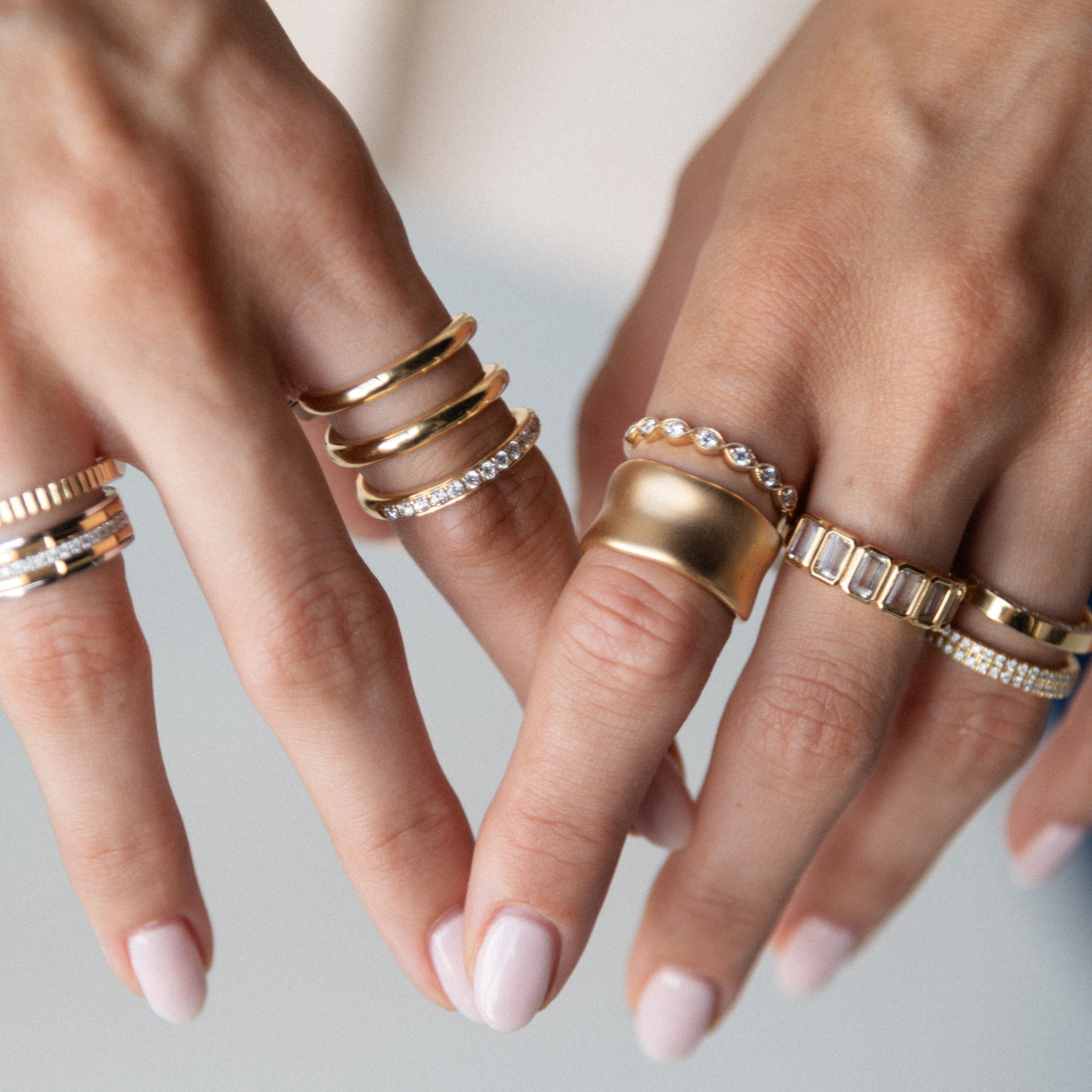
- Review the stone layout. Consider whether the diamonds form a continuous surface, a spaced pattern, or a focused detail across only part of the band. A half-eternity layout places stones across part of the circumference, while a full-eternity design continues them around the ring. The arrangement changes what is visible from different angles and how the band contributes when worn by itself.
- Test the gap and the contact points. A small gap can frame a prominent setting and make each ring easier to read. If the rings touch, check whether their edges, settings, and profiles meet smoothly rather than catching during movement. A rounded comfort-fit interior can help a wider band slide more smoothly over the knuckle, but the result still depends on the relationship between adjacent rings. Try the pair together and move your hand naturally before deciding.
- Plan for the larger stack. A diamond band does not have to stay beside the engagement ring. It can stand alone as a focused piece, partner with the engagement ring, or act as an anchor in a curated stack. Add neighboring bands one at a time, watching how metal color, width, stone layout, and spacing interact. If the desired proportion or fit is difficult to find, product details and sizing information should be checked on the specific product page before purchase.
There is no single correct arrangement. A close-fitting contour may feel right for a traditional paired look, while a straight band or mixed-metal combination may better express a personal style. Compare the full stack from the top, side, and wrist-facing views, then prioritize the combination that feels balanced, comfortable, and meaningful to wear.
Contact LUCE before the FAQ for no-pressure guidance on style, setting, proportion, and fit.
When Should You Consider a Custom Wedding Band?
A custom wedding band can make sense when the right ring needs to do more than add sparkle. Consider one if a straight band leaves an awkward gap. A shaped engagement ring needs a precise contour, or your preferred width and profile are difficult to find together. Custom work is also worth exploring when an unusual setting, low-clearance design, or distinctive stone layout affects how the band must sit beside another ring.
Fit is only part of the decision. You may want a band that balances a delicate engagement ring without disappearing, adds structure to a wider stack, or transitions comfortably from ceremony to everyday wear. Band width, edge shape, interior profile, and the relationship between adjacent rings all influence how a piece looks and feels. If those details matter more than selecting a standard silhouette, a tailored design can give you a clearer path forward.
Start with the way you want the rings to work together
Bring the engagement ring, heirloom pieces, or stack you expect to wear with the new band into the conversation. The goal is not necessarily a perfect visual match. A small intentional gap, contrasting metal, or change in scale may be exactly right. The important question is whether the combination feels balanced, comfortable, and true to your style. A custom band can be shaped around the setting, adjusted to the proportions of the existing rings. Or developed as a standalone piece that still integrates naturally into the stack.
LUCE's custom design process begins with a conversation, then moves through collaborative concepts and guidance on materials and stones. You receive a transparent cost estimate before committing, rather than having to make a decision without understanding the direction of the design. Explore LUCE's custom design guidance or consider designing your own ring if you already have a strong point of view.
Ask for specifics before you commit
When comparing a custom option with an existing band, ask how the proposed profile will sit beside your ring. Which materials and stone details are being considered, and how the final dimensions will affect comfort. Product-specific grades, dimensions, setting details, availability, and other specifications should be confirmed rather than inferred from an image or collection page. LUCE's ring-buying guidance treats those details as items to verify for the individual piece, not assumptions to make in advance. Learn more about the custom process when your desired fit, proportion, or pairing is not met by an existing design.
What Should You Ask Before Choosing a Diamond Wedding Band?
The right band should make sense for your daily life as well as your larger ring story. Before comparing details, use these questions to clarify what you want the piece to do, how you want it to feel, and what information you need to confirm.
How will you wear the band?
Decide whether the ring is intended to stand alone, sit beside an engagement ring, or become part of a larger stack. A band that needs to work across several settings may call for a more adaptable profile and proportion. If you expect frequent daily wear, consider how the edge, interior shape, and setting will feel during work, travel, and other regular activities.
Which band style and setting suit your priorities?
Ask whether you prefer a half-eternity layout, with diamonds across part of the circumference, or a full-eternity design with stones continuing around the ring. Then consider how the setting supports your priorities. Pavé places small diamonds closely together for a continuous look. Channel settings hold stones between strips of metal for a smoother edge, and prongs allow light to enter from multiple directions. Bezel settings surround a stone with a metal rim. Your choice should reflect the balance of sparkle, structure, protection, and maintenance that feels right to you.
What metal, width, and proportion feel cohesive?
Metal color can coordinate the band with adjacent rings or create deliberate contrast. Width also changes how the ring reads visually and how it stacks. Compare the band beside the rings you already wear, rather than judging it alone. Look at the relationship between the width, profile, stone layout, and the scale of your engagement ring or other stack pieces.
Will the fit remain comfortable?
Ask how the interior profile and edge shape interact with your finger and neighboring rings. A rounded comfort-fit interior may help a wider band slide more smoothly over the knuckle. Try the band with the rings you plan to wear beside it, and confirm the available size information before making a decision.
What should you verify before buying?
Review the product information for materials, stone details, dimensions, sizing, care instructions, and warranty information where applicable. Do not infer a diamond grade, setting detail, or measurement from a photograph alone. If the existing options do not provide the fit or proportion you want, ask whether a collaborative custom design conversation could address those priorities.
Frequently Asked Questions
What setting is best for an everyday diamond wedding band?
Choose the setting based on your priorities. Pavé creates a closely set, continuous look, channel settings offer a smooth edge between metal rails. Bezel settings surround each stone with a metal rim, and prongs allow light to enter from multiple directions. Consider how much exposed sparkle, surface smoothness, and protection fit your daily routine.
How should a diamond wedding band fit with an engagement ring?
Start with the shape and height of the engagement ring. A contoured band can follow its outline and reduce a gap, while a straight band offers a cleaner. More flexible look and can make an intentional gap part of the styling. Compare width, profile, metal color, and stone scale together rather than choosing the band in isolation.
What makes a diamond band comfortable for daily wear?
Comfort depends on the interior profile, edge shape, width, and how the band interacts with adjacent rings. A rounded interior can help a wider band slide more smoothly over the knuckle. Try the band with the rings you expect to wear beside it, and pay attention to pressure, rubbing, and movement before deciding.
What should you compare before choosing a diamond wedding band?
Review the band's metal, stone details, dimensions, setting, size options, care guidance, and warranty information where applicable. Band width and profile affect both visual proportion and the feel of a stack. If an existing design does not provide the fit or pairing you want, custom design support can help develop a concept around those priorities.
Contact us for thoughtful guidance
Choosing a diamond wedding band is easier when style, setting, proportion, comfort, and pairing are considered together. For a clear, no-pressure conversation about your options, contact LUCE. Our team can help you compare directions and determine whether a ready-to-wear style or custom design best reflects how you want the band to look and feel every day.