How to Wear Men's Jewelry: A Modern Styling Guide
Men's jewelry does not need to feel complicated. The most considered looks usually begin with one clear point of focus, then build through proportion, texture, and the setting rather than adding every piece at once. That approach works whether you're dressing for a relaxed weekend, a professional wardrobe, or an evening that calls for more polish.
Talk with the LUCE team about finding your next men's jewelry piece.
The easiest way to learn how to wear men's jewelry is to start with one piece that feels natural, such as a ring or simple chain. Then add complementary pieces while keeping scale and visual weight in balance. Your comfort, personal style, and the occasion should guide how far you take the look.
Rings, chains, bracelets, and earrings each change the silhouette of an outfit in a different way. Once you identify the piece you want people to notice first, the rest of your jewelry can support it with intention. Begin by choosing that anchor and letting your everyday wardrobe set the pace.
Start With One Anchor Piece
The easiest way to make men's jewelry feel natural is to begin with one piece you genuinely want to wear. That might be a ring with a clean silhouette, a simple chain that sits comfortably at the neckline. A bracelet with enough presence to notice, or a small earring that fits your everyday style. Starting with one anchor gives you a reference point for scale, texture, and intensity without asking every part of your outfit to compete for attention.
This approach also keeps the process personal. In its guidance on men's fine jewelry, GIA recommends starting with basics such as a ring or simple chain, while considering the wearer's personal style and comfort with risk. That is useful advice because there is no universal starting piece. The right choice is the one you can imagine reaching for repeatedly, whether your wardrobe leans quiet and tailored, relaxed and textured, or more expressive.
Let comfort set the pace
Pay attention to how the piece feels during an ordinary day. A ring should feel easy when you move your hands, type, drive, or reach into a pocket. A chain should sit in a way that makes sense with the necklines you already wear. A bracelet should work with your sleeves instead of becoming an item you constantly adjust. If a piece feels distracting, the answer may be a different scale, shape, or placement rather than abandoning jewelry altogether.
Comfort also includes visual comfort. If you are new to jewelry, a restrained anchor can help you understand what you like before you add more. A smooth band may feel more intuitive than a highly detailed ring. A short, uncomplicated chain may be easier to style than several layers at once. Someone already comfortable with accessories may prefer a more substantial silhouette or a piece with texture. Both approaches are valid. The goal is to build confidence through use, not to follow a rigid formula.
Build around what you already own
Once you have worn the anchor through a few regular outfits, notice what it supports. Does its visual weight call for a similarly quiet bracelet, or would a contrasting texture make the look more considered? Does it feel most at home with denim and knitwear, or does it sharpen a jacket and open-collar shirt? Let those observations guide the next addition. You can also repeat a tone or finish for cohesion, then introduce contrast gradually when it feels intentional.
For a fine jewelry wardrobe, this slower approach has a practical advantage: each new piece earns a place in your rotation. LUCE frames jewelry as future heirlooms for everyday luxury, so the strongest collection is not necessarily the largest one. It is the one that reflects your style and works across real days. Start with the piece that feels most like you, then use your comfort and your existing wardrobe to decide what comes next. From there, the setting and outfit can help determine how much visual presence the rest of the look needs.
How to Wear Men's Jewelry for Casual, Work, and Formal Looks
The same ring, chain, bracelet, or earring can read very differently depending on the setting. The goal is not to follow a rigid dress code. It is to adjust scale, shine, texture, and the number of pieces so your jewelry supports the clothes rather than competing with them. A relaxed outfit can carry more contrast and layering, while a professional or formal look usually benefits from a quieter edit. This is the practical framework for how to wear men's jewelry with intention.
Start by identifying the visual anchor of the outfit. If a substantial ring is doing most of the work, keep the chain or bracelet simpler. If the clothing is understated, one textured chain or sculptural bracelet can add definition without making the look feel overstyled. Personal comfort matters just as much as the occasion, so use the examples below as adaptable starting points rather than fixed rules.
| Setting | Jewelry approach | Proportions | Example combination |
|---|---|---|---|
| Casual | Use texture, layering, and personal details. | Medium or varied scale works well when the outfit is relaxed. | Textured chain, understated ring, and a bracelet with a different surface. |
| Work | Keep the selection refined, coordinated, and easy to overlook at first glance. | Choose one clear anchor and keep supporting pieces slimmer. | Simple chain with a polished band, or a restrained ring with a clean bracelet. |
| Formal | Favor clean lines and a deliberate edit that complements the tailoring. | Let proportion follow the lapel, collar, cuff, and overall silhouette. | One substantial ring or subtle chain paired with a minimal bracelet. |
Casual looks: let texture do the work
Casual dressing creates room to combine finishes. A chain can sit over a plain tee or under an open shirt, while a ring or bracelet adds a closer, more tactile detail. Try pairing one visually stronger piece with quieter companions instead of stacking several equally bold designs. For example, a textured chain can lead, with a smooth band and a simple bracelet repeating its scale. If you are layering, leave enough visual space between pieces so each silhouette remains legible.
Work looks: edit for clarity
For a professional setting, subtlety often feels more polished than restraint for its own sake. A single ring, a clean chain, or a slim bracelet can add personal style without distracting from a tailored shirt, jacket, or knitwear. Matching metal tones creates an immediately cohesive impression, while a deliberate contrast can work when the rest of the outfit is simple. GIA similarly describes many men's jewelry options as subtle and connected to personal style, which makes an edited combination a strong place to begin: GIA's guide to men's jewelry.
Formal looks: make one decision feel intentional
Formal clothing already has structure, so jewelry should clarify the silhouette rather than add visual noise. Choose one focal piece, then repeat its tone or geometry in a smaller detail. A strong ring can stand alone, or a fine chain can complement an open collar when the neckline allows it. Earrings should feel proportional to the rest of the look, and bracelets should sit comfortably with the cuff instead of crowding it. The most convincing formal combinations look considered, not overly matched.
Across all three settings, fit and confidence are useful tests. Move, sit, and view the outfit from a distance before adding another piece. If the jewelry is the first thing you notice when it should not be, reduce the scale or remove one layer. If the outfit feels unfinished, add one detail with a distinct purpose.
How to Style Rings, Chains, Bracelets, and Earrings
Each jewelry category changes the balance of an outfit in a different way. Rings draw attention to the hands, chains shape the neckline, bracelets add movement at the wrist, and earrings frame the face. The most wearable approach is to choose one category as the focal point, then let the others support it through scale, finish, or repetition. There is no need for every piece to match perfectly. The goal is a look that feels considered and comfortable in your wardrobe.
Rings: start with the hands
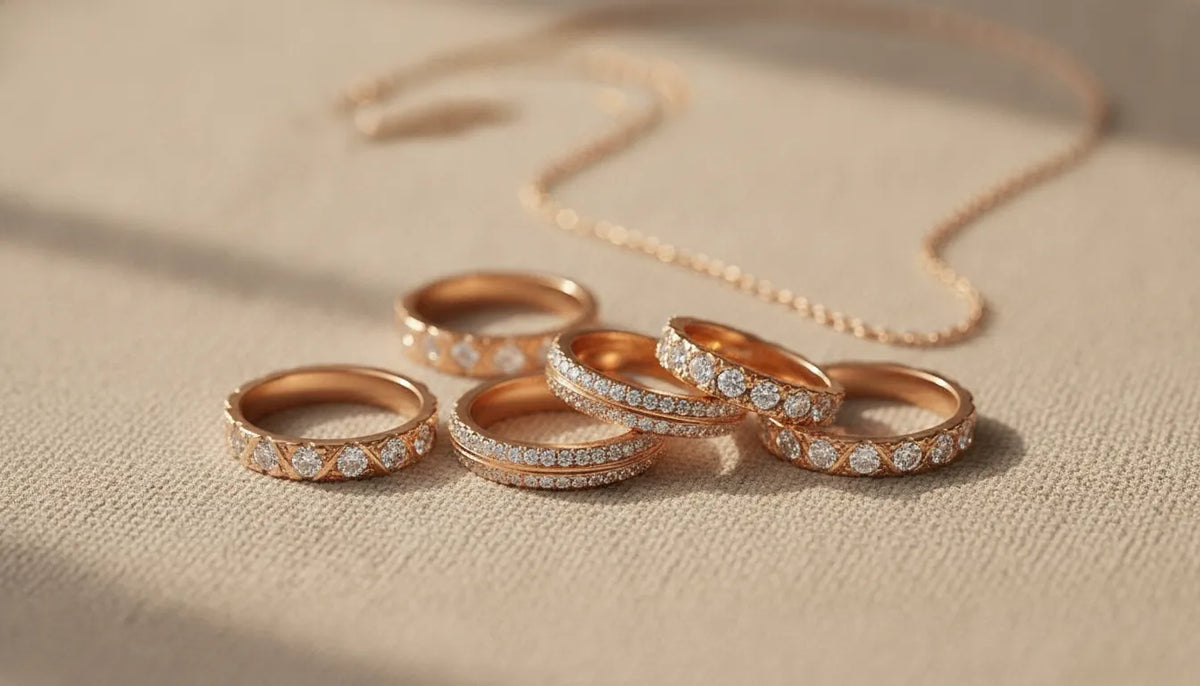
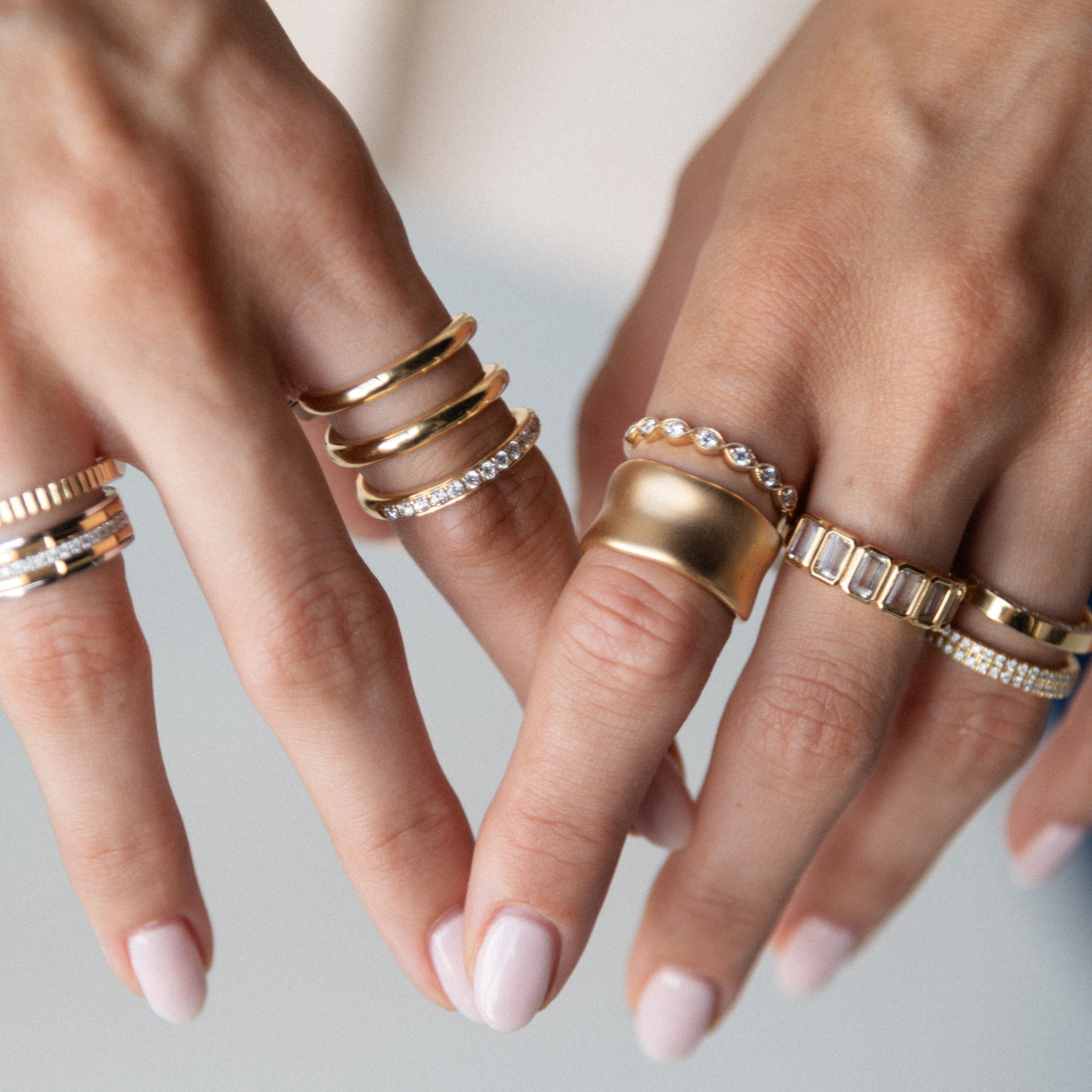
A ring is often the easiest place to begin because it can stand alone without changing the proportions of an entire outfit. A simple band can function as a quiet everyday detail, while a larger silhouette can become the anchor for a more expressive look. If you are wearing more than one ring, distribute visual weight rather than placing every substantial piece on the same finger or hand. Leave space between shapes so each one remains legible.
Think about the setting as well as the outfit. A streamlined ring can sit naturally with tailored clothing, while a more textural or sculptural design can add interest to denim, knitwear, or relaxed layers. LUCE's ring collection includes bands, cocktail rings, gemstone designs, and stackable rings, giving you different ways to adjust presence. For more detail on proportions, fit, and meaning, explore this signet ring styling guide or compare options in the guide to men's gold ring styles.
Chains and necklaces: frame the neckline
Match the length and visual weight of a chain to the neckline you are wearing. A shorter piece can sit neatly with an open collar. While a longer or more substantial chain may work better over a plain tee, sweater, or other uncomplicated layer. When the clothing already has a strong pattern or prominent collar, a simpler necklace usually keeps the outfit from feeling crowded.
For a layered effect, vary length or texture so the chains do not merge into one indistinct line. You can also let one necklace carry the attention and keep the rest of the outfit quiet. LUCE's necklace collection includes box chains, bead chains, mariner and link necklaces, chokers, and lariats. If you want to understand how scale influences a specific option, read the 14K gold chain guide before building a layered combination.
Bracelets: add texture without competing
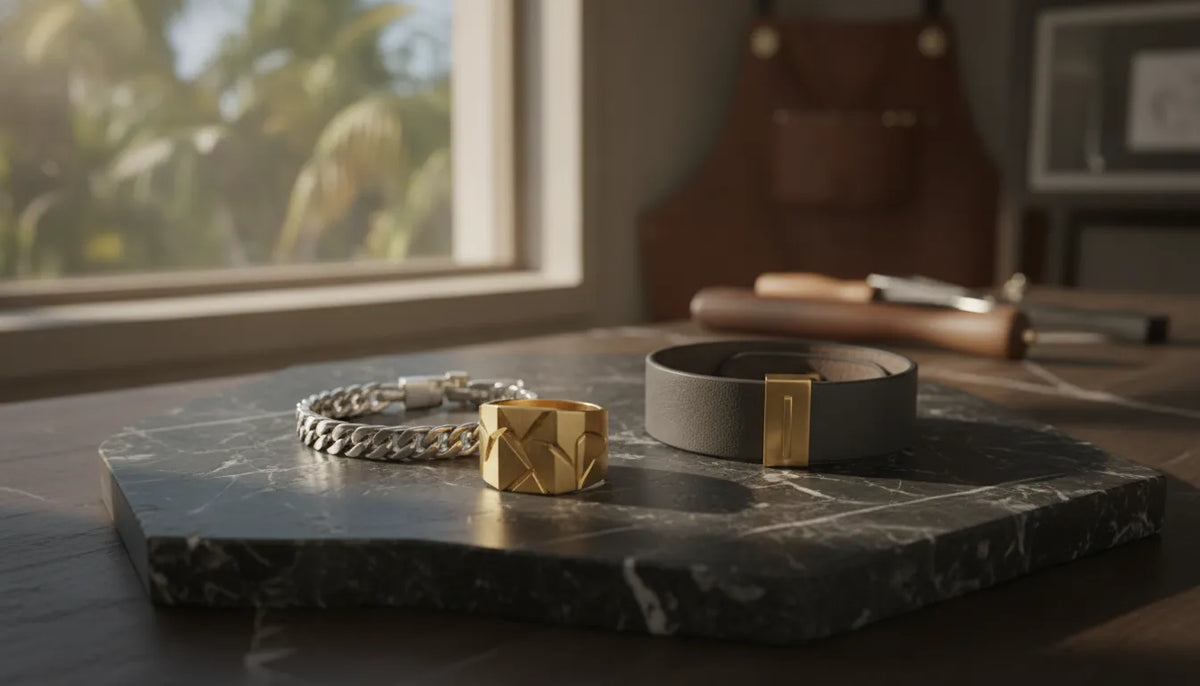
Bracelets are especially effective when they relate to what you are already wearing on your hands. A clean ring and a textured bracelet can create contrast, while two pieces with similar visual weight can produce a more unified look. If your sleeves are tailored or close to the wrist, a lower-profile bracelet may feel more natural. With rolled sleeves or relaxed clothing, a more noticeable design can become part of the outfit's texture.
Use the wrist as a place to repeat a finish or introduce a small point of contrast. Avoid piling on multiple substantial pieces before you know how they move together during the day. The LUCE bracelet collection includes beaded, station, cuff, tennis, stretch, and link designs. For a closer look at one more refined styling direction, the diamond tennis bracelet guide offers useful context on the category.
Earrings: keep the face in focus
Earrings should work with your haircut, neckline, and the level of detail in the rest of the outfit. Studs and huggies can provide a subtle everyday finish, while a dangle silhouette brings more movement and becomes a natural focal point. If you are wearing a prominent chain, consider a quieter earring. If the neckline and hands are understated, earrings can carry more of the visual interest.
LUCE's earring collection includes studs, huggies, and dangle designs, so the category can shift with the setting rather than being limited to one aesthetic. Start with the piece that feels most like you, then choose supporting jewelry that leaves room for it to be seen. That simple hierarchy is a practical foundation for how to wear men's jewelry with ease.
Layering Men's Jewelry: Balance Scale, Metal, and Texture
Layering works best when each piece has a role. Instead of adding several accessories and hoping they feel cohesive, build the look in stages. This method keeps the result intentional while leaving room for personal taste, whether you prefer a quiet combination or a more expressive arrangement.
- Choose one anchor. Start with the piece that should define the combination. It might be a substantial ring, a chain with a clear silhouette, a textured bracelet, or a pair of earrings. A simple chain or ring is a practical foundation for a jewelry wardrobe, and the right starting point depends on personal style and comfort with visibility. GIA's men's jewelry guidance similarly recommends beginning with basics and considering how daring the wearer wants to be. Once the anchor is chosen, the other pieces should support it rather than compete for attention.
- Balance scale. Compare the visual weight of every piece, not just its physical size. A broad ring may need a cleaner bracelet, while a delicate chain can sit comfortably beside a slimmer ring or understated earrings. If two pieces are both bold, separate them across the body so the eye has space to move. Proportion should also suit the setting and the wearer, rather than follow a universal rule. The goal is a combination that feels considered when your hands are at rest, your sleeves are rolled, or your neckline is visible.
- Set a metal direction. Matching metal tones creates a streamlined effect, especially when the silhouettes are already substantial. It is also completely possible to mix tones intentionally. Repeat the secondary tone at least once, such as pairing a warmer ring with a cooler chain and a smaller detail that relates to the ring. That repetition makes the contrast look designed instead of accidental. There is no requirement to make every piece identical; consistency can come from scale, finish, or placement instead.
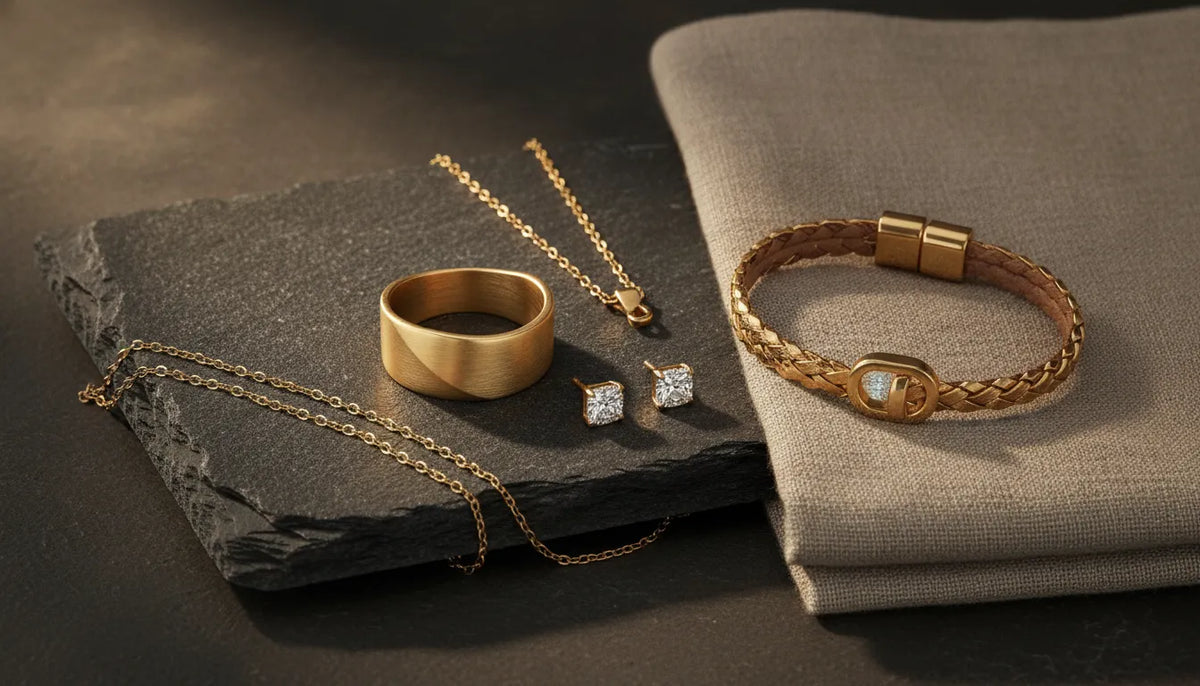
- Introduce texture with restraint. Texture gives a layered look dimension. Combine a smooth surface with a beaded, brushed, linked, or otherwise tactile piece, but avoid making every item visually busy. Materials can vary as well. GIA notes that men's jewelry design may combine leather with metals such as titanium and stainless steel. Though any specific piece should always be evaluated from its actual details. One textured element can be enough to keep a polished group from feeling flat.
- Build in spacing. Give neighboring pieces room to read. On the wrist, a small gap can separate two bracelets; at the neck, distinct chain lengths prevent the pieces from collapsing into one line. With rings, consider placing them on different fingers rather than crowding one hand. Spacing is especially useful when layering for a formal setting, where a little restraint keeps the look refined.
- Make one final edit. Put on the complete combination, then remove the least useful piece. Check it against the outfit, the occasion, and your comfort while moving. If the anchor is no longer noticeable, reduce competing scale or texture. If the look feels too quiet, add one deliberate contrast rather than several unrelated accents. The best answer to how to wear men's jewelry is the arrangement you can wear naturally and repeat with confidence.
Build a Men's Jewelry Collection You Will Actually Wear
A wearable collection is not a catalog of every style you like. It is a small, considered group of pieces that works with your real wardrobe, your comfort level, and the occasions that fill your calendar. Start by identifying the jewelry you reach for most often, then add pieces that extend those habits rather than forcing an entirely new look.
One practical approach is to build in layers of usefulness. Begin with an anchor, such as a ring or chain, that feels natural with everyday clothing. Add a second category that supports it without competing for attention, such as a bracelet with a related scale or texture. Once those pieces feel easy to wear, introduce an earring or a more distinctive ring for evenings. Events, or days when you want the jewelry to lead the outfit. This sequence keeps the collection versatile and gives each addition a clear role.
Choose by lifestyle, not just by category
Think through the settings where you want to wear the collection. A refined ring and a simple chain may move easily from a relaxed shirt to a tailored jacket. A cuff, link bracelet, or more expressive necklace can add definition when the rest of the outfit is quiet. Earrings can be an understated finishing detail or a stronger focal point, depending on their scale and your personal style. The goal is not to follow a universal formula. It is to understand which silhouettes feel comfortable, which proportions suit you, and which pieces you will genuinely want to put on again.
LUCE supports this kind of gradual, personalized approach with rings, chains and necklaces, bracelets, and earrings. The assortment includes options such as bands and stackable rings, several necklace silhouettes, varied bracelet constructions, and studs, huggies, and dangle earrings. Those categories make it possible to coordinate a collection without making every piece look identical. Keep one element consistent, such as a metal tone, scale, or clean silhouette, and let another element introduce contrast through texture or shape.
Buy for repeat wear and future meaning
Before adding a piece, ask three questions: Can I picture at least three outfits with it? Does it feel comfortable for the way I move through the day? Will its design still feel like me after a season of changing trends? These questions shift the focus from impulse to intentional purchasing. They also leave room for pieces connected to a milestone, a personal story, or a future gift, rather than treating jewelry as disposable styling.
That is where a welcoming, personalized jeweler can be useful. Whether you are exploring men's jewelry in Palm Beach Gardens or shopping from elsewhere, the right conversation should help you compare proportion, versatility, and personal expression without pressure. LUCE approaches fine jewelry as approachable everyday luxury and future-heirloom wearability, so your collection can evolve at a pace that feels considered and distinctly yours.
Contact LUCE for personal styling guidance as you build your jewelry collection.
Frequently Asked Questions
What is the easiest men's jewelry piece to start with?
Begin with one piece that fits your daily wardrobe and feels comfortable for several hours. A simple ring, chain, bracelet, or pair of earrings can establish your style without requiring a complete set. Choose the piece you are most likely to reach for, then build around its scale and finish.
How much men's jewelry is appropriate for work?
Let the setting and your clothing determine the intensity. For a polished work outfit, one or two refined pieces usually create a composed result. Such as a ring with a slim chain or understated earrings with a bracelet. Keep the silhouette intentional and avoid adding more pieces simply to fill space.
Can I mix different metal tones?
Yes. Matching metal tones can create a clean, seamless look, while mixing them can feel considered when the contrast appears more than once. Repeat a tone across two pieces, or use a shared texture or shape to connect the combination. If the mix feels distracting, remove one piece before changing everything.
How do I layer men's jewelry without looking overdone?
Start with one anchor, such as a substantial ring or chain, then add lighter pieces in a different position on the body. Vary scale and texture instead of stacking several pieces with the same visual weight. Try the combination with the outfit you plan to wear, and reduce the layer count for formal settings.
What should I consider when choosing men's jewelry?
Consider your personal style, comfort, wardrobe, and the settings where you will wear the piece. Look at proportion first, then evaluate how the finish and texture work with what you already own. The best choice is one that feels natural on your body and remains versatile enough to wear beyond a single occasion.
Ready to Find Your Next Jewelry Layer?
The right combination of rings, chains, bracelets, and earrings should feel personal, balanced, and easy to wear across your wardrobe. Explore LUCE's modern fine jewelry, then contact the LUCE team for personal styling guidance as you refine your collection.