Emerald Cut Engagement Ring: The Complete Style Guide
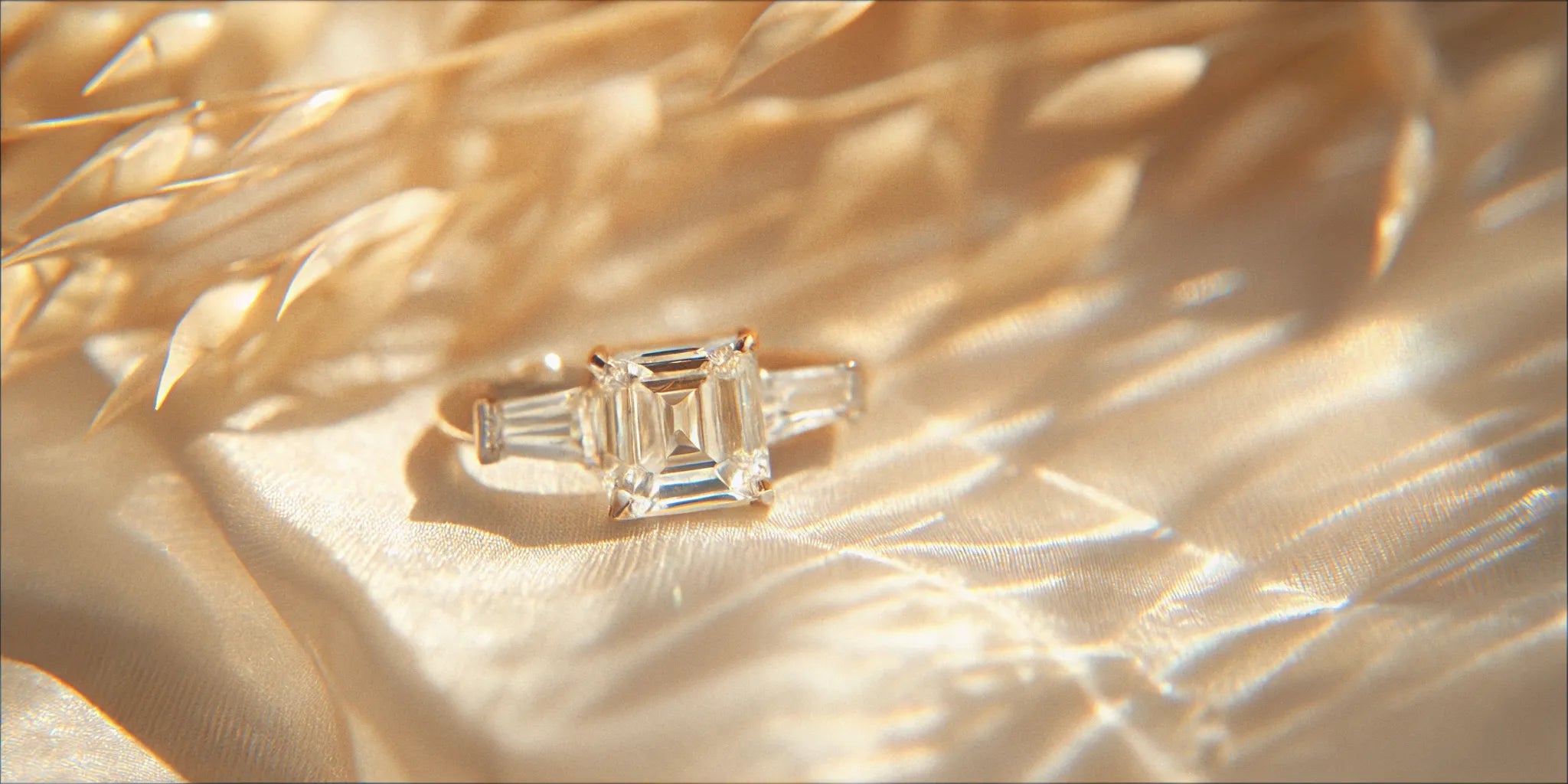
The emerald cut engagement ring is defined by its rectangular silhouette and stepped facets that create a luminous, glass-like appearance. Unlike brilliant cuts that maximize light return through small facets, the emerald cut prioritizes clarity and transparency, making it an ideal choice for high-clarity diamonds. Its elongated shape also creates a flattering, finger-lengthening effect. At LUCE Jewelry in West Palm Beach's NORA District. Our fourth-generation team combines old-world craftsmanship with modern design to help you select or create the perfect emerald cut engagement ring.
Schedule a private consultation at our West Palm Beach showroom to explore our curated collection of emerald cut engagement rings and custom design options.
A Brief History of the Emerald Cut Diamond
The emerald cut originated in the 1500s as a cutting style for emerald gemstones, which are softer than diamonds and prone to chipping. Cutters developed a rectangular shape with stepped, beveled facets to protect the corners while maximizing the stone's color and clarity. During the Art Deco era of the 1920s and 1930s, jewelers adapted this cut for diamonds, and it became an icon of clean-lined glamour. Grace Kelly's 10-carat emerald cut engagement ring from Prince Rainier cemented its status as a timeless choice for discerning buyers.
16th-Century Origins and Safety
The emerald cut did not start with diamonds. It emerged in the 1500s as a solution for cutting emerald gemstones, which are notably softer than diamonds and can fracture under pressure. Early lapidaries developed a rectangular silhouette with flat, beveled corners and stepped facets running parallel across the stone. This design served two vital purposes. First, the beveled corners protected the gem from chipping during both cutting and daily wear. Second, the large, open table and tiered facets created a channel of light. This made the stone's color and clarity visible from every angle, a quality documented by Sotheby's guide to emerald cut diamonds. For centuries, this cut remained the preferred choice for colored gemstones. It balanced safety with beauty.
The Art Deco Transformation
The 1920s and 1930s marked a turning point. The Art Deco movement prized geometric precision, clean lines, and bold symmetry. These values aligned perfectly with the emerald cut's architectural facets. Jewelers began cutting diamonds in this style for the first time, and the look became synonymous with the era's modernist aesthetic. The large, open table showed off a diamond's purity in a way that the dense brilliant cut could not match. It became a top pick for engagement rings during those years. The Kravit family, founders of LUCE's jewelry legacy, began their own story during this same period, starting in 1927 with a pushcart on a New York City street. Our fourth-generation heritage traces directly back to this golden age of design. We carry that same reverence for clean lines and balanced proportion through LUCE's four-generation jewelry legacy.
Mid-Century Glamour and Quiet Luxury
By the mid-1900s, the emerald cut had become a hallmark of understated elegance. The most famous example remains Grace Kelly's engagement ring. Her 10-carat emerald cut diamond was set in a platinum band and given to her by Prince Rainier of Monaco in 1956. This single ring elevated the cut to an enduring symbol of cinematic sophistication. Today, an emerald cut engagement ring continues to embody what many call quiet luxury. It never shouts for attention. Instead, it reveals itself gradually through the clarity of its facets and the purity of its stone, qualities that transcend fleeting trends. The elongated shape also offers the practical benefit of making the finger appear longer and more slender, an effect widely recognized in jewelry design.
Why an Emerald Cut Engagement Ring Demands Higher Clarity
The emerald cut's large, open table and parallel facets act like windows into the diamond, making inclusions visible to the naked eye. This creates what experts call a clarity penalty: buyers typically need a diamond one to two grades higher than they would for a round brilliant cut. For most shoppers, VS1 or VS2 clarity represents the sweet spot, offering eye-clean beauty at a reasonable price. The GIA's clarity grading scale provides the framework for making this critical choice.
Understanding clarity is essential when shopping for an emerald cut engagement ring. Most diamonds are cut to sparkle and mask flaws. The round brilliant cut uses 57 or 58 small facets to bounce light in multiple directions, effectively hiding minor inclusions. But the emerald cut is a step cut with long, flat facets that function as clear windows into the stone. You can see deep into the heart of the diamond. For an emerald cut, a stone that appears clean to the naked eye is non-negotiable.
The Clarity Penalty Explained
Experts call this phenomenon the clarity penalty. You often need to buy a diamond one or two grades higher than you would for a round stone. The diamond's top surface, called the table, is unusually large in an emerald cut, typically spanning 60 to 70 percent of the stone's width. This expansive flat surface gives you a direct view of any internal characteristics. Because step cuts produce less light dispersion than brilliant cuts, there is no sparkle to camouflage inclusions. Clarity is, by a significant margin, the most important quality factor for this shape.
Navigating the GIA Clarity Scale
The Gemological Institute of America grades diamond clarity using a standardized scale. Understanding where your diamond falls on this scale is essential for making an informed purchase. Here is a practical breakdown of how clarity grades apply specifically to emerald cut diamonds:
- FL and IF (Flawless and Internally Flawless): No inclusions visible under 10x magnification. The rarest and most expensive grades. Ideal for collectors but beyond what most buyers need for a beautiful ring.
- VVS1 and VVS2 (Very, Very Slightly Included): Minute inclusions that are extremely difficult for a trained grader to see under magnification. Excellent for emerald cuts but often overkill for everyday wear.
- VS1 and VS2 (Very Slightly Included): The sweet spot for most emerald cut buyers. Small inclusions are visible under 10x magnification but are typically not seen by the naked eye. VS1 offers the best balance of value and eye-clean performance according to GIA clarity standards.
- SI1 and SI2 (Slightly Included): Questionable for emerald cuts. Inclusions are noticeable under magnification and may be visible to the naked eye, especially if they sit under the table. Risk varies by stone.
- I1 to I3 (Included): Inclusions are obvious to the naked eye. Not recommended for emerald cuts under any circumstances.
Both natural and lab-grown diamonds must meet these same standards. The clarity requirement applies regardless of origin.
How Inclusions Behave in Step Cuts
Not all inclusions affect an emerald cut the same way. You may see tiny crystals, clouds of pinpoint dots, or feathers (small internal cracks). Cavities are tiny holes on the surface. In an emerald cut, the location of the inclusion matters enormously. A mark positioned directly under the table will be visible through the stone's largest facet. The Hall of Mirrors effect can also multiply the visual impact of a single flaw, as the parallel step facets reflect the same inclusion repeatedly. What would be a minor imperfection in a round brilliant can appear as a repeating pattern in an emerald cut. A Sotheby's analysis confirms that placement, not just size, determines whether an inclusion is acceptable in a step-cut diamond.
Questions to Ask Your Jeweler
When evaluating emerald cut diamonds, you should ask to see the GIA or AGS clarity plot, a map that shows the location of every inclusion. Inspect the stone under a 10x loupe, focusing specifically on the table area for any dark spots or visible inclusions. At LUCE, our custom engagement ring design services in West Palm Beach include expert guidance on every diamond we offer. Our team evaluates each stone to ensure it meets the eye-clean standard that emerald cut diamonds demand.
The Most Flattering Settings for an Emerald Cut Engagement Ring
The ideal setting for an emerald cut engagement ring maintains the stone's clean lines while protecting its vulnerable corners. Solitaire settings with four prongs offer maximum light exposure and a minimalist aesthetic. Bezel settings provide complete corner protection with a sleek, contemporary profile. Three-stone settings with tapered baguettes create a vintage-inspired look that echoes the cut's Art Deco heritage. For those who want subtle brilliance, a hidden halo adds sparkle without competing with the center stone's clean silhouette.
Choosing the right setting for an emerald cut engagement ring is as important as selecting the diamond itself. The best settings showcase the gem's clean edges while keeping the corners protected. The table below compares the most popular setting styles for emerald cut diamonds.
| Setting Style | Visual Appeal | Corner Protection | Best For |
|---|---|---|---|
| Solitaire with Four Prongs | Clean, minimalist, maximum light exposure | High | Buyers who want the diamond to be the sole focus |
| Bezel | Sleek, modern, wrap-around metal frame | Maximum | Active lifestyles or those wanting a contemporary profile |
| Three-Stone with Baguettes | Vintage-inspired, adds width and symmetry | High | Traditional brides seeking an Art Deco feel |
| Hidden Halo | Subtle sparkle visible only from the side | Moderate | Those wanting extra brilliance without masking the center stone |
Solitaire and Bezel Settings
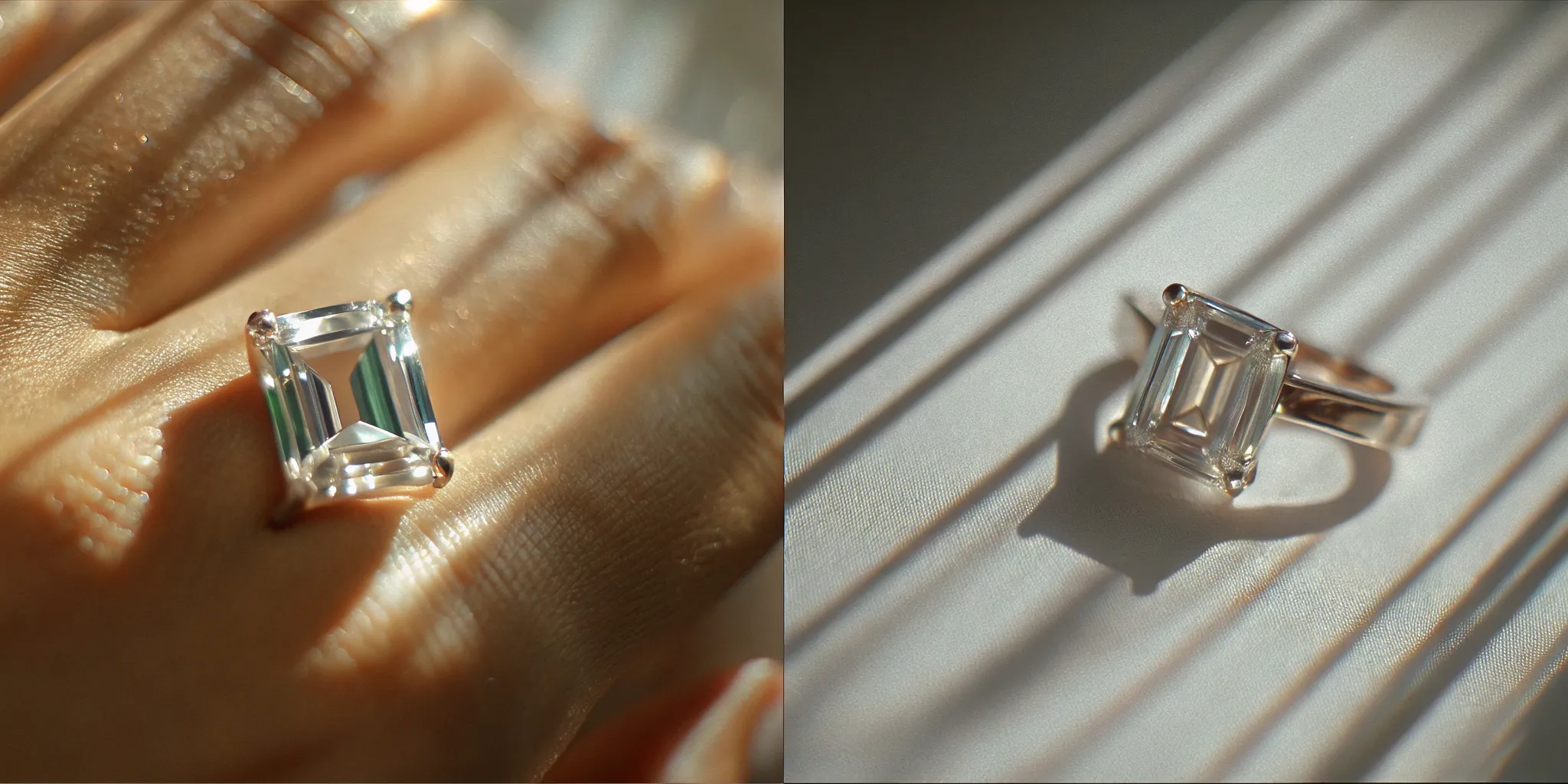
A solitaire setting remains the most popular choice for emerald cut diamonds. It lets the stone command attention without competing side gems. Four prongs are the standard configuration, opening the sides to allow more light to enter the stone and enhancing the Hall of Mirrors effect. From a practical standpoint, a solitaire setting is also easier to pair with wedding bands later. A split-shank solitaire adds a subtle design element while maintaining the minimalist ethos that makes this cut so distinctive.
A bezel setting offers a more protective alternative. It wraps the diamond in a thin metal rim that shields every corner. Many active clients prefer this option because the smooth profile does not snag on clothing or hair. The bezel also conveniently hides any small inclusions near the edges of the stone. In yellow gold or platinum, a bezel setting produces a very clean architectural look that resonates with modern design sensibilities.
Three-Stone and Hidden Halo Designs
A three-stone setting creates a classic frame for emerald cut diamonds. Small baguette or trapezoid side stones flank the center diamond, adding width and creating a balanced, stepped composition that echoes the cut's geometric origins. Tapered baguettes offer a vintage feel, while trapezoids provide a more contemporary silhouette. This configuration also makes the center diamond appear larger by extending the visual line across the finger. The finger-lengthening effect of the emerald cut is amplified in a well-designed three-stone setting.
For those who want additional sparkle without overwhelming the cut, a hidden halo is an excellent choice. Unlike a traditional halo that surrounds the stone, a hidden halo sits just below the center diamond. It creates a secret glow visible only from the side or at certain angles. This is a smart approach for maintaining the clean lines of the emerald cut while adding subtle brilliance.
Custom Design at LUCE Jewelry
At LUCE, we specialize in custom engagement ring design services in West Palm Beach. Our team helps you create a setting that reflects your personal style while respecting the unique character of an emerald cut diamond. We follow a clear four-step design process: an initial consultation to understand your vision, stone selection with expert guidance. A detailed design plan with a preview, and a transparent cost quote before any work begins. Every setting we build is tailored to your specific stone's dimensions, proportions, and clarity characteristics. We invite you to explore our LUCE engagement ring collection for inspiration before your consultation.
How to Pair the Perfect Wedding Band with Your Emerald Cut Engagement Ring
Matching a wedding band to an emerald cut engagement ring requires careful attention to fit and profile. Curved or V-shaped bands contour around the diamond's silhouette for a flush fit. Metal choice matters: platinum offers lasting white brilliance, while 14K gold provides excellent daily durability. Eternity bands with small emerald cuts create a cohesive look, while round diamond bands introduce complementary sparkle. For rings with complex settings, a thin spacer band prevents metal-on-metal wear.
Selecting a wedding band for an emerald cut engagement ring requires deliberate planning. The diamond's straight lines and flat profile mean your band choice should either blend in seamlessly or create a deliberate contrast. Most buyers find that comfort and fit are the primary considerations. The goal is to find a band that sits properly against your engagement ring without gaps, rubbing, or an unbalanced silhouette. Browse the LUCE fine jewelry ring collection for band options that complement emerald cut diamonds.
Choosing the Right Metal and Finish
The metal you choose significantly affects the final look of your bridal set. Many clients match the metal of their engagement ring for a uniform appearance. Platinum remains the top choice for its durability and naturally white finish that does not require rhodium plating. For gold lovers, 14K gold offers superior scratch resistance compared to 18K while still providing a rich color, making it practical for daily wear. Mixing metals has become increasingly popular. A yellow gold band paired with a platinum engagement ring creates warm contrast that makes the center diamond stand out more. At LUCE, we use recycled gold whenever possible, so your ring can be both beautiful and environmentally conscious.
Band Shapes That Fit Perfectly
The height of your engagement ring's setting determines which band shapes will work. A high setting allows a straight band to sit flush against the ring. However, if your diamond sits closer to your finger, a straight band may leave an uncomfortable gap. Curved or V-shaped bands that wrap around the diamond are the best solutions for low-set stones, as noted by Brilliant Earth's guide to wedding bands. These contours follow the diamond's geometry and protect the corners from impact. If your setting has an intricate design, a thin spacer band between the two rings prevents friction that could wear down the prongs over time. For sets that require a fully custom fit, our team offers custom engagement ring design services in West Palm Beach to create a band that precisely follows your ring's architecture.
Stacking and Eternity Band Options
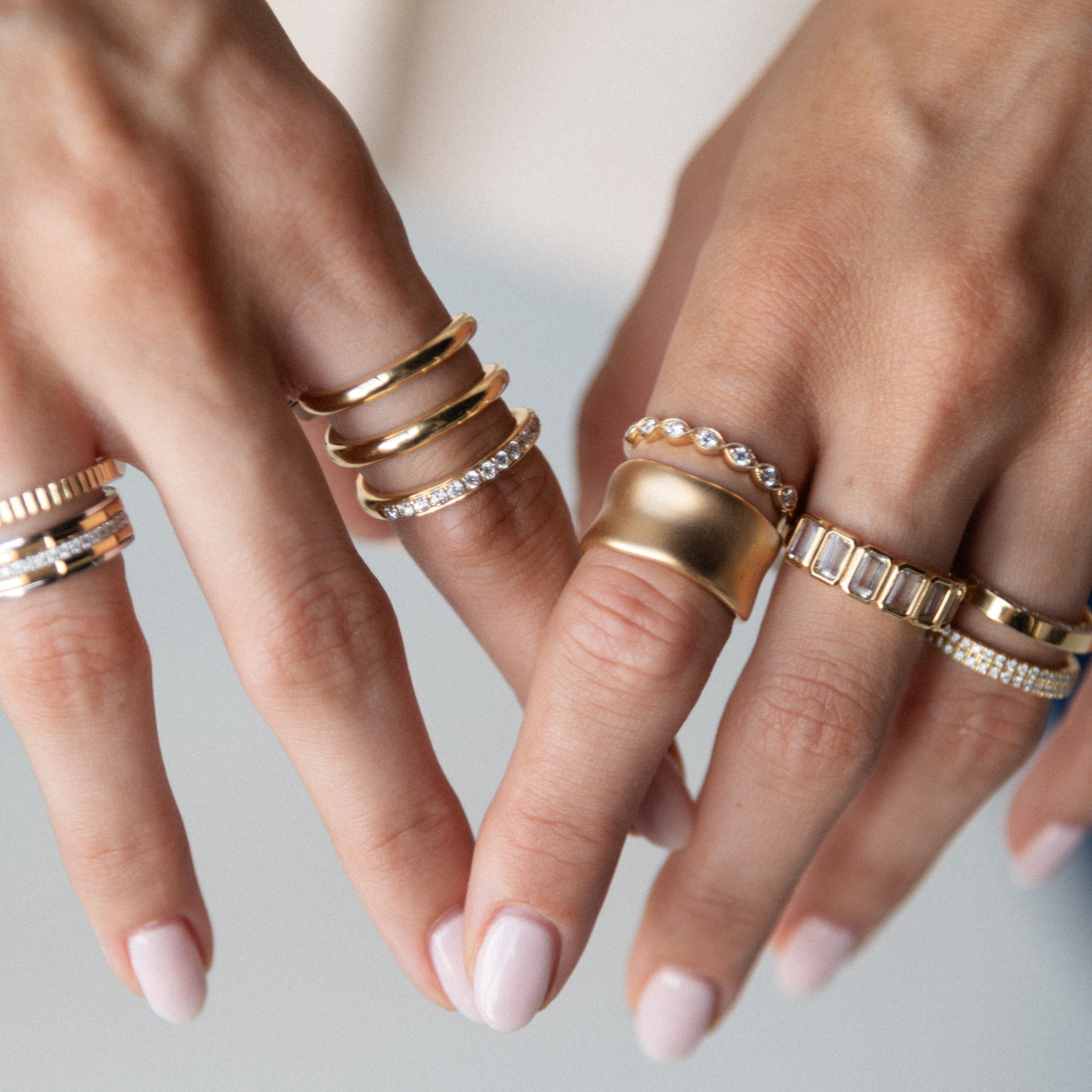
Emerald cut engagement rings pair beautifully with eternity bands. A band set with small emerald cuts echoes the lines of your center stone for a cohesive look. Round diamond eternity bands provide textural contrast and add substantial sparkle. Stacking multiple thin bands in mixed metals creates a custom bridal set that you can rearrange for different occasions. Some clients choose to have their rings permanently soldered together to prevent spinning. If you need modifications or adjustments, LUCE offers expert jewelry repair and restoration services at our West Palm Beach workshop.
Why LUCE Jewelry Is Your Partner for Emerald Cut Engagement Rings
LUCE Jewelry brings four generations of family expertise to every emerald cut engagement ring we create. Our Kravit family heritage traces to 1927, and our West Palm Beach showroom in the NORA District offers personalized custom design services. We pair deep diamond knowledge with sustainable practices including recycled gold and ethically sourced stones. Our transparent four-step design process ensures you understand every decision before any work begins.
Selecting an emerald cut engagement ring requires a jeweler who understands step-cut diamonds at a fundamental level. The large, open facets of this cut leave no room for compromise in stone selection or setting craftsmanship. LUCE Jewelry combines deep family heritage with modern design expertise. Browse our LUCE engagement ring collection online or visit our showroom in person.
Four Generations of Jewelry Expertise
Our story spans nearly a century. The Kravit family began in the jewelry trade in 1927 from a pushcart on the streets of New York. Today, LUCE represents the fourth generation of this family business, carrying forward knowledge of diamonds, precious metals, and fine craftsmanship that cannot be learned from a textbook. This heritage means our clients benefit from generations of institutional knowledge about diamond grading, setting techniques, and metalworking. When you work with us, you are not just buying a ring but joining LUCE's four-generation jewelry legacy.
A Transparent Custom Design Process
Our custom design service follows a structured, transparent process with four clear stages. We begin with a conversation to understand your goals, style preferences, and budget. Next, we create a design concept tailored to your vision. The third stage involves diamond selection, where we guide you through clarity, color, cut, and carat weight decisions specific to the emerald cut. Finally, we provide a complete cost breakdown before any work begins. Our showroom is located at 985 North Railroad Avenue in West Palm Beach's NORA District, a welcoming space where you can explore ideas at your own pace.
Sustainable and Ethical Practices
We recognize that modern jewelry buyers care about the impact of their purchase. LUCE prioritizes responsible sourcing and environmentally conscious production methods. We use recycled gold for our settings whenever possible, reducing demand for new mining. All of our diamonds come from sources that meet ethical standards. Using recycled gold scrap helps reduce the environmental footprint of new jewelry. We are also committed to carbon-conscious operations, working toward offsetting our footprint. Our goal is to create jewelry that brings you joy while respecting the world around us.
Frequently Asked Questions About Emerald Cut Engagement Rings
Are emerald cut diamonds more expensive than round diamonds?
Emerald cut diamonds are typically 10 to 20 percent less expensive per carat than round brilliant diamonds of comparable quality. This cost advantage exists because cutters preserve more of the rough diamond's weight when shaping an emerald cut, as noted by Sotheby's. However, you may offset this savings by needing a higher clarity grade. For most buyers, the result is a larger-looking diamond at a similar or slightly lower price point.
What clarity grade is recommended for an emerald cut engagement ring?
VS2 or higher is the recommended clarity range for an emerald cut diamond. Because the cut's large, open table and parallel facets do not camouflage inclusions, you need a stone that is eye-clean without reliance on light dispersion. Industry experts at CutGrade advise that VS1 often represents the optimal balance of eye-clean appearance and reasonable cost. SI1 can work when inclusions are positioned near the edges rather than under the table, but this requires careful individual inspection.
Do emerald cut diamonds look smaller than round diamonds of the same carat weight?
Yes, an emerald cut diamond may appear slightly smaller in surface area than a round diamond of the same carat weight. This is because more of the emerald cut's weight sits in its pavilion (the lower portion). A one-carat emerald cut typically measures about seven by five millimeters, while a one-carat round brilliant measures approximately 6.5 millimeters in diameter. The trade-off is that the emerald cut's elongated shape creates a finger-lengthening effect that many find more elegant than the round's compact silhouette.
Are emerald cut diamonds prone to chipping?
Emerald cut diamonds are durable and resistant to chipping under normal wear. Unlike princess or marquise cuts that have sharp points vulnerable to impact, emerald cuts feature beveled corners that distribute force more evenly. The cut's rectangular shape and 90-degree angles are inherently stable, making it a practical choice for daily wear. A secure four-prong or bezel setting provides additional corner protection and peace of mind.
What wedding band styles complement emerald cut engagement rings best?
Curved or contour bands are the most complementary choice for emerald cut engagement rings. These bands follow the diamond's straight lines and sit flush against the ring without gaps. V-shaped bands are another excellent option, wrapping around the center stone's profile. For a coordinated look, select a band paved with small emerald cut diamonds that mirror your engagement ring's geometry. Eternity bands in matching metal create a clean, continuous line across your finger.
Begin Your Emerald Cut Engagement Ring Journey
Finding the perfect emerald cut engagement ring requires time, expert guidance, and a jeweler who understands the unique demands of step-cut diamonds. The best stones sell quickly, and delaying your search could mean missing the ideal diamond for your ring. Starting your custom design process now allows you to explore every option at a comfortable pace, working with a family that has four generations of jewelry experience.
Call us today at (561) 281-3769 or schedule your private consultation at our West Palm Beach showroom to begin designing your emerald cut engagement ring with our expert team.