Lab Grown Diamond Tennis Bracelet vs Natural
Choosing a tennis bracelet is rarely just a question of which diamond looks brighter. The right piece also needs to suit your budget, styling preferences, and expectations around origin. Think about how you plan to wear it in West Palm Beach. Comparing the stones before comparing the settings can make the decision feel straightforward.
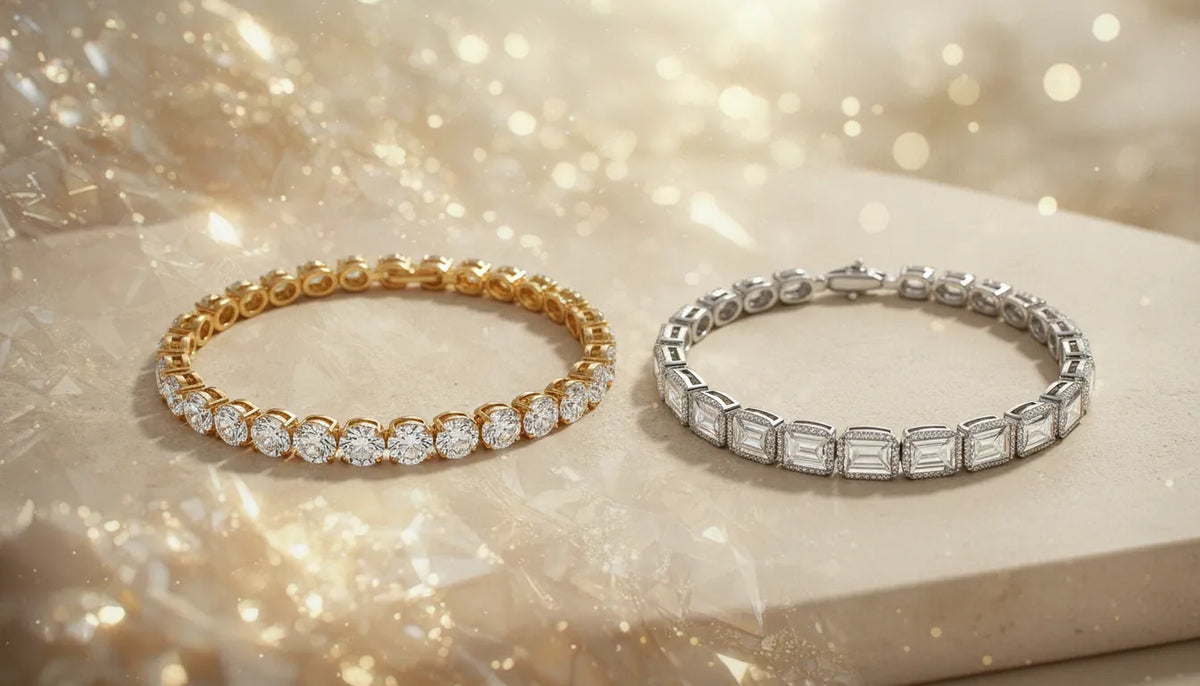
In a lab grown diamond tennis bracelet vs natural comparison, both options can offer a classic continuous line of diamond sparkle. They differ in origin, market positioning, and often overall cost. The best choice depends on which factor matters most to you.
Contact LUCE to compare your options with a jewelry team in West Palm Beach or online.
Once you know what separates the diamond options, the bracelet itself deserves a closer look. Its flexible construction and proportions affect comfort. The setting also determines how naturally it layers with the rest of your jewelry.
What Makes a Tennis Bracelet Different?
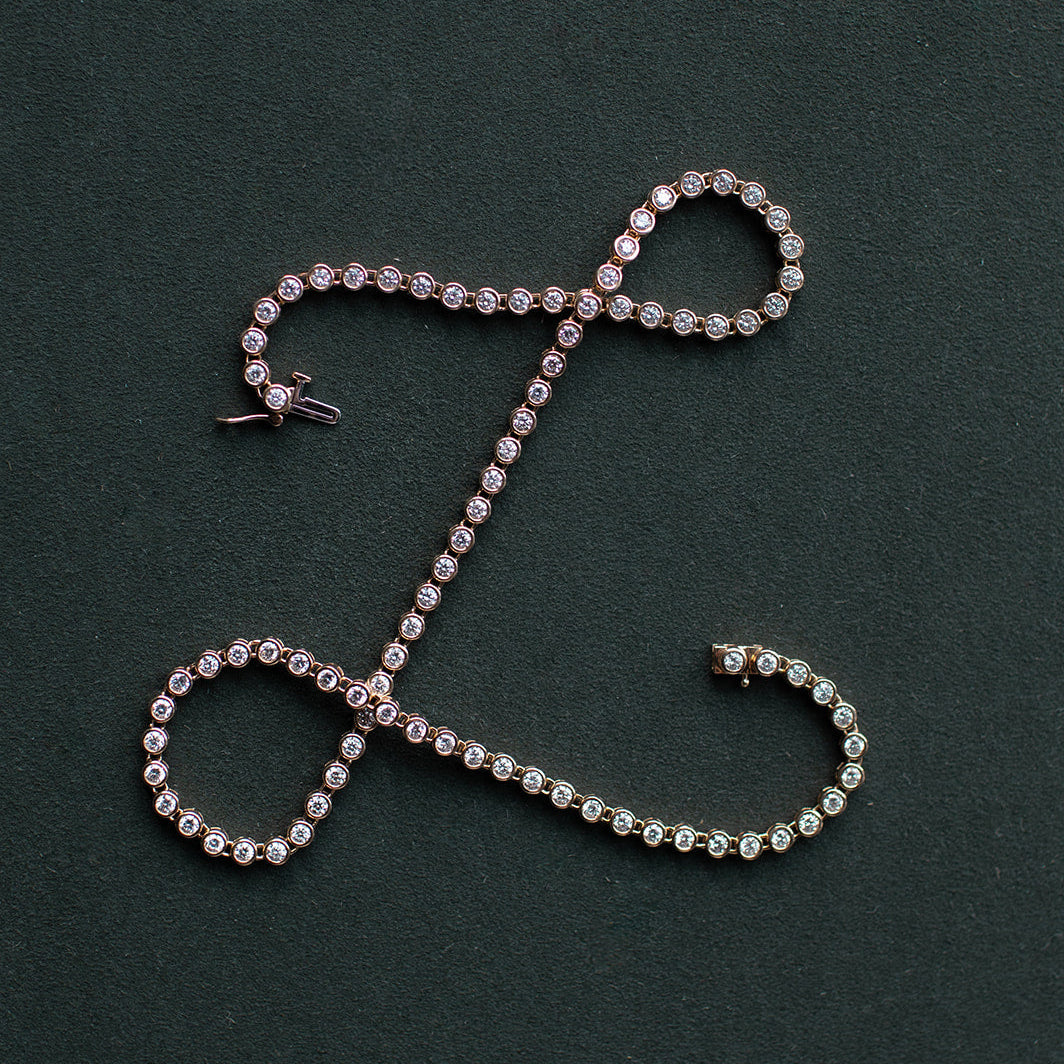
A tennis bracelet is defined by its continuous line of individually set stones. Flexible links help the piece follow the natural movement of the wrist. Unlike a rigid bangle or station bracelet with separated accents, its stones create a consistent visual line from one end to the other. That structure gives the bracelet a balance of presence and ease. It can read as refined on its own while also working within a layered stack.
The first details to compare are width, stone size, and overall proportion. A slimmer design creates a quieter line. A wider bracelet has more visual weight and may become the main focus of a stack. The number of stones matters, too. It affects how continuous the line appears and how the bracelet articulates around the wrist. A well-made setting should allow movement without leaving the stones feeling loose or uneven.
Metal and construction shape the look
Metal changes the bracelet's color, contrast, and daily-wear character. Yellow gold creates a warm frame around the stones, while white metal produces a cooler, more blended look. The choice should work with the rest of your jewelry and the way you want the bracelet to sit against your skin. The clasp is equally practical. Look for a secure closure that feels easy to operate but does not distract from the continuous design, with a safety feature that adds confidence for regular wear.
Diamond origin is one buying variable
When comparing a lab grown diamond tennis bracelet vs natural options, diamond origin is one factor among several. It is not a substitute for evaluating the entire piece. Compare the bracelet's stone quality, setting, metal, flexibility, clasp, and finish alongside origin. Lab grown and natural diamonds can share the same basic optical and physical properties. But they come from different supply pathways and may carry different considerations for your priorities and budget. Keeping those variables separate makes the comparison more useful.
How Lab Grown Diamond Tennis Bracelet vs Natural Options Differ
The main difference is origin. A natural diamond forms through geological processes deep within the earth, while a laboratory-grown diamond is created using technology that reproduces the conditions needed for diamond growth. The finished stones share the same fundamental material: crystallized carbon with diamond's characteristic crystal structure and optical properties.
Laboratory-grown diamonds are produced through either high-pressure, high-temperature (HPHT) or chemical vapor deposition (CVD) methods. HPHT recreates the combination of pressure and heat associated with diamond formation. CVD grows diamond material from a carbon-containing gas in a controlled chamber. These methods can produce gem-quality diamonds, although the growth environment can leave features that help trained gemologists and grading laboratories identify the stone's origin.
What both bracelet options have in common
Origin does not change the basic gemological identity of the stone. Both natural and laboratory-grown diamonds can be evaluated by the same core characteristics, including color, clarity, cut, and carat weight. Both can display the brightness, fire, and durability shoppers expect from diamond jewelry when they are well cut and properly cared for.
The Gemological Institute of America explains that laboratory-grown diamonds have essentially the same chemical composition and crystal structure as natural diamonds. GIA also notes that specialized examination is needed to distinguish laboratory-grown diamonds from natural ones, because standard observation alone may not reveal their origin. GIA's laboratory-grown diamond overview provides additional detail on growth methods and identification.
How origin is identified and described
Identification is not based on whether a diamond looks real. A laboratory-grown diamond is a diamond, but it is not a mined diamond. Grading laboratories use advanced instruments and microscopic observations to assess growth patterns, inclusions, and other features associated with its formation. A report should clearly state whether the stone is natural or laboratory-grown, and the stone may also carry a microscopic inscription linked to that report.
That distinction matters when comparing a lab grown diamond tennis bracelet vs natural. The two choices can offer a similar visual effect and shared physical properties, but they represent different origins and should be labeled accurately. The Federal Trade Commission's guidance says descriptions should make a laboratory-created diamond's non-mined origin clear. The FTC jewelry advertising guidance explains the importance of clear, accurate terminology.
How Do Appearance and Durability Compare?
For a tennis bracelet, the visible difference between lab grown and natural diamonds is not a separate look created by origin alone. Cut quality, color, clarity, stone matching, and the setting influence how consistently the bracelet reflects light. Durability also depends on the diamond, the metal, the prongs, and how the bracelet is worn and maintained.
| Consideration | What to evaluate | Why it matters |
|---|---|---|
| Appearance | Cut, color, clarity, and proportions across the full bracelet | These factors shape brightness, contrast, and visual consistency. |
| Durability | Diamond material, metal, setting construction, and clasp security | A bracelet needs both resilient stones and a secure structure for regular wear. |
| Matching | Consistent size, shape, color, and appearance from stone to stone | Close matching helps the line of diamonds read as one continuous design. |
| Grading | Documentation and the grading criteria applied to the individual stones | Reports can help you compare stated characteristics, but they do not replace inspecting the finished bracelet. |
| Daily wear | Contact with hard surfaces, chemicals, moisture, impact, and snagging | Regular checks and appropriate care help protect the settings and clasp over time. |
When comparing a lab grown diamond tennis bracelet vs natural, focus on the finished piece rather than assuming one category will always look better or last longer. Ask how the diamonds were matched, review the available grading documentation, and examine whether the settings sit evenly and hold each stone securely. A well-made bracelet should have a cohesive appearance across the row.
For daily wear, remove the bracelet during activities that may expose it to sharp impact, heavy abrasion, or substances that can affect the metal or setting. Have the clasp, links, and prongs checked periodically, especially if the bracelet is worn often. These practical habits matter regardless of origin.
What Should You Know About Price and Long-Term Value?
The price of a tennis bracelet reflects more than whether its diamonds were created in a laboratory or formed naturally. It is shaped by total carat weight, individual diamond sizes, and the balance of the stones across the bracelet. Two pieces with similar total carat weight can look and wear differently if one uses fewer larger stones and the other uses more smaller stones.
Diamond quality also matters. The 4Cs, color, clarity, cut, and carat weight, influence appearance and cost. Cut affects how each stone handles light, while color and clarity affect how consistent the line looks from one end to the other. In a lab grown diamond tennis bracelet vs natural comparison, evaluate these qualities within each piece rather than treating origin as the only meaningful difference.
Metal adds another layer to the decision. Karat, alloy, weight, and finish can affect the bracelet's feel, durability, and appearance. The setting contributes as well. Secure links, carefully finished prongs, a dependable clasp, and smooth articulation all require workmanship. Those construction details shape how confidently the bracelet moves on the wrist and how practical it is for regular wear.
Origin can be an important personal consideration, but it should be discussed alongside the full design and sourcing picture. A lower price is not automatically better value, and a higher price is not automatically evidence of a better choice. Ask what is included in the piece, how the bracelet is constructed, and which qualities matter most to you before comparing options.
Long-term value is personal rather than a promise of financial return. For one wearer, it may mean a comfortable bracelet that fits a daily wardrobe. For another, it may mean a particular diamond origin, a substantial presence, or a design intended to mark a meaningful occasion. The best comparison connects the budget to those priorities and to the experience of wearing the piece over time.
Contact LUCE to discuss the details that matter to you.
How Do Sourcing and Environmental Priorities Differ?
Origin is one of the clearest differences to consider when comparing a lab grown diamond tennis bracelet with a natural diamond tennis bracelet. Natural diamonds form below the earth's surface and enter the jewelry market through a supply chain that includes mining, sorting, cutting, and distribution. Lab grown diamonds are created in a controlled setting using advanced technology that replicates the conditions needed for diamond crystal growth. Both are real diamonds, but their paths from creation to the finished bracelet are different.
For natural diamonds, sourcing matters. LUCE works with trusted partners who follow ethical practices, giving shoppers a way to ask informed questions about how a piece was sourced. That does not mean every natural diamond has the same origin or supply-chain history. It is best to discuss available sourcing information for the specific bracelet you are considering.
Lab grown diamonds are often considered a low-impact alternative to mined diamonds because they do not require traditional diamond mining. However, that phrase should not be treated as a blanket environmental claim. Their production uses energy and can create emissions, with the overall impact depending on how the facility is powered and how the diamonds are made. A lab grown option may align with your priorities, but the environmental conversation is more nuanced than a simple label.
When deciding between the two, consider the values you want your bracelet to reflect. A natural diamond may appeal because of its geological origin and the importance you place on trusted sourcing. A lab grown diamond may appeal because it offers a modern production route and a low-impact alternative to traditional mining. Neither choice needs to be framed as universally correct.
Ask about the specific stones, metal, and sourcing details before you buy. A knowledgeable jeweler can explain what is known, what varies by piece. And how those details fit into your priorities without reducing a meaningful purchase to a single environmental claim.
How Should You Compare Quality Before Buying?
A thoughtful comparison looks beyond whether a bracelet appears bright or substantial in photographs. Review the same details for every option, and ask for clarification when a listing leaves an important point unclear.
- Review the diamond details. Compare the 4Cs: cut, color, clarity, and carat weight. Lab-grown and natural diamonds can both be evaluated using these characteristics, but the grading information should be clear about the stones being described.
- Check total carat weight. Total carat weight describes the combined weight of the diamonds, not the size of one individual stone. Compare it with the number of stones and the bracelet's length.
- Identify the metal accurately. Confirm whether the bracelet is made with white gold, yellow gold, or another metal, and ask which karat is used when that information is not stated.
- Inspect setting security. Ask how each diamond is held and whether the setting has been inspected before delivery. Prongs, shared settings, and other construction details influence how securely stones are supported.
- Confirm fit and construction. Measure the wrist and compare it with the bracelet's stated length. Ask how the clasp operates, whether links articulate smoothly, and whether the bracelet allows comfortable movement.
- Ask about origin disclosure and documentation. Request clear information about whether the diamonds are lab-grown or natural, where that information is recorded, and what documents accompany the purchase.
- Clarify care and policy questions. Ask how the bracelet should be cleaned, stored, and inspected, along with what the jeweler's applicable repair, return, exchange, or service policies cover.
Contact LUCE Jewelry with questions about comparing a tennis bracelet.
Which Bracelet Is Right for Your Priorities?
There is no single right answer in the lab grown diamond tennis bracelet vs natural diamond conversation. The better choice depends on what you want your budget, design, and sourcing preferences to accomplish. Start by identifying the priorities that matter most, then compare bracelets with consistent details such as diamond quality, total carat weight, metal, setting, and craftsmanship.
When lab grown diamonds may fit
Lab grown diamonds may suit shoppers who want to allocate more of their budget toward a larger look. A higher color or clarity range, or a particular bracelet design. Because they are created in a laboratory rather than recovered through mining, they can also appeal to someone whose priorities include a non-mined origin. Review the individual specifications and finished setting rather than relying on the category alone.
When natural diamonds may fit
Natural diamonds may be the more meaningful choice for someone who values geological origin and the traditional rarity associated with stones formed in the earth. That preference can be personal, symbolic, or connected to the history the wearer wants the jewelry to represent. If origin is central, ask for clear documentation and compare the bracelet's actual characteristics alongside its design and construction.
Either option can be appropriate for a considered purchase. A shopper in West Palm Beach can compare the bracelet in person, including its movement, proportions, and fit. Online shoppers should look closely at measurements, stone details, metal specifications, return terms, and photographs from multiple angles. Choose the piece that aligns with your priorities and that you will feel comfortable wearing often.
Frequently Asked Questions
Do lab-grown and natural diamonds look different in a tennis bracelet?
No. Lab-grown and natural diamonds have the same crystal structure and optical properties, so appearance depends more on cut, color, clarity, matching, and setting quality than on origin.
Is a lab-grown diamond tennis bracelet a good choice for everyday wear?
Yes, provided the bracelet is well made and cared for properly. Look for secure prongs, a dependable clasp, and consistent stone matching. Remove it for activities that could expose it to hard impact, chemicals, or excessive pulling.
Why does the price differ between lab-grown and natural diamond bracelets?
The two options follow different supply and sourcing models, which can create a meaningful price difference. Compare complete specifications, including total carat weight, diamond quality, metal, construction, and available service support.
Which option is better for a gift?
Either can be an excellent gift. Choose natural diamonds when origin and traditional rarity are central to the recipient's priorities. Choose lab-grown diamonds when matching visual quality to a particular budget matters most. In both cases, confirm wrist size and clasp security.
How should I compare two tennis bracelets?
Review the diamonds, not just the label. Ask how consistently the stones are matched, inspect flexibility and clasp, confirm metal and total carat weight, and check care policies. A side-by-side evaluation makes the tradeoffs easier to understand.
Ready to Compare Your Tennis Bracelet Options?
The right choice depends on the look, sourcing preferences, and overall feel you want from your bracelet. Contact LUCE to compare lab-grown and natural diamond tennis bracelet options with a jewelry team in West Palm Beach or online.