How to Style Jewelry with Outfits: A Fine Jewelry Guide
The most polished jewelry looks usually begin before the jewelry does. Start with the outfit's neckline, color, texture, and level of formality. Then choose pieces that create balance rather than compete for attention. A simple silhouette may welcome a stronger focal point. A detailed neckline often looks best with cleaner lines.
To understand how to style jewelry with outfits, use the clothing as your framework. Coordinate jewelry scale and shape with the silhouette. Let color guide the mood, and layer only where pieces have enough visual space to be appreciated.
These are flexible principles, not rules. The right combination should still feel personal. It might be understated, sculptural, or layered with necklaces, rings, and bracelets. Begin by reading the outfit as a whole, then refine the jewelry choice around its strongest visual detail.
How to Style Jewelry with Outfits, Starting With the Outfit
The most polished jewelry combinations usually begin with the clothes, not the jewelry box. Look at the outfit's neckline, color, texture, and overall proportion first. Then choose pieces that support its visual direction rather than competing with it. A simple knit may welcome a distinct necklace or sculptural earrings. A patterned blouse may call for quieter metalwork that lets the fabric lead. This outfit-first approach makes styling feel intentional. It leaves room for personal expression.
Contact LUCE to explore jewelry styling for your wardrobe.
Start by identifying the garment that establishes the outfit's mood. A crisp shirt creates a different foundation from a fluid dress, a tailored jacket, or a relaxed sweater. Jewelry can echo that character through its shape and finish. Clean lines suit an architectural look, while organic forms can soften structured clothing. The goal is not to match every detail. It is to create a conversation between the jewelry and the outfit.
Use proportion as your first styling check
Consider how much visual space the clothing occupies around the face, neck, hands, and wrists. A high neckline may already create a strong frame. Earrings or a bracelet can provide balance without crowding the collar. An open neckline offers more room for a necklace. The piece should still relate to the garment scale. Fine layers may disappear against a heavy knit. An oversized statement can overwhelm delicate fabric.
Next, choose one clear focal point. If the outfit has a bold print, dramatic sleeve, or strong collar, let the jewelry play a supporting role. If the clothing is pared back, a distinctive ring, pendant, or pair of earrings can define the look. These are useful guidelines, not fixed rules. Choose what feels balanced on the body and true to how you move through the day.
Match Jewelry to Your Neckline and Silhouette
Your neckline creates a natural frame for jewelry, so let its shape guide the direction and length of your pieces. A V-neck often pairs well with a pendant or lariat that follows the garment's line. A shorter necklace can create a deliberate contrast. Keep the pendant proportionate to the depth of the V. Choose earrings that support the look without competing for attention.
V-necks and open collars
For a deeper V-neck, a necklace with a vertical drop can echo the silhouette and draw the eye toward the center of the outfit. With a shallow V, try a shorter pendant or a fine chain above the opening. An open button-down collar gives you more flexibility. Wear a chain inside the collar for a quieter effect, or let a pendant rest at the edge. If the collar is structured or wide, streamlined earrings can keep the look balanced.
Crew necks and scoop necks
A crew neck provides a clean, high frame. A necklace that sits just above or just below the neckline can look intentional, but avoid placing a delicate chain where it disappears into the fabric. Small hoops, studs, or a more sculptural earring can provide the visual interest instead. Scoop necks leave more open space. They can accommodate a station necklace, chain, or pendant that follows the curve. Use the width of the scoop as a guide. A wide opening can support a stronger necklace, while a narrow scoop benefits from lighter scale.
High necklines and bare shoulders
With a turtleneck or high neckline, skip the necklace when the fabric already supplies strong visual coverage. Let earrings, rings, or a bracelet become the focal point. Or layer a longer necklace over the garment if the outfit is simple enough to leave room for it. Halter styles and strapless tops shift attention to the shoulders and collarbone. This is an opportunity for earrings with presence or a close-fitting necklace, depending on whether you want the face or neckline to lead.
These are starting points, not rules. Fabric weight, pattern, hair length, and personal comfort all change the balance. For more necklace-specific ideas, explore this guide to women's necklaces, then adjust the proportion until the jewelry feels like part of the outfit rather than an afterthought.
How Do Color and Metal Change the Mood?
Color can shift the feeling of an outfit before you add a single accessory. Jewelry does not need to match your clothing exactly; it can echo a tone, create contrast, or introduce a quiet point of interest. Start by noticing whether the outfit feels warm, cool, neutral, monochrome, or already visually active. Then choose metal and gemstone colors that support the mood you want, while leaving room for your personal preferences.
| Outfit palette. | Jewelry direction. | Styling effect. |
|---|---|---|
| Warm colors, such as rust, camel, or olive. | Yellow gold or gemstones with earthy, green, or blue accents. | Creates a grounded, softly contrasted look. |
| Cool colors, such as navy, gray, or icy blue. | White gold, titanium, diamonds, or cool-toned gemstones. | Keeps the outfit crisp and streamlined. |
| Neutral colors, such as black, white, or beige. | Use metal contrast or one noticeable gemstone as a focal point. | Adds dimension without competing with the clothing. |
| Monochrome dressing. | Vary metal texture, stone color, or silhouette rather than relying on color alone. | Builds interest while preserving a clean visual line. |
| Patterns or high-color outfits. | Choose a simpler metal shape, or quietly repeat one color from the pattern. | Helps the jewelry feel intentional instead of crowded. |
These pairings are starting points, not fixed rules. A warm outfit can look sharp with a cooler metal when you want contrast, while yellow gold can bring softness to a blue or gray look. Gemstones can either repeat a shade already present or provide a controlled counterpoint. If the clothing has a bold print, a pared-back necklace or pair of earrings may let the pattern lead. With a simple outfit, a colored stone or sculptural ring can become the detail that gives it personality.
Make mixed metals feel deliberate
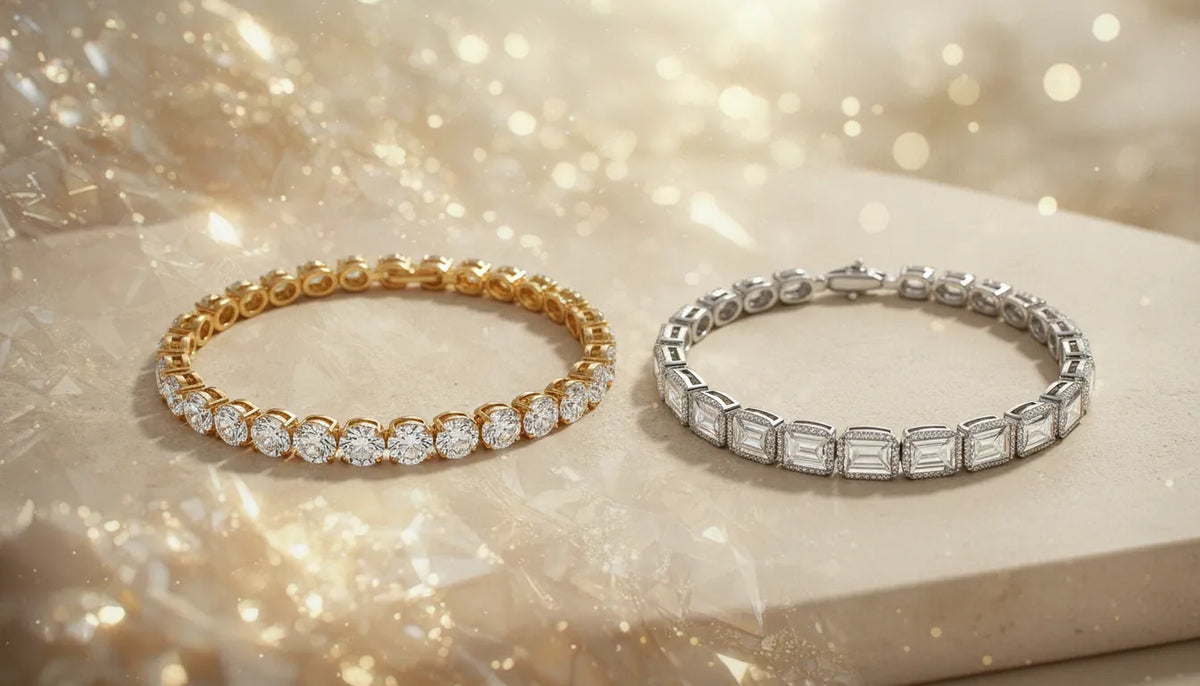
Mixing metal tones works best when it looks connected to the rest of the outfit. Repeat the combination in more than one place, such as a two-tone necklace with a ring that includes both finishes, or warm-toned earrings balanced by a cooler bracelet. You can also keep the silhouettes consistent while changing the metal color. The result does not have to be perfectly symmetrical; a small, intentional relationship is often enough to make the contrast feel considered.
When deciding how to style jewelry with outfits, choose the mood first and refine the palette second. The most successful combination is usually the one that feels comfortable, reflects your wardrobe, and leaves enough visual space for each piece to be appreciated.
Choose Jewelry by Occasion and Outfit Dress Code
The best choice changes with the setting, but the goal stays consistent: your jewelry should feel comfortable, intentional, and in step with the outfit's visual energy. Start with how formal the clothing feels, then consider how much movement, shine, and scale the occasion can support.
Everyday dressing
For denim, knitwear, relaxed tailoring, and other daily staples, choose pieces that feel easy rather than overly precious. A simple necklace, small earrings, or a bracelet with a clean silhouette can add polish without making the outfit feel styled around the jewelry. If your clothes already have texture, pattern, or layered proportions, let one restrained piece provide definition. LUCE's everyday luxury jewelry guide offers more ideas for building that kind of repeatable rotation.
Professional settings
Workwear usually benefits from clarity and proportion. Consider jewelry that sits securely, feels comfortable through a full day, and does not compete with a collar, headset, or other practical detail. Small-scale earrings, a refined chain, or a considered ring stack can support a tailored jacket or crisp shirt without becoming the first thing people notice. The right look is not necessarily minimal; it is edited enough to let your clothing and presence lead.
Evenings and celebrations
Dinner, a gallery opening, or a milestone event gives you room to increase contrast. Choose one focal point, such as sculptural earrings, a more substantial necklace, or a ring with visible presence, then keep the surrounding pieces quieter. Match the jewelry's visual energy to the clothing: sleek pieces can sharpen a simple silhouette, while more expressive texture can complement an uncomplicated dress or suit. For a wedding or similarly meaningful celebration, comfort still matters. Jewelry that stays in place and feels like you will photograph better than a dramatic choice you spend the evening adjusting.
Relaxed occasions
For weekends, travel, and casual gatherings, use jewelry to echo the ease of the outfit rather than forcing formality into it. Mixed proportions, a favorite everyday piece, or one unexpected detail can make simple clothing feel personal. These are flexible guidelines, not rules. The strongest answer to how to style jewelry with outfits is the one that respects the occasion while leaving room for your own habits and expression.
Balance Scale, Texture, and the Focal Point
When an outfit has a strong visual presence, jewelry works best when it adds intention rather than another competing layer. Consider the garment's scale, texture, and overall pattern before choosing a piece. A heavily textured knit, bold print, sculptural neckline, or embellished fabric may already create movement. Sleek jewelry can bring definition without interrupting it, while a more substantial piece may hold its own against a simple, streamlined outfit.
Scale is personal, but proportion offers a useful starting point. A delicate chain can disappear against a thick sweater or dramatic collar, while a large necklace may overwhelm a fine silk blouse. Look at the relationship between the jewelry and the garment, as well as how the piece sits on you. Earrings, rings, and bracelets should feel considered in relation to one another, not selected in isolation.
Choose one lead piece
A practical rule is to choose one focal point, then let the remaining jewelry support it. If sculptural earrings lead the look, pair them with a quiet necklace or a few streamlined rings. If a bold cuff or substantial ring is the focus, keep the other wrist and hand details restrained. This does not mean every piece must match. It means each element has room to be noticed.
Texture can create depth when it is varied with purpose. Pairing a polished piece with a softly textured one can feel more dimensional than repeating the same finish throughout. With a complex garment, however, simpler surfaces often provide the necessary negative space. Accessories influence how line, color, and texture are perceived, so use them to clarify the outfit's visual direction rather than add noise. The best approach to how to style jewelry with outfits is flexible: start with the garment, identify what should draw the eye, and build around that decision.
Layer Jewelry Without Losing the Outfit
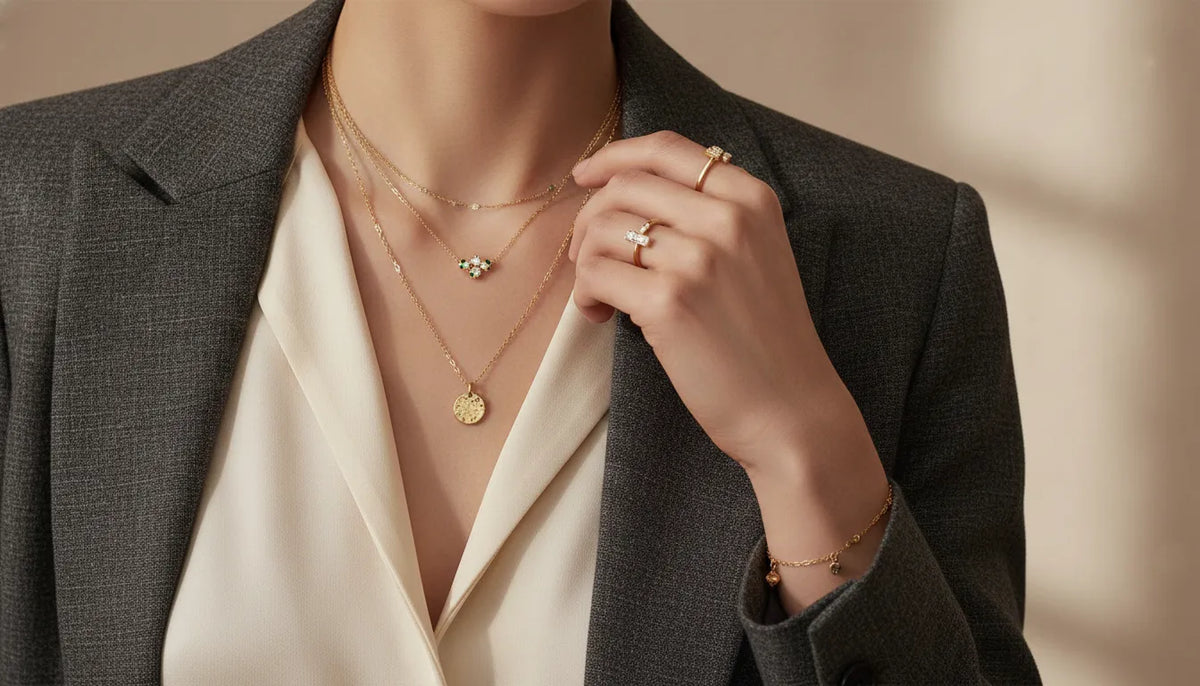
Layering works best when it supports the clothes rather than competing with them. Start by noticing where the garment already creates visual interest. A crisp shirt, textured knit, bold print, or embellished neckline may need fewer layers, while a simple column of color can give you room to build dimension. The goal is not to wear more jewelry. It is to create a clear relationship between the outfit and the pieces you choose.
Build layers around negative space
For necklaces, use the open area created by the neckline as your guide. Two or three lengths can feel intentional when each one has room to read, but closely crowded chains may disappear into a high collar or busy pattern. With a low neckline, a shorter chain can define the upper edge while a longer pendant follows the vertical line of the garment. If you want a deeper dive into necklace proportions, see this layered necklace styling guide, then bring that technique back to the entire outfit.
Negative space matters beyond the neckline. Leave visual breathing room between earrings and a necklace, especially when both are substantial. A sculptural earring may be all the framing a clean neckline needs. Conversely, small earrings can balance a more expressive necklace without making the face and chest feel visually crowded.
Coordinate the hands and wrists
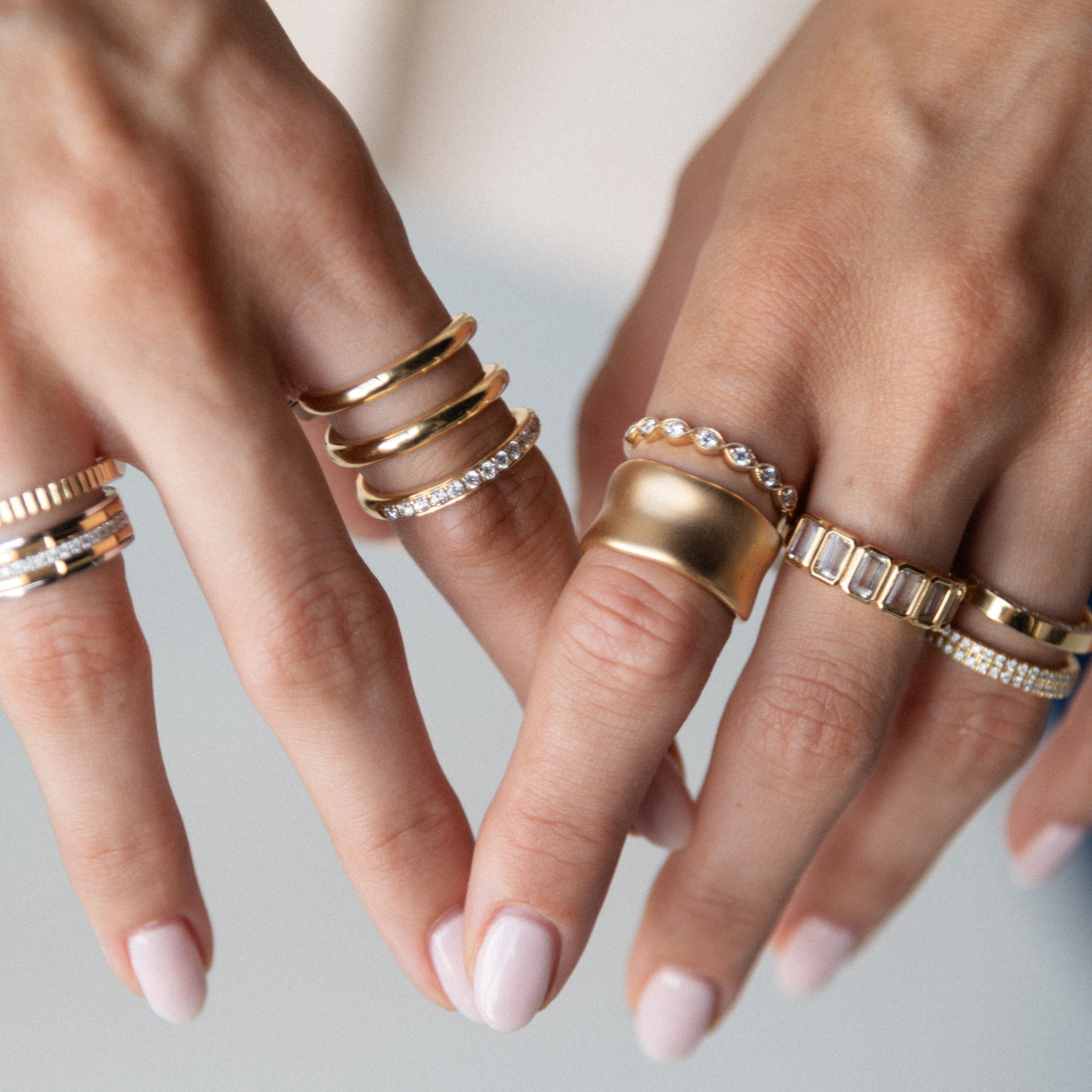
Layering rings and bracelets calls for the same restraint. If a bracelet stack is the focal point, let the opposite hand stay quieter or choose one deliberate ring to connect the look. When several rings are already shaping the hands, a simple bracelet can preserve movement and keep the outfit from feeling overworked. Consider the sleeves, too: a long cuff or fitted sleeve changes how much wrist jewelry will actually be visible.
Think of earrings, necklaces, rings, and bracelets as a conversation, not a matching set. Repeat one subtle element, such as a metal tone, rounded silhouette, or restrained stone color, and allow the other pieces to vary. The result feels personal and coordinated while the garment remains part of the composition. These principles are flexible. Your most successful combination will be the one that leaves enough space for both your jewelry and your outfit to be noticed.
A Five-Step Outfit-First Styling Check
When a jewelry combination feels almost right but not quite finished, return to the outfit. This quick check helps you make deliberate choices without turning personal style into a list of rigid rules.
- Read the silhouette. Notice the neckline, sleeve length, fabric weight, and overall shape before reaching for a piece. A clean crewneck may leave room for a visible pendant, while an open collar can already create a strong line. Let the garment's structure guide the first decision.
- Identify the focal point. Decide where you want the eye to land. It might be a sculptural earring, a necklace against an open neckline, a ring stack, or a bracelet that moves with a rolled sleeve. If the clothing is patterned or highly detailed, a quieter piece can preserve balance.
- Choose the metal and color mood. Look at the outfit's dominant colors and decide whether you want harmony or contrast. Gold can reinforce a warm palette, while white metal can sharpen cooler tones, but personal preference matters more than a strict matching rule. Colorful stones can bring energy to a neutral outfit or echo a shade already in the look.
- Set the scale. Compare the visual weight of the jewelry with the garment and with the other pieces you plan to wear. A bold necklace may need simpler earrings, while delicate rings can support a more expressive earring. Aim for proportion, not uniformity; contrast in texture or size can make a considered look feel more personal.
- Edit, then test movement and comfort. Remove one piece and see whether the outfit becomes clearer. Turn your head, move your arms, sit down, and check that chains, earrings, rings, and bracelets stay comfortable. The best combination should support the way you actually live, not only look polished in a mirror.
Contact LUCE to explore jewelry styling for your wardrobe.
Frequently Asked Questions
How do I choose jewelry for a busy neckline?
Start by noticing the garment's strongest line. With a high, ruffled, or embellished neckline, earrings or a bracelet may create a cleaner finish than a necklace competing for the same space. With a simple scoop or open collar, a necklace can echo the shape and establish the outfit's focal point. The goal is balance, not a strict rule.
Should my jewelry match the color of my outfit?
It can, but coordination does not require an exact match. Use metal, gemstone color, or contrast to support the mood of the clothing. A neutral outfit can carry a more noticeable stone or texture, while a saturated print may look more considered with simpler pieces. Choose color based on the complete outfit and your personal style rather than following a universal formula.
How many statement pieces should I wear at once?
One strong focal point is a reliable place to begin. If you choose bold earrings, keep the necklace or rings quieter so the look has room to breathe. If the necklace is the focal point, streamlined earrings can frame it without competing. You can add more visual interest through texture or a measured stack once the main point of attention feels clear.
What is the easiest way to layer necklaces?
Begin with a necklace you already wear comfortably, then add a second piece with a clearly different length or scale. A shorter chain and a longer pendant can create separation, while contrasting textures add dimension. Check the layers with your neckline and movement in mind, and remove any piece that tangles, obscures the others, or makes the outfit feel crowded.
Contact LUCE for Personal Styling Guidance
If you are narrowing down jewelry for a particular neckline, color palette, or occasion, a personal styling conversation can help. It can turn these ideas into choices that feel natural to your wardrobe. Contact LUCE to get started with personalized fine jewelry styling guidance for your wardrobe.