Jewelry Glossary: Fine Jewelry Terms Explained
Jewelry shopping gets easier when the words on a product page become useful clues rather than a wall of insider language. Terms such as karat, carat, bezel, and hallmark describe different parts of a piece, from the materials chosen to the way a gemstone is held and cared for.
Contact LUCE for personalized jewelry guidance
A jewelry glossary is a practical reference for understanding fine-jewelry terms before you buy, wear, gift, or maintain a piece. Use it to compare metal purity, interpret gemstone details, recognize setting and construction features, and ask more precise questions about everyday wear.
Start with the metal itself. Understanding purity, alloys, and hallmarks gives you a clearer foundation for evaluating how a piece is made and how it fits your personal style.
Understanding Metals, Purity, and Hallmarks in a Jewelry Glossary.
Metal language can look technical at first, but each term answers a practical question about what a piece is made from and how it fits your collection. In a jewelry glossary, these definitions are a useful starting point for comparing materials, reading a metal mark, and choosing a piece that suits your style and intended wear.
Alloy and karat
An alloy is a combination of metals fused together. Gold jewelry is commonly alloyed because pure gold is too soft for many designs and because additional metals can influence the finished material's color and working properties. Karat, written with a K, describes the proportion of pure gold in a gold alloy. It is different from carat, which measures gemstone weight.
14K gold contains 58.5% pure gold and 41.5% alloy. 18K gold contains 75% pure gold and 25% alloy. Those percentages are useful context when you are comparing the metal content of two pieces, but the best choice also depends on the design, your wearing habits, and the look you prefer. For a closer comparison of these two gold standards, read LUCE's 14K vs 18K gold guide.
Platinum and solid metal
Platinum is a noble metal commonly used in fine jewelry, alongside gold. The term noble metal describes a metal that is relatively resistant to chemical reaction. When a description says a piece is made from solid metal, it means the stated metal forms the material of the piece rather than serving only as a surface layer over another base material. This distinction helps you understand the construction before you evaluate the design.
Gold's ductility makes it possible to fashion the metal into many shapes, which supports a wide range of jewelry forms. Platinum and gold can each bring a distinct presence to a piece, so metal selection is both a material decision and a style decision. Ask which metal was used, whether it is solid throughout, and how the finish is intended to wear over time.
Hallmarks and metal marks
A hallmark is a stamped or engraved mark that identifies information about a jewelry metal, often its fineness or karat designation. You may find a small mark inside a ring, on a clasp, or near another discreet part of a piece. Marks can be tiny or difficult to read, and a mark should be interpreted in context rather than treated as the only detail that matters. If you are unsure what a mark means, a jeweler can help identify it and explain how it relates to the piece's construction.
Once you understand alloy, karat, solid metal, and hallmark, a metal conversation becomes much easier. You can ask focused questions, compare 14K and 18K gold clearly, and consider whether gold or platinum supports the way you plan to wear the jewelry.
Gemstone Terms: Carat, Cut, Clarity, Color, and Hardness
Gemstone language becomes much easier to navigate once you separate weight, appearance, and wearability. A carat measures weight, not the visible size of a stone. One carat equals 200 milligrams, so two stones with the same carat weight can still look different when their shapes, proportions, or depths vary. You may see carat written as ct: a one-carat stone is 1ct, while a half-carat stone may be described as .5ct or 50 points. Points are smaller units used to express fractional carat weights.
When a jeweler discusses the 4 Cs, the terms are carat weight, clarity, color, and cut. Carat weight describes how heavy the stone is. Clarity refers to the presence and visibility of internal features or surface characteristics. Color describes the stone's body color or, for diamonds, the degree of color present. Cut describes how a diamond or gemstone has been shaped and finished, including the way its proportions and facets interact with light. These terms help describe a stone, but they should not be treated as a shortcut for deciding what you will love wearing.
Gemstone and diamond are not interchangeable terms
A diamond is one type of gemstone. The broader category includes natural mineral materials such as ruby and sapphire, as well as many other stones selected for color, character, and design potential. The 4 Cs are most familiar in diamond conversations, but the same words do not always carry identical meaning across every gemstone. For example, color may be central to the appeal of a colored stone, while clarity expectations can vary by material and by the look a designer intends.
If you are exploring stones beyond diamonds, our colored gemstone jewelry guide offers a useful next step. It is also worth asking which qualities matter most for the particular stone, rather than applying a diamond-first checklist to every piece.
Hardness, toughness, and stability explain durability
Hardness is a stone's resistance to scratching. The Mohs scale ranks mineral scratch hardness from 1 to 10, with talc at 1 and diamond at 10. Ruby and sapphire rank 9 on that scale. Toughness is different: it describes how well a stone resists breaking, chipping, or cleaving when it receives an impact. Diamond resists scratches exceptionally well, but a hard blow can still cause it to cleave or fracture.
Stability describes how a gemstone responds to heat, light, household chemicals, and changes in humidity. Together, hardness, toughness, and stability provide a more complete picture of durability than hardness alone. That distinction matters when you are choosing a ring or bracelet for frequent wear, selecting a stone for a special occasion piece, or planning how you will care for jewelry over time. A thoughtful conversation about intended wear can help match the stone's characteristics to your everyday routine.
In practical terms, ask what a stone's carat weight means for its proportions, which visual qualities you value most, and what care its material requires. Understanding those terms gives you a clearer foundation for comparing pieces and choosing a future heirloom that feels right for your life.
Sources: Reeds jewelry glossary; jewelry vocabulary reference; GIA guide to gemstone durability.
Which Jewelry Setting Terms Should You Know?
A setting is the part of a jewelry design that holds a gemstone in place. It also shapes how much of the stone is visible, how the metal frames it, and how the piece feels at a glance. The same gemstone can look very different in a bezel, prong, pavé, or channel setting.
Common ways to hold a gemstone
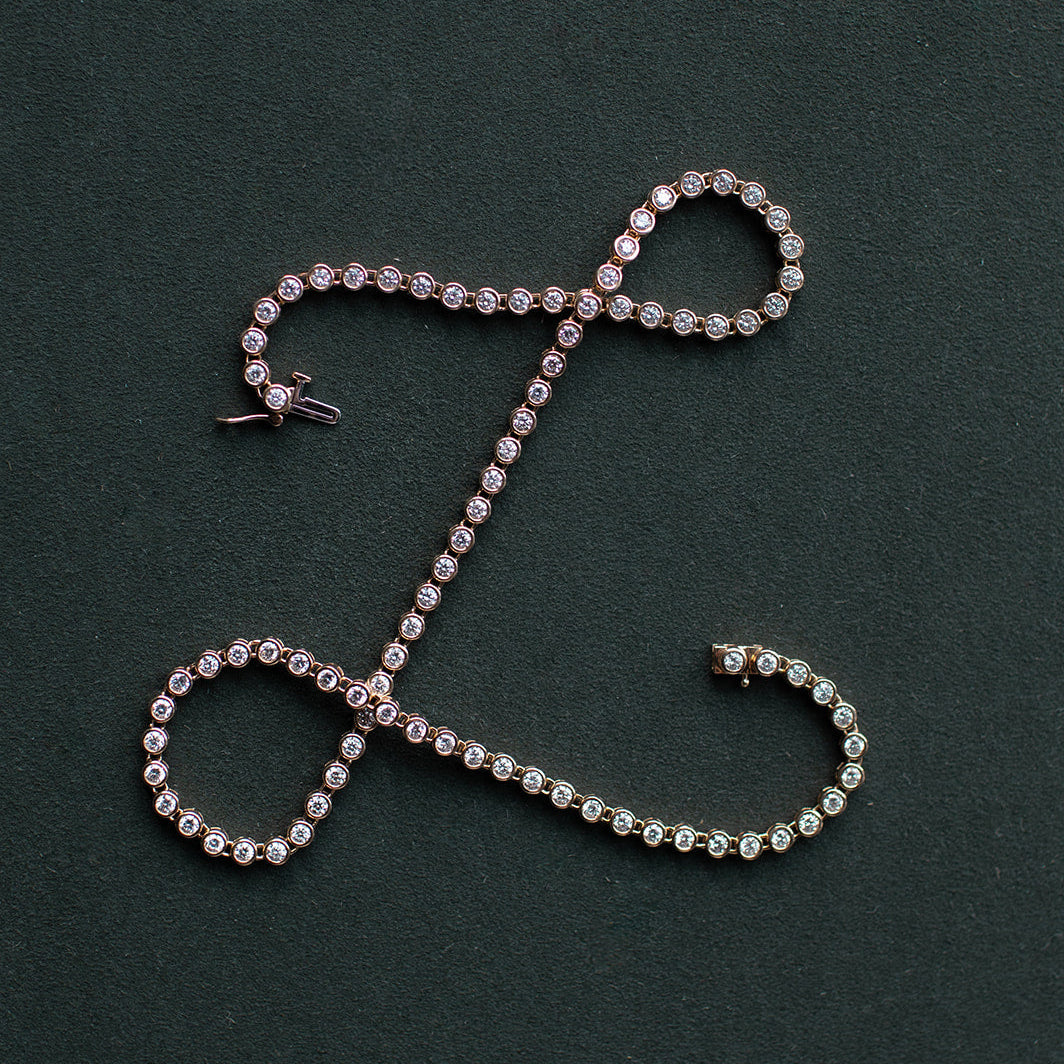
Bezel: A bezel surrounds a stone with a rim of metal. Because the metal frames the perimeter, this setting creates a clean outline and can give a piece a sleek, modern profile. The amount of metal and the shape of the rim are part of the design, not just a technical detail.
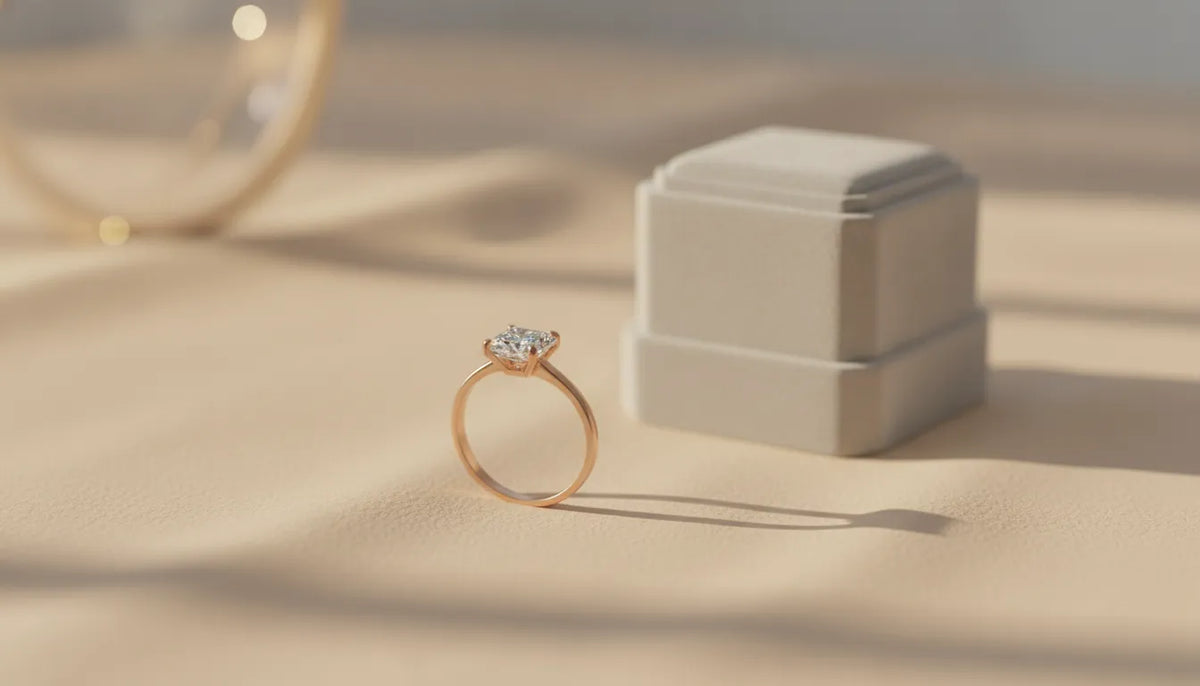
Prong: A prong is a small metal claw or projection that reaches over the edge of a stone. Prong settings can leave more of the gemstone exposed, which is why they are often chosen when a designer wants the stone to be the visual focus. The number, placement, and condition of the prongs matter when a piece is worn regularly.
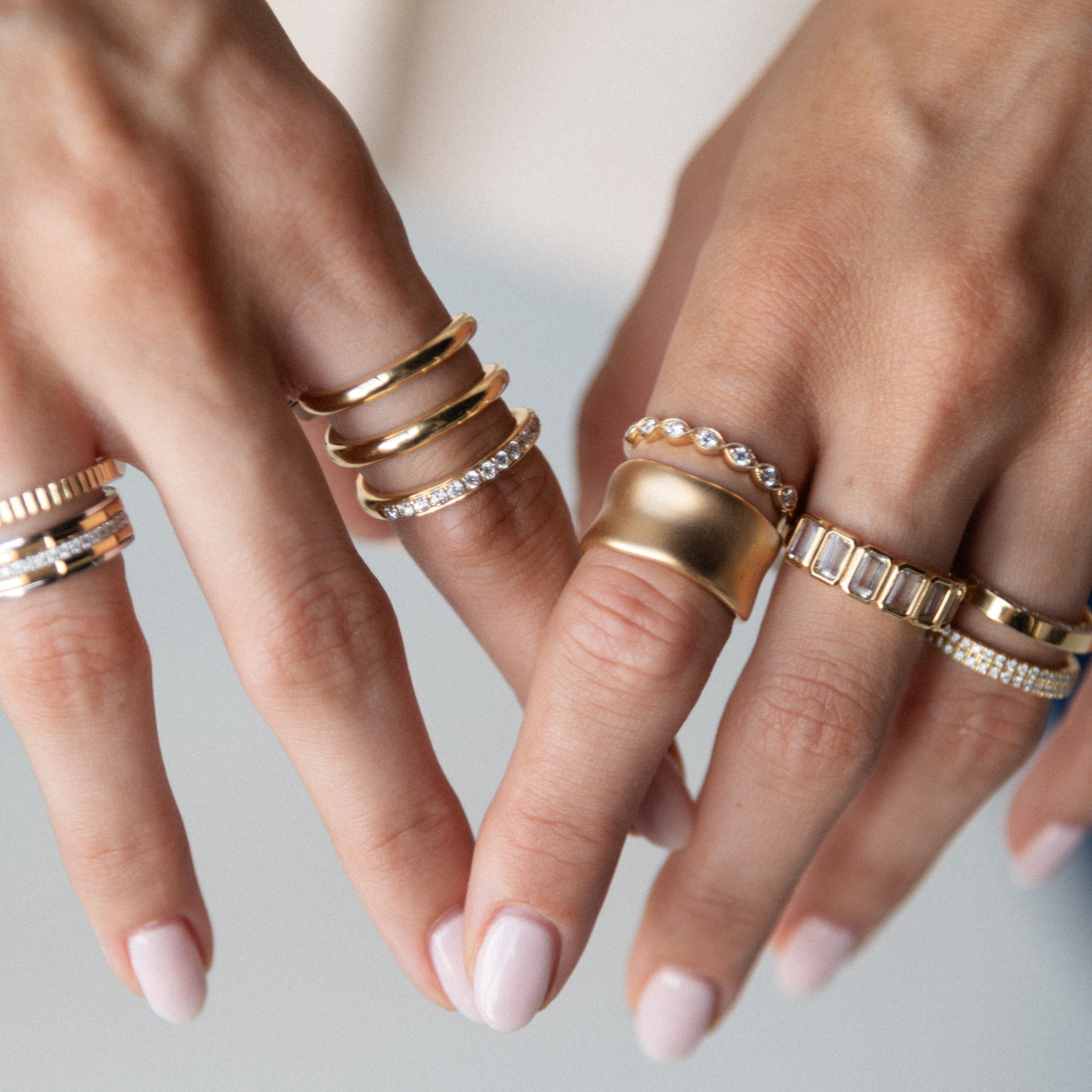
Pavé: Pavé means that multiple small stones are set closely together in a surface, creating a field of sparkle. Channel: A channel setting places stones within a groove between metal walls. Both terms describe how several stones work together, but they create different lines and textures.
Design terms that describe the overall look
Solitaire describes a design centered on one primary stone. Halo describes a surrounding frame of smaller stones around a central stone. An accent is a design element intended to draw attention to another focal point. That can mean a smaller gemstone, a contrasting line of metal, or a shape that leads the eye toward the center.
These terms are useful because they help you describe what you notice. If you prefer a clean outline, ask about a bezel. If you want a central stone to lead the design, ask whether the piece is a solitaire or uses a halo. If you like continuous sparkle across a surface, ask how the pavé or channel work is constructed.
Our engagement ring settings guide goes deeper into how setting styles change the look and feel of a ring. When comparing pieces, look beyond the name of the setting. Consider the stone's shape, the scale of the metal, the way the piece sits on your body, and how you plan to wear and care for it.
Construction Terms: From Bail to Shank
Construction vocabulary describes how the parts of a jewelry piece connect, move, and sit on the body. A bail is the connector at the top of a pendant that allows it to hang from a chain or jump ring. Its size and orientation affect how the pendant faces forward and how freely it moves.
A jump ring is a small circular connector used to join components, such as a pendant and clasp. In a repair conversation, identifying these small connection points can help clarify whether a piece needs a replacement component, a reinforcement, or a simple adjustment.
A shank is the band portion of a ring that wraps around the finger. The shoulders are the areas where the shank rises toward the center setting or main design. Together, they influence the ring's visual balance, how it transitions from the finger to the focal element, and how it may sit beside another ring. A ring's profile is its shape and height when viewed from the side. A lower profile may feel closer to the finger, while a higher profile creates more space beneath the center design. Neither is automatically better; the right choice depends on comfort, styling, and the way you use your hands.
Components that create movement
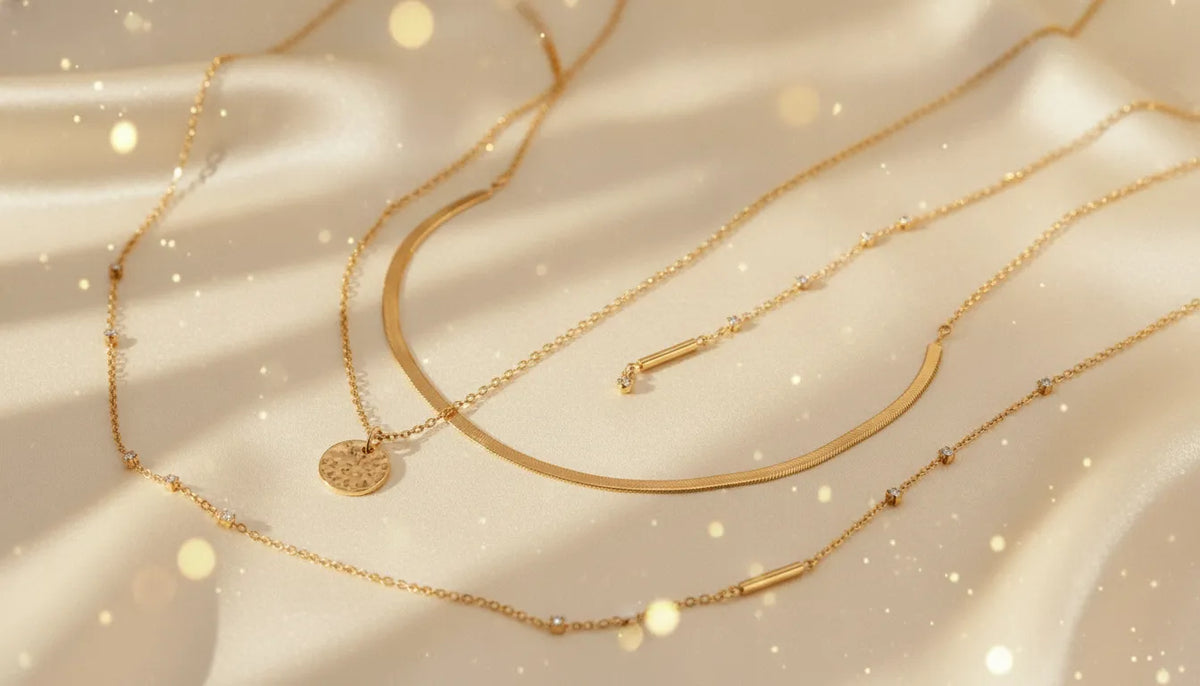
A link is an individual connected element in a chain or articulated design. Links can allow a necklace or bracelet to flex, while their scale affects the overall proportion and visual weight. A station is a defined point or element placed along a chain, such as a bead, stone, or decorative feature. The spacing between stations contributes to rhythm and determines how a piece reads when worn. A clasp is the mechanism that opens and closes a necklace or bracelet. Its operation, placement, and relationship to the chain matter in everyday wear, especially when you need to fasten the piece without assistance.
How construction terms help with design and repairs
A gallery is the structure beneath or around a ring's center setting. It can support the design and shape the side view, while also affecting how the ring relates to a neighboring band. A bezel is a setting that surrounds a stone with a rim of metal. Because it forms part of the visible edge around the stone, it can influence the piece's profile and the way the center appears framed. When discussing a repair, these distinctions make the conversation more precise: you can describe whether the concern involves a clasp, link, jump ring, gallery, or shank rather than referring to the whole piece generally.
For a custom piece, understanding how these elements work together helps you communicate proportion, movement, and wear preferences before fabrication begins. LUCE's custom jewelry design process offers a useful starting point for thinking through those choices in accessible terms.
Care Terms That Protect Fine Jewelry
A useful jewelry glossary should help you recognize not only how a piece is made, but also what its care terms mean in practice. Jewelry does not respond to cleaning, friction, heat, or chemicals in exactly the same way. The stone, setting, metal, and any treatments all matter, so a safe routine begins with identifying the specific materials involved.
Tarnish, patina, and abrasion
Tarnish is a surface change that can make a metal look darker or less bright after exposure to air, moisture, skin oils, or chemicals. It is different from patina, a gradual change in surface appearance that can develop through age and wear. Depending on the metal and the look you prefer, either may be cleaned, polished, or allowed to remain as part of the piece's character. Avoid assuming that an abrasive polish is harmless. Abrasion means gradual surface wear caused by rubbing or contact, and repeated friction can affect polished metal, delicate details, or a stone's surface.
Why gemstone durability changes the care plan
Gemstone durability is broader than scratch resistance. Gemologists consider hardness, toughness, and stability, including a stone's ability to withstand wear, heat, light, household chemicals, and changes in humidity. The Mohs scale measures scratch hardness from 1 to 10, but a hard stone can still be vulnerable to impact. For example, diamond resists scratches and abrasion yet can cleave or fracture after a hard blow. That distinction is why a routine suitable for one piece should not automatically be applied to another.
Ultrasonic cleaning and porous materials
Ultrasonic cleaning uses low-frequency wavelengths through a liquid solution to loosen dirt and buildup. It can be effective in appropriate situations, but many gemstones may be damaged by an ultrasonic cleaner. Porous materials have small spaces that can absorb liquids or chemicals, which makes them especially sensitive to cleaning choices. Coral, pearl, and turquoise should not be exposed to ammonia-based cleaners. Before using an ultrasonic device, chemical solution, or strong brush, confirm that the stone, setting, and any treatment are compatible with that method.
For many diamond pieces, a soft, clean toothbrush reserved for jewelry can be used gently, taking care not to loosen stones. For more detailed routines, see LUCE's fine jewelry care guide.
When to schedule a professional inspection
A professional inspection is a hands-on review of a piece's condition, including its stones, settings, closures, and areas that receive regular wear. Consider one when a stone moves, a clasp feels unreliable, a prong catches on fabric, or the piece has experienced an impact. A jeweler can recommend cleaning or repair based on the actual construction rather than a universal rule. If you need local guidance, LUCE's jewelry repair in West Palm Beach resource is a helpful next step.
How Do You Use a Jewelry Glossary When Buying?
A jewelry glossary is most useful when it becomes a set of questions, not a list of terms to memorize. Use it to slow down a purchase, translate a product description, and make sure the piece suits your style, routine, and plans for wearing it. When a salesperson or designer uses an unfamiliar word, ask what it means for the specific piece in front of you. This simple framework can help.
- Identify the metal and its marks. Start by asking what metal the piece uses and where its marks appear. Terms such as karat describe the proportion of gold in an alloy, while a hallmark or stamp can identify the metal standard used by the maker. Ask whether the piece is intended for everyday wear and how its metal choice fits your preferences. If you are comparing gold options, a custom jewelry design process conversation can also clarify which metal supports the look and feel you want.
- Evaluate the stone beyond its name. Ask whether the center of the design is a diamond, a colored gemstone, or another material, then clarify the details that affect its appearance and use. For diamonds, carat refers to weight, not a direct measurement of visible size. Cut, clarity, and color add important context. For any gemstone, ask what characteristics matter most for the way you plan to wear it, rather than assuming every stone has the same care needs.
- Understand the setting and construction. The setting is the structure that holds a stone in place, while construction terms describe how the rest of the piece connects and moves. Ask whether the stone sits in prongs, a surrounding bezel, or another design, and learn how the chain, clasp, shank, links, or other components function. Look at the profile from the side as well as the front. Proportion, movement, and comfort often become clearer from that angle.
- Ask about care before you commit. Find out what can affect the metal, stone, finish, or joining points, including routine exposure to chemicals, heat, light, moisture, and friction. Ask whether the piece should be kept away from ultrasonic cleaning or handled with a particular method. Care guidance should be specific to the materials in your jewelry, not based on a universal rule. Also ask how often the piece should be checked and what early signs of loosening or wear deserve attention.
- Confirm fit and intended wear. A technically well-made piece still needs to work on your body and in your life. Confirm the ring, bracelet, necklace, or earring size, how it should sit, and whether adjustments are possible. Explain when you expect to wear it, such as daily, occasionally, layered, or for formal occasions. The right vocabulary helps you describe those priorities clearly and choose a piece that feels effortless rather than merely attractive in a display.
You do not need to know every jewelry term before shopping. You only need enough language to ask precise questions, compare like with like, and understand the answers. That turns research into a more personal, confident decision.
| Question | Best terms to review |
|---|---|
| What metal is used? | Karat, alloy, hallmark, solid metal |
| What stone is it? | Carat, cut, clarity, color, hardness |
| How is it held? | Bezel, prong, pave, channel, halo |
| How is it assembled? | Bail, clasp, shank, links, profile |
| How should it be cared for? | Cleaning method, exposure, wear, inspection |
Have questions about fine jewelry? Contact LUCE.
Frequently Asked Questions
What words are commonly used to describe jewelry?
Common terms describe what a piece is made of, how its gemstone is evaluated, how the stone is held, and how the piece is assembled. You may see words such as alloy, karat, carat, bezel, prong, pavé, bail, shank, clasp, and patina. Learning these terms makes a product description easier to compare with your personal preferences and intended wear.
What are the different categories of jewelry?
Jewelry can be grouped by the way it is worn, including rings, earrings, necklaces, bracelets, and pendants. It can also be categorized by its materials, gemstones, setting style, or construction. These categories overlap. For example, a pendant is a type of necklace component, while a bezel describes how a stone is set rather than what kind of jewelry the piece is.
What do the codes and marks on jewelry mean?
Metal marks often indicate purity, while stone abbreviations can describe weight. For example, 14K gold contains 58.5% pure gold and 18K gold contains 75% pure gold. A carat may appear as ct, and a half-carat stone may appear as .5ct or 50 points. Ask a jeweler to interpret an unfamiliar mark in the context of the complete piece.
How do I use jewelry terms when choosing a piece?
Start with the metal and the way you expect to wear the piece. Then ask about the gemstone's carat weight, cut, clarity, and color, along with its hardness, toughness, and care needs. Look closely at the setting and construction, since those details affect the piece's appearance, movement, fit, and future repair conversations. This approach keeps technical vocabulary practical and helps you choose with confidence.
What is the difference between karat and carat?
Karat describes gold purity. Carat describes gemstone weight. The words sound alike, but they answer different questions, so checking the spelling and context can prevent confusion when you compare fine jewelry.
Get Started With Personalized Jewelry Guidance
A glossary can help you ask more informed questions, but the right choice still depends on how a piece fits your style, daily routine, and care preferences. For guidance on choosing or caring for fine jewelry, contact LUCE to share what you are considering and get personalized direction from the team.